
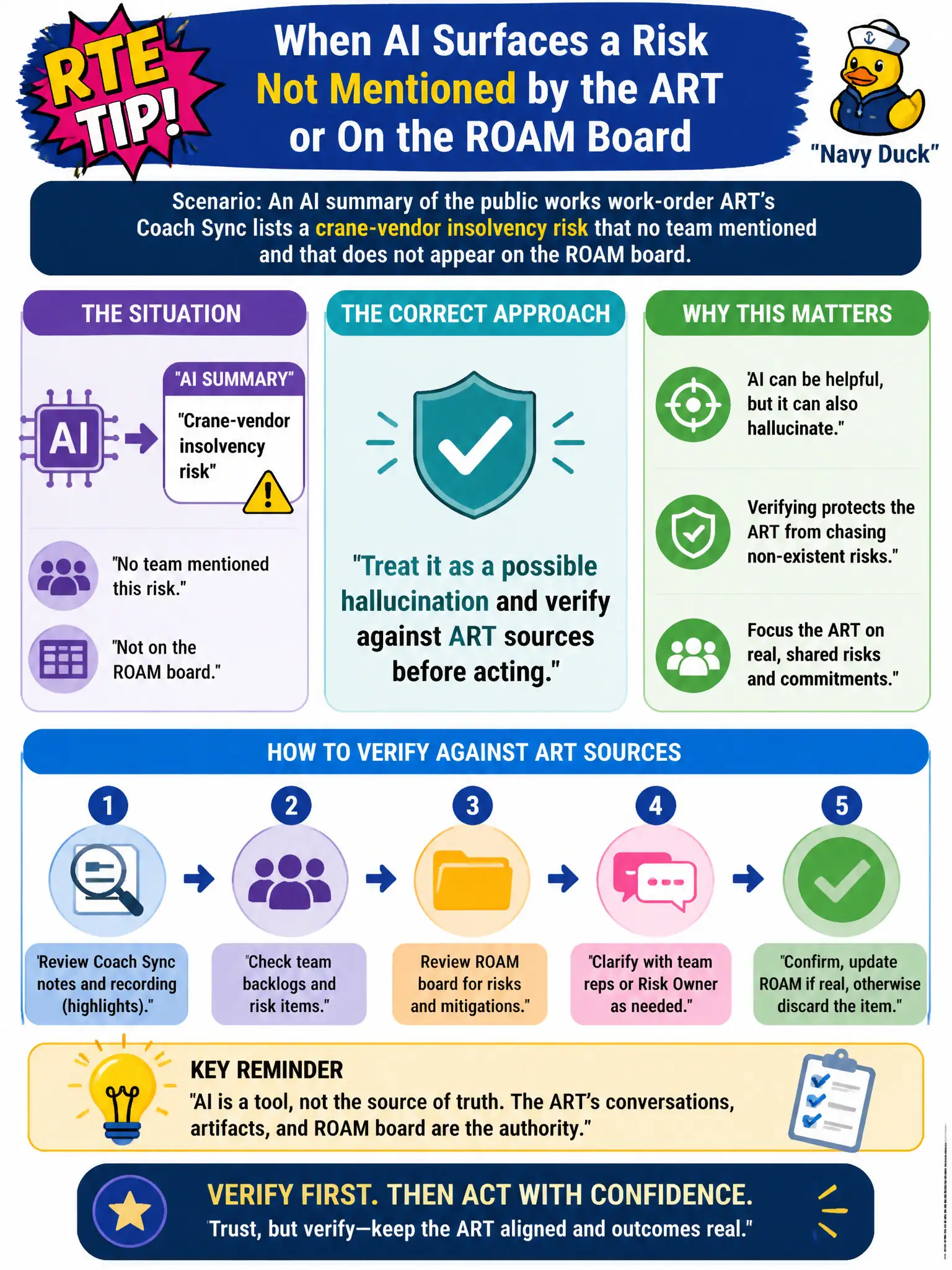
An AI summary of the public works work-order ART's Coach Sync lists a crane-vendor insolvency risk that no team mentioned and that does not appear on the ROAM board. How should the RTE treat that item?
Select an answer to reveal the explanation.
Short Explanation
If nobody said the crane vendor is insolvent, the model may have made it up. That is a hallucination, not a hidden memo. Check the ROAM board and the people in the room before lighting a fire.
Full Explanation
Generated content that invents facts not present in ART sources should be treated as a possible hallucination and verified before action. When an AI summary of the public works work-order ART’s Coach Sync lists a crane-vendor insolvency risk no team mentioned and that does not appear on the ROAM board, the RTE should verify against ART sources before acting. Adding it to the program board immediately because generated risks are “usually prophetic” promotes fiction into planning. Firing the vendor of record based solely on the summary is reckless. Hiding the invented risk from Business Owners so nobody questions the tool protects the tool instead of the ART. Exam caveat: hallucination checks apply even when the rest of the summary looks polished and confident. Operational check: ask the Coach Sync participants whether the vendor risk was discussed, compare to the ROAM board, discard or research only if evidence appears, and note the false item as a prompting/review lesson. Keep the civic mission visible when applying the technique so resident-facing outcomes stay the measure of success. In municipal ART practice, capture the rationale in facilitation notes so future coaches inherit the same standard.