
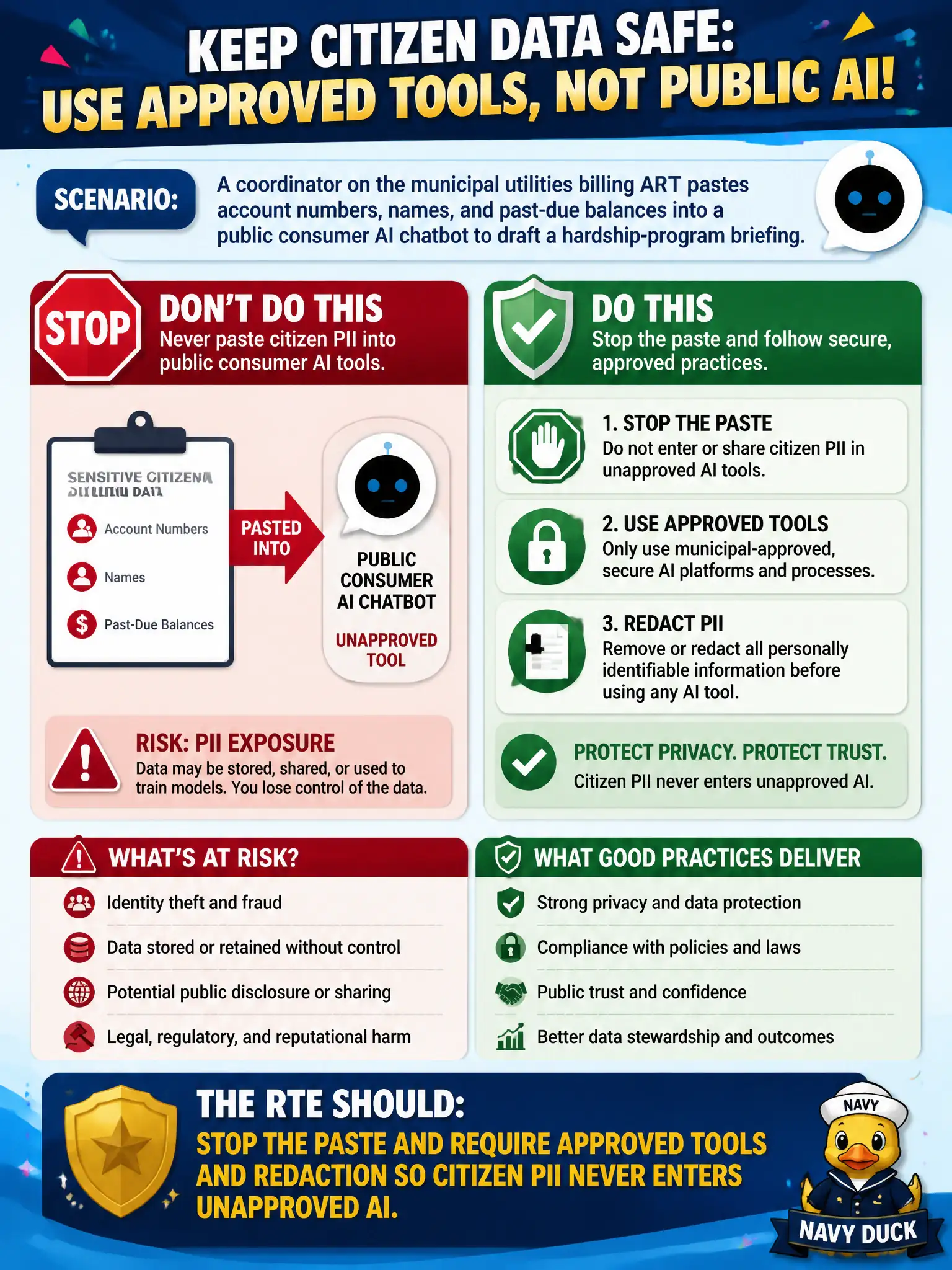
A coordinator on the municipal utilities billing ART pastes account numbers, names, and past-due balances into a public consumer AI chatbot to draft a hardship-program briefing. What should the RTE do?
Select an answer to reveal the explanation.
Short Explanation
Citizen account numbers do not belong in a hobby chatbot. That is a privacy incident waiting for a headline, not a shortcut. Use the approved tool, strip the PII, and keep the briefing about patterns—not people.
Full Explanation
Citizen personally identifiable information must not enter unapproved public AI tools. On the municipal utilities billing ART, when a coordinator pastes account numbers, names, and past-due balances into a public consumer chatbot to draft a hardship-program briefing, the RTE should stop the paste and require approved tools and redaction. Allowing the paste because public models “promise they forget” civic data after each session trusts marketing over municipal policy and resident privacy. Encouraging more records so the model can personalize disconnection notices automatically amplifies harm. Treating public chatbots as the official system of record for billing exceptions invents a shadow system of record. Exam caveat: even approved enterprise AI may require redaction or role-based access for utility customer data—tool approval is necessary but not always sufficient. Operational check: quarantine the chat, revoke any shared links, coach the coordinator on redaction and approved channels, and re-draft the hardship briefing without PII. Keep the civic mission visible when applying the technique so resident-facing outcomes stay the measure of success. In municipal ART practice, capture the rationale in facilitation notes so future coaches inherit the same standard.