
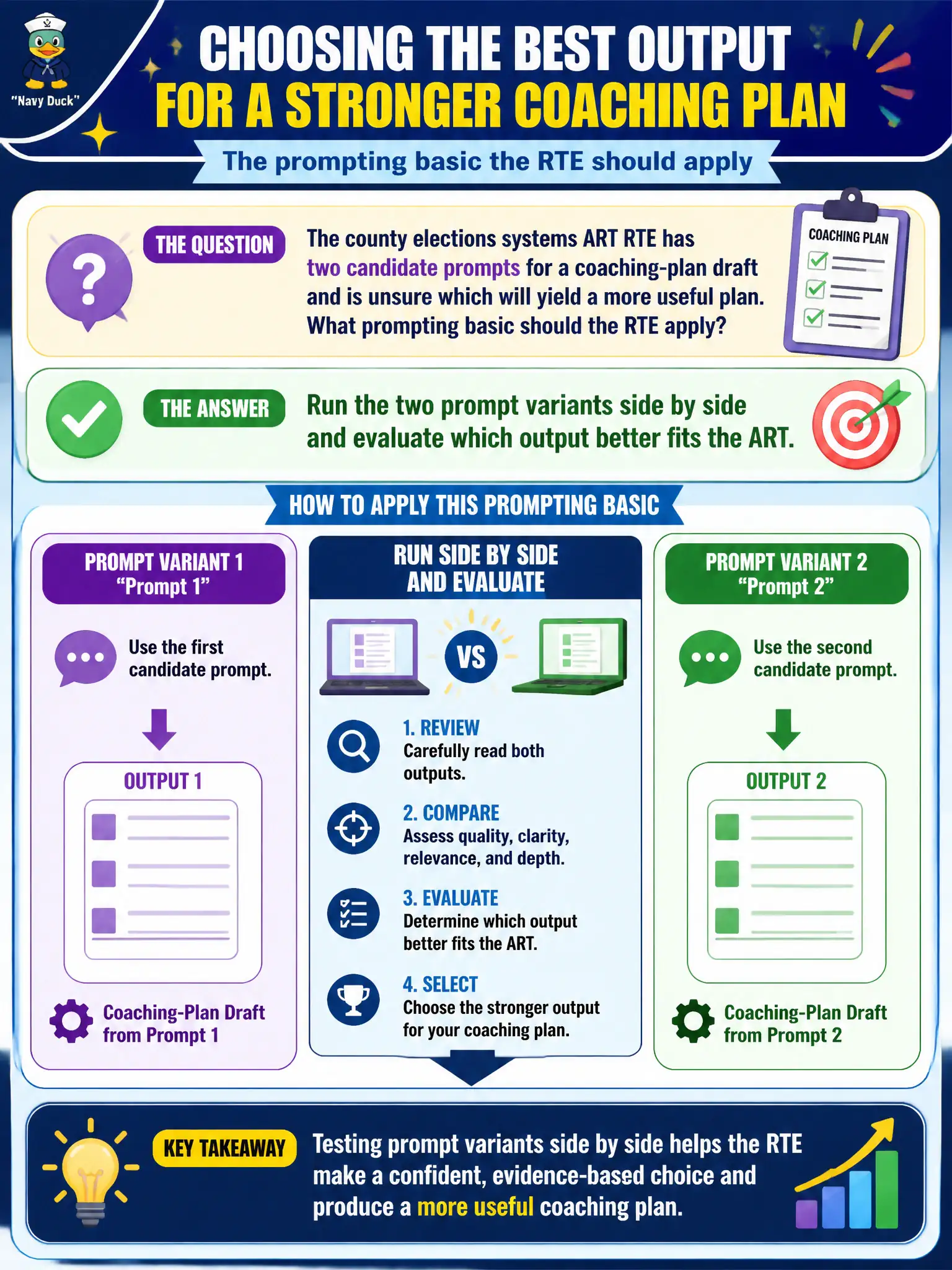
The county elections systems ART RTE has two candidate prompts for a coaching-plan draft and is unsure which will yield a more useful plan. What prompting basic should the RTE apply?
Select an answer to reveal the explanation.
Short Explanation
When two recipes sit on the counter, you cook both and taste. Same with prompts: run the variants, compare the coaching-plan drafts, and keep the one that actually helps the elections ART. Guessing from length or audit theatrics is not evaluation.
Full Explanation
Comparing prompt variants side by side and evaluating which output better fits the ART is a basic prompting practice. On the county elections systems ART, when the RTE has two candidate prompts for a coaching-plan draft, running both and judging fitness beats guessing. Always keeping the shorter prompt because token cost is the only quality signal optimizes for cheap, not useful. Merging both prompts into one contradictory block so the model averages them often produces muddle. Asking the model which prompt would look more impressive in an audit binder substitutes appearance for coaching usefulness. Exam caveat: evaluation criteria should be explicit—clarity, SAFe alignment, and actionability for elections Scrum Masters—not vibes. Operational check: run both prompts on the same nonsensitive coaching scenario, score outputs against a short rubric with a peer coach, and save the winning template for reuse. Keep the civic mission visible when applying the technique so resident-facing outcomes stay the measure of success. In municipal ART practice, capture the rationale in facilitation notes so future coaches inherit the same standard. Re-validate after the next PI cadence event that the same control still fits current civic constraints.