
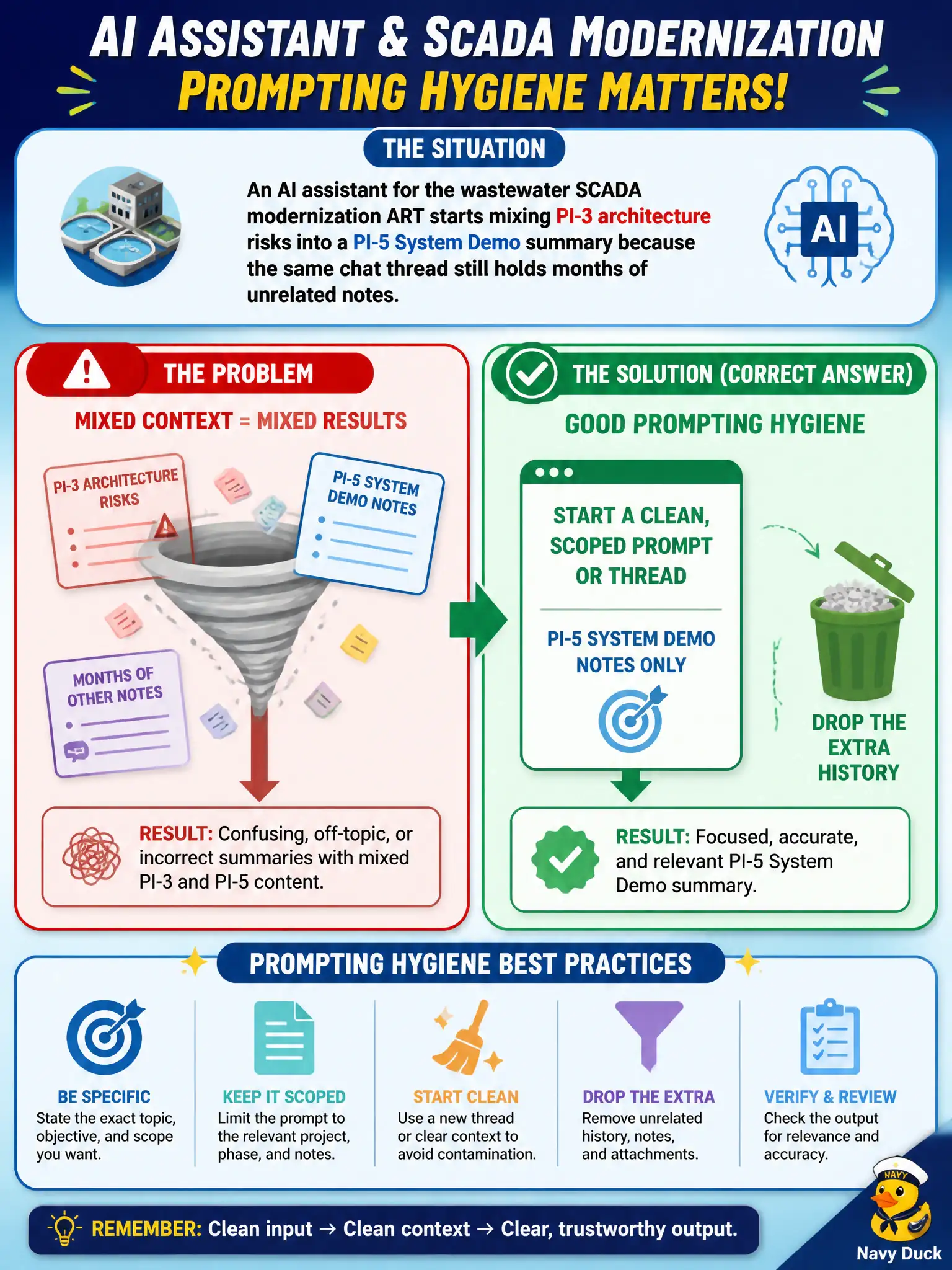
An AI assistant for the wastewater SCADA modernization ART starts mixing PI-3 architecture risks into a PI-5 System Demo summary because the same chat thread still holds months of unrelated notes. What prompting hygiene should the RTE apply?
Select an answer to reveal the explanation.
Short Explanation
A chat thread is not a filing cabinet with folders—it is one messy table. If last winter's risks are still sitting there, they leak into this PI's demo notes. Wipe the table and prompt only with the PI you care about.
Full Explanation
Prompting hygiene includes scoping context so stale history does not contaminate new artifacts. On the wastewater SCADA modernization ART, when an assistant mixes PI-3 architecture risks into a PI-5 System Demo summary because one eternal thread holds months of notes, the RTE should start a clean, scoped prompt or thread limited to PI-5 demo notes. Keeping one eternal thread so the model can “learn” every past PI at once increases cross-PI contamination. Pasting every SCADA runbook into the same chat to overpower stale PI-3 text adds noise and may introduce sensitive operational detail unnecessarily. Ignoring the mix-up because contamination “proves long-term memory” celebrates a failure mode. Exam caveat: scoped threads still need approved tools and care with plant operational data. Operational check: open a fresh thread with only PI-5 System Demo notes and the requested summary format, regenerate, and verify no PI-3 risks appear before sharing with the SCADA ART. Keep the civic mission visible when applying the technique so resident-facing outcomes stay the measure of success. In municipal ART practice, capture the rationale in facilitation notes so future coaches inherit the same standard.