
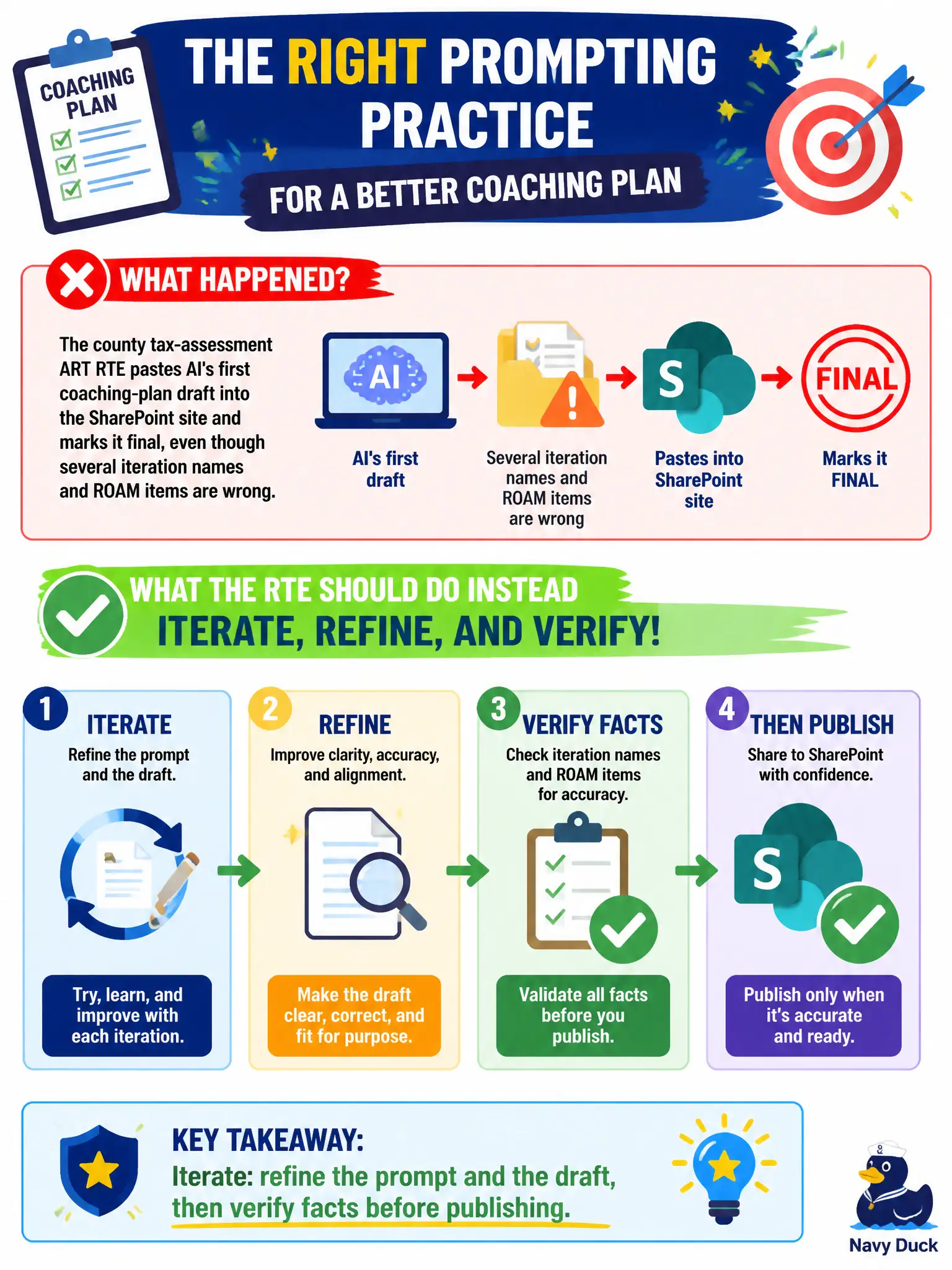
The county tax-assessment ART RTE pastes AI's first coaching-plan draft into the SharePoint site and marks it final, even though several iteration names and ROAM items are wrong. What prompting practice should the RTE apply instead?
Select an answer to reveal the explanation.
Short Explanation
First drafts from a model are like first-pass meeting notes—useful, not finished. Tweak the ask, fix the facts, and only then hit publish. One-and-done is how wrong ROAM items become "official."
Full Explanation
Iteration and verification are core prompting practices: refine the prompt and the draft, then verify facts before publishing. On the county tax-assessment ART, pasting AI’s first coaching-plan draft into SharePoint as final while iteration names and ROAM items are wrong skips that loop. Publishing faster so staff cannot request changes prioritizes speed over correctness in civic coaching. Disabling follow-up prompts because iteration “confuses the model” abandons the main way to improve outputs. Treating the first draft as legally binding once it appears on screen confuses generation with authority. Exam caveat: iteration does not mean endless polishing—stop when facts match the ART’s boards and the coaching intent is clear. Operational check: compare the draft coaching plan to the tax-assessment iteration calendar and ROAM board, correct mismatches with a refined prompt or manual edit, then publish only the verified version. Keep the civic mission visible when applying the technique so resident-facing outcomes stay the measure of success. In municipal ART practice, capture the rationale in facilitation notes so future coaches inherit the same standard. Re-validate after the next PI cadence event that the same control still fits current civic constraints.