
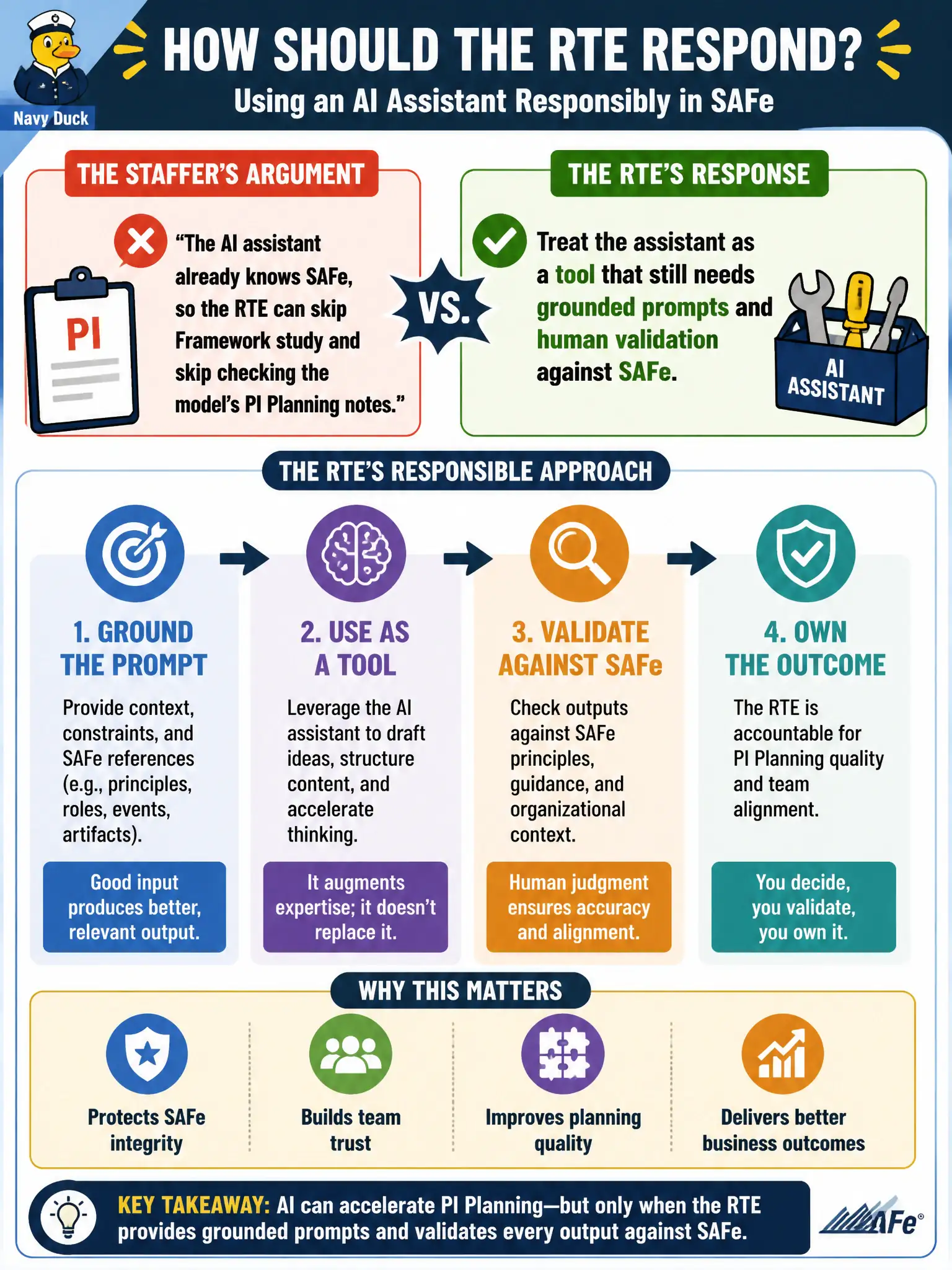
A staffer on the open-data and civic-engagement ART argues that the AI assistant already knows SAFe, so the RTE can skip Framework study and skip checking the model's PI Planning notes. How should the RTE respond?
Select an answer to reveal the explanation.
Short Explanation
The chatbot is not a hidden SPC with a badge in its pocket. It can draft, but it does not replace knowing the Framework or checking the work. Grounded prompts plus human validation—that is the deal.
Full Explanation
An AI assistant is a tool that still needs grounded prompts and human validation against SAFe, not a substitute for Framework knowledge. On the open-data and civic-engagement ART, staff arguing that the model “already knows SAFe” so the RTE can skip study and skip checking PI Planning notes confuses training-data familiarity with certified, context-correct guidance. Accepting notes as Framework-certified because models train on public internet text ignores hallucination, outdated guidance, and local election or open-data constraints. Deleting all SAFe references so the model invents a lighter municipal method abandons the Framework the ART claims to run. Replacing the RTE’s Framework knowledge with whatever the model returns on the first try removes the human accountability SAFe roles require. Exam caveat: assistants can accelerate lookup and drafting, but official Framework guidance and the ART’s operating agreements remain the authority. Operational check: take one model-generated PI Planning note, mark each claim as confirmed, revised, or rejected against SAFe and the civic-engagement calendar, and keep only validated items. Keep the civic mission visible when applying the technique so resident-facing outcomes stay the measure of success.