
A parks recreation-booking Product Owner wants to keep Sprint Planning open until every field-trip rule is specified, and the timebox is already exhausted. What should the Product Owner do?
Select an answer to reveal the explanation.
Short Explanation
Endless Planning for perfect field-trip rules is like refusing to leave the driveway until every traffic light in town is green. The timebox exists so the team starts learning from real booking work. Park leftover rules as refinement, not as a longer meeting.
Full Explanation
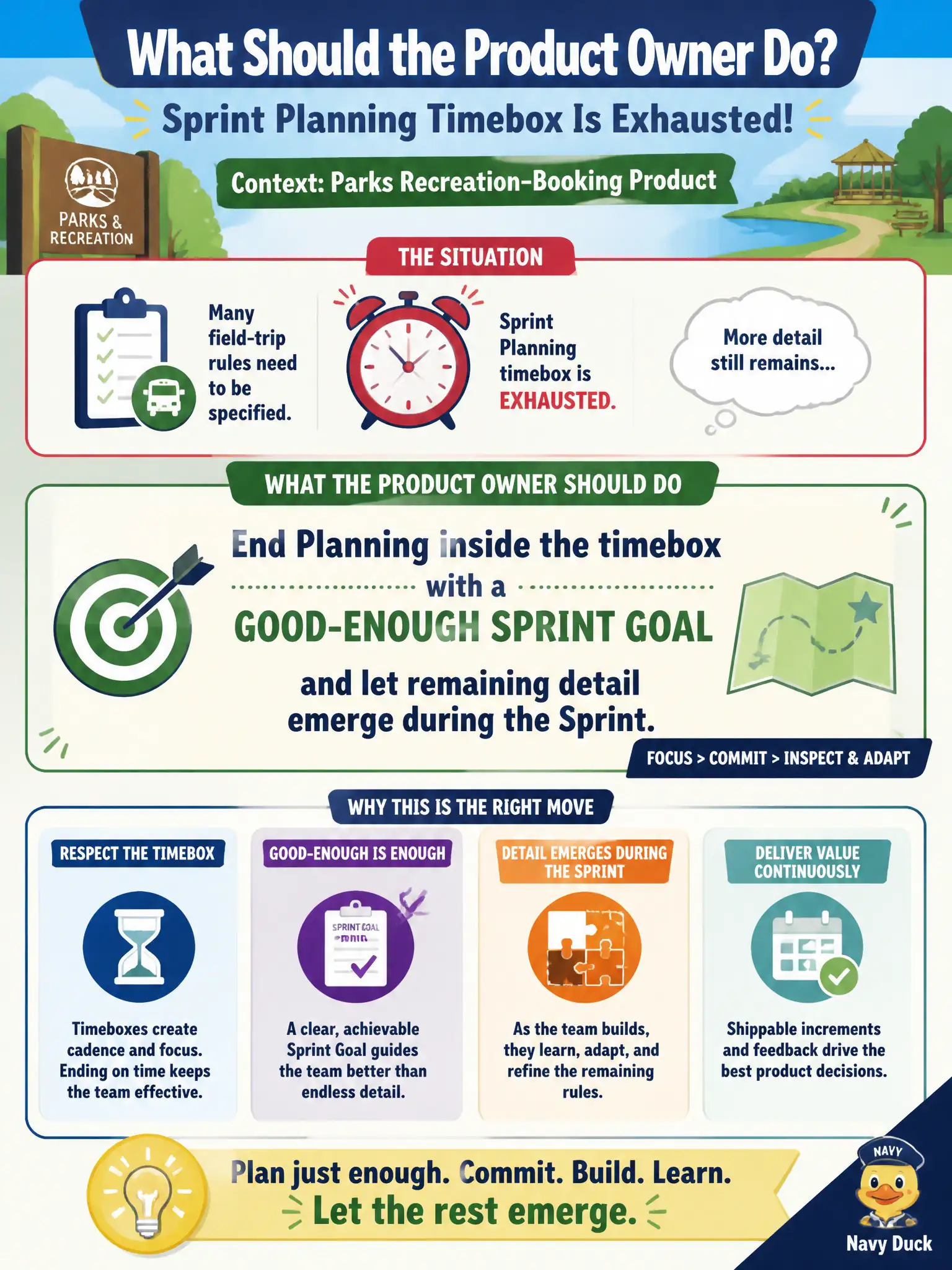
Scrum events are timeboxed to create focus and force decisions with incomplete information. When a parks recreation-booking Product Owner wants to keep Sprint Planning open until every field-trip rule is specified and the timebox is already exhausted, the Product Owner should end Planning inside the timebox with a good-enough Sprint Goal and let remaining detail emerge during the Sprint. Endless specification recreates waterfall analysis and delays empiricism.
Extending Planning into the next day until the specification is complete violates the timebox and rewards analysis paralysis. Canceling the Sprint and opening a requirements phase until parks legal signs off abandons Scrum for a mini-waterfall. Handing leftover specification work to the Scrum Master as a facilitation backlog misplaces product clarification ownership.
Parks booking value for the public starts when the Sprint begins learning, not when every legal footnote is pre-solved in Planning.
Exam caveat: PSPO II timeboxes exist to start learning; perfect rules before Planning ends are not required for a Sprint Goal.
Operational check: close Planning on time with a Sprint Goal and forecasted booking items, park remaining field-trip rules as refinement work, and clarify details with Developers during the Sprint as needed.