
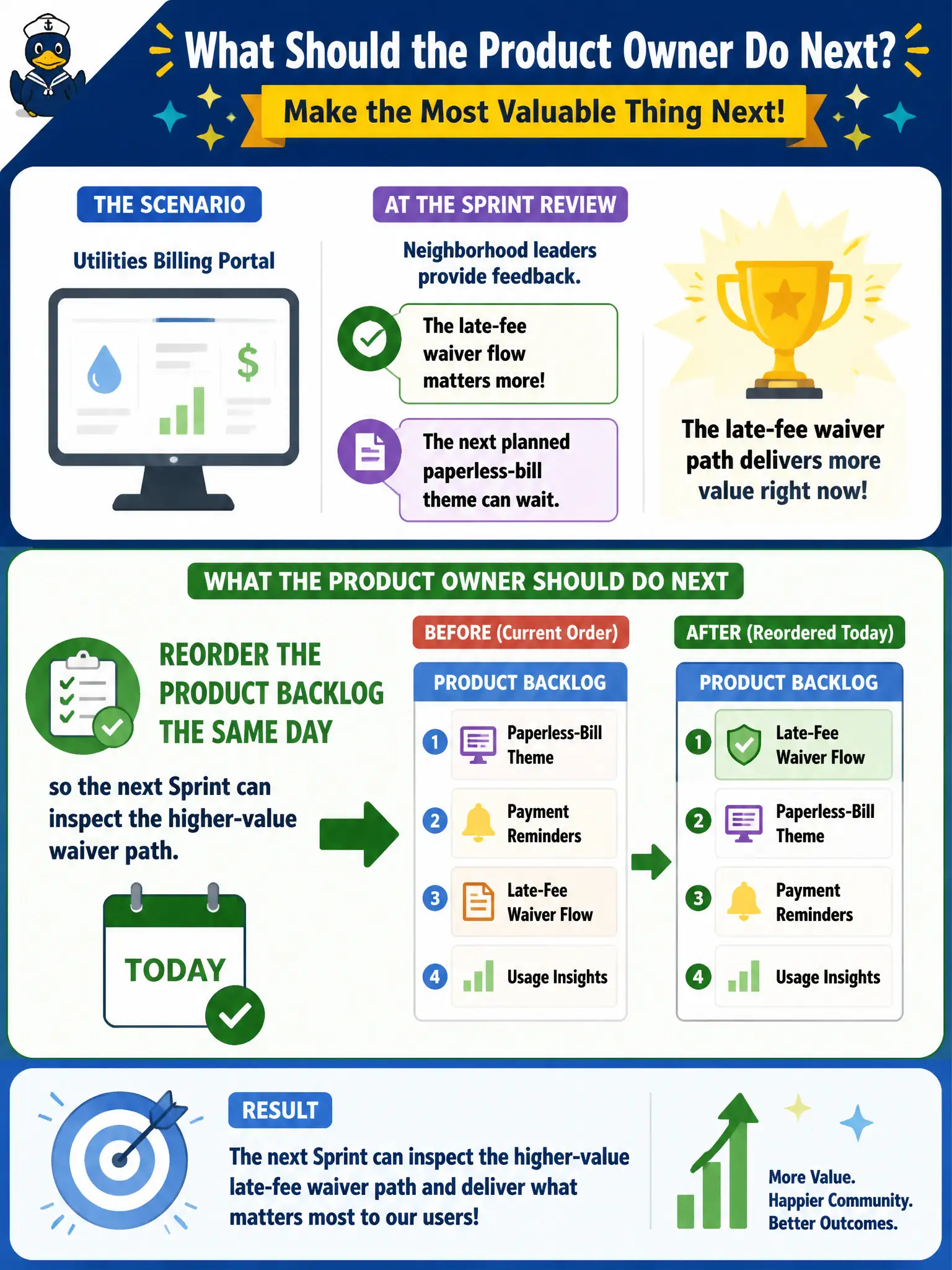
During the Sprint Review for a utilities billing portal, neighborhood leaders show that a late-fee waiver flow matters more than the next planned paperless-bill theme. What should the Product Owner do next?
Select an answer to reveal the explanation.
Short Explanation
Inspection without a same-day backlog shuffle is like reading the weather radar and still packing for yesterday's picnic. The Review just handed better evidence about what residents need. Move the waiver work up now, while the conversation is still warm.
Full Explanation
Empiricism requires adaptation after inspection. During Sprint Review for a utilities billing portal, when neighborhood leaders show that a late-fee waiver flow matters more than the next planned paperless-bill theme, the Product Owner should reorder the Product Backlog the same day so the next Sprint can inspect the higher-value waiver path. Delaying adaptation wastes learning residents just provided.
Parking the feedback in a parking-lot document until the annual rate-hearing cycle freezes empiricism behind a civic calendar. Asking Developers to add the waiver work to the current Sprint Backlog without changing product order confuses mid-Sprint stuffing with Product Backlog adaptation. Keeping the existing order so the paperless-bill roadmap slide stays accurate protects a slide at the expense of billing outcomes.
Ratepayers signal value in Review; treating that signal as a parking-lot note until next year's hearing wastes public input.
Exam caveat: PSPO II expects prompt Product Backlog adaptation from Sprint Review evidence—not annual parking lots or roadmap-slide protection.
Operational check: before leaving Review, move late-fee waiver work above the paperless-bill theme on the Product Backlog and confirm the new order will feed the next Sprint Planning.