
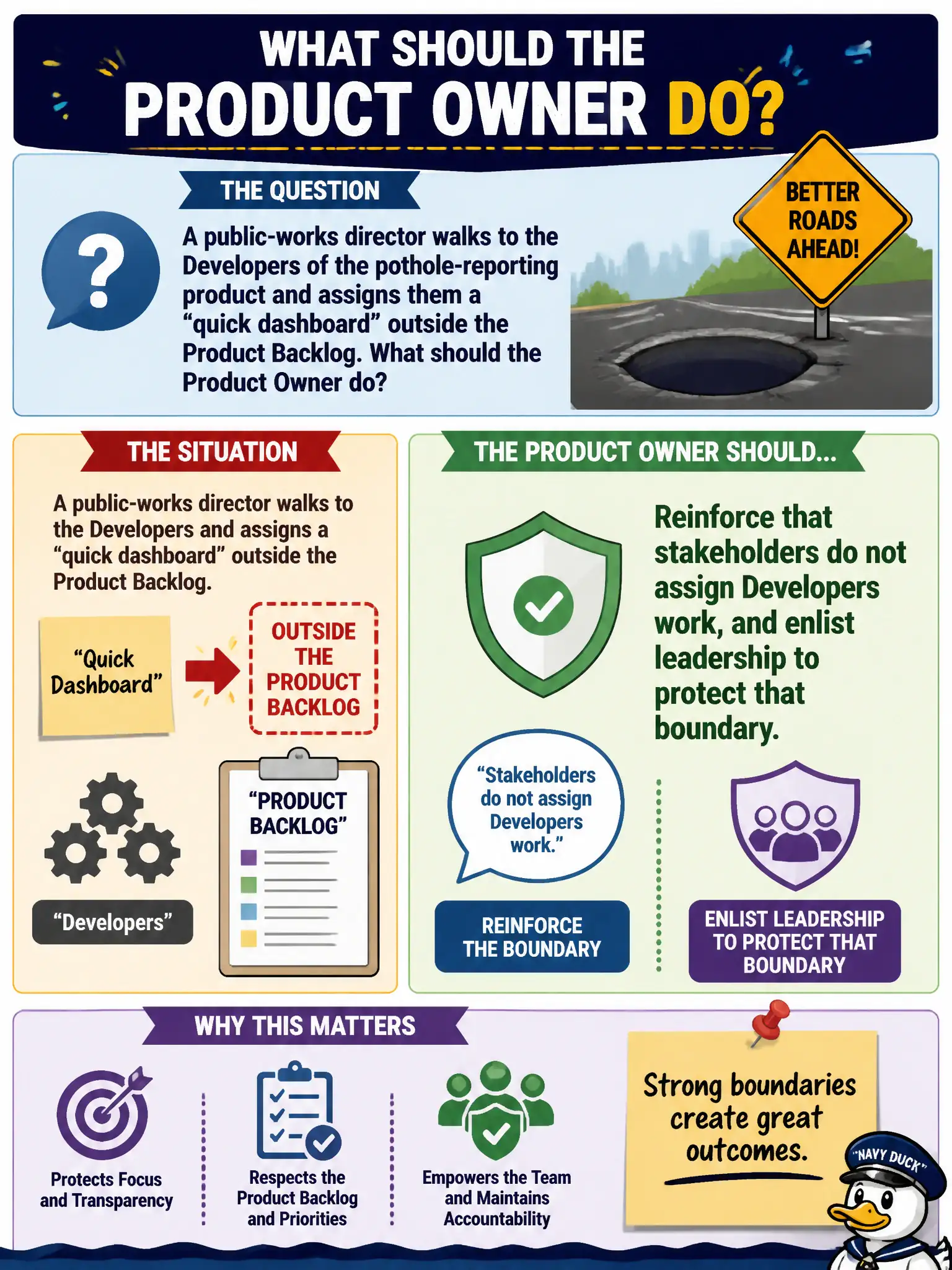
A public-works director walks to the Developers of the pothole-reporting product and assigns them a “quick dashboard” outside the Product Backlog. What should the Product Owner do?
Select an answer to reveal the explanation.
Short Explanation
If every director can walk onto the shop floor and hand out jobs, you do not have a Product Backlog — you have a hallway. One Product Owner orders the work; Developers do not take a second boss. Get leadership to back that fence or the Sprint Goal is wallpaper.
Full Explanation
Scrum accountabilities require that the Product Owner manage the Product Backlog and that Developers work from the Sprint Goal and Sprint Backlog they plan, not from ad-hoc hallway assignments. When a public-works director walks to the pothole-reporting Developers and assigns a “quick dashboard” outside the Product Backlog, that bypass creates hidden WIP, destroys forecastability, and splits value decisions. The Product Owner should reinforce that stakeholders do not assign Developers work, and enlist leadership to protect that boundary. Rank on a city org chart does not create a second Product Owner.
Allowing the assignment because the director outranks the Product Owner fails by confusing hierarchy with Scrum accountability. Adding the dashboard to the Sprint Goal automatically fails by letting conflict avoidance reorder value mid-Sprint. Maintaining a secret side backlog for director-only work fails because hidden work kills transparency and Focus.
Exam caveat: Stakeholders advise and request; they do not assign Developers outside the Product Backlog. Operational check: Document the boundary with public-works leadership, route the dashboard request into the Product Backlog for value ordering, and ask leadership to redirect future walk-ups to the Product Owner.