
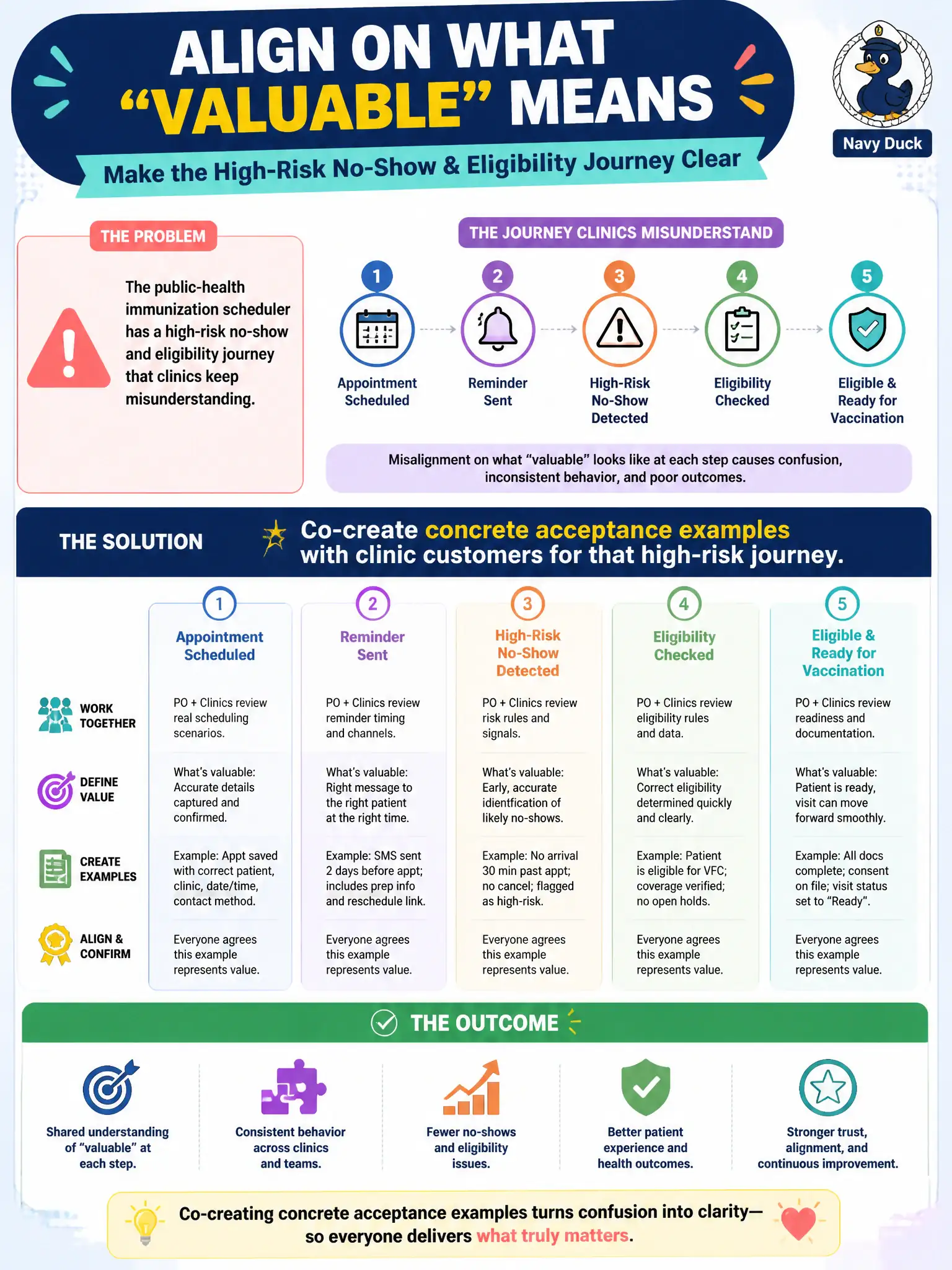
The public-health immunization scheduler has a high-risk no-show and eligibility journey that clinics keep misunderstanding. How should the Product Owner improve alignment on what “valuable” means?
Select an answer to reveal the explanation.
Short Explanation
If two kitchens argue about “done,” cook one sample plate together first. Shared examples beat a novel-length spec nobody agreed on. For a high-risk clinic journey, those examples are how “valuable” stops being a shrug.
Full Explanation
High-risk civic journeys such as immunization no-show and eligibility fail when “valuable” stays abstract and clinics keep misunderstanding acceptance. Co-creating concrete acceptance examples with clinic customers builds a shared, inspectable understanding before and during delivery. That collaboration does not transfer Product Backlog ownership; it reduces late rejection and training-as-a-workaround. Shared examples beat a novel-length spec nobody agreed on for public-health scheduling risk.
Writing a legal specification alone and withholding it until UAT fails because late surprise specs recreate misunderstanding and block adaptation. Asking Developers to invent acceptance tests from ticket titles without clinic involvement fails by guessing clinical meaning. Replacing acceptance understanding with longer post-Done training fails because training after the Increment cannot fix an ambiguous definition of valuable.
Exam caveat: For high-risk journeys, co-created acceptance examples align value; ownership of the backlog still stays with the Product Owner. Operational check: Run a short clinic workshop that writes concrete given/when/then examples for eligibility and no-show paths, then attach those examples to the ordered backlog items before the next Sprint.