
Utility-billing stakeholders skip the Product Owner and escalate new requests to the CIO every morning, creating drive-by interruptions. What should the Product Owner do?
Select an answer to reveal the explanation.
Short Explanation
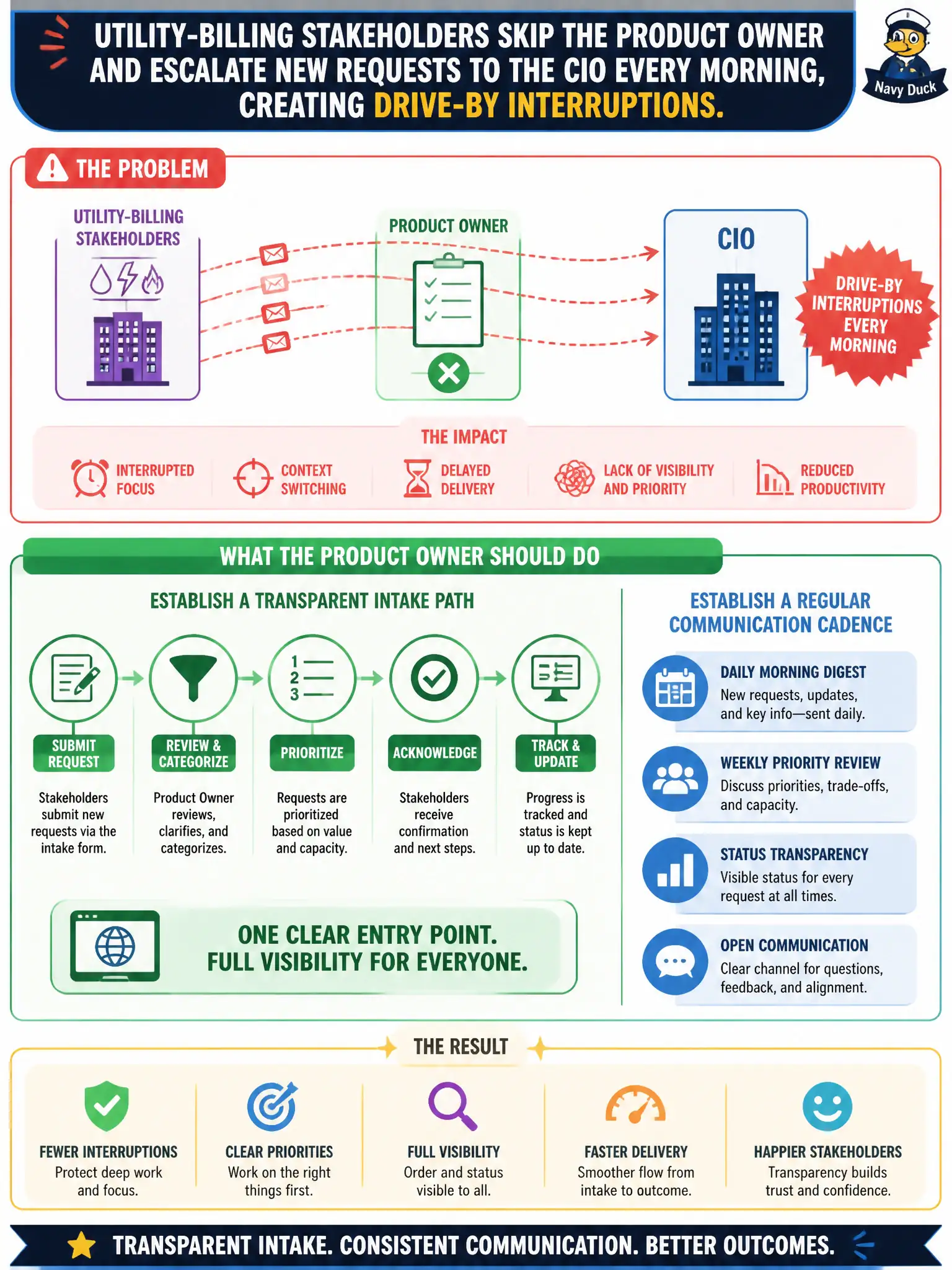
Drive-bys happen when the scoreboard is in a locked closet. Put the intake and the current order where people can see them, and the midnight hallway chats calm down. Transparency beats a secret list plus daily panic.
Full Explanation
When utility-billing stakeholders skip the Product Owner and escalate to the CIO every morning, the usual root cause is missing transparency, not a need to conceal unfinished work. A clear intake path and a regular communication cadence let stakeholders see how requests are captured, ordered, and forecast without using the CIO as a ticket desk. The Product Owner still decides order; visibility reduces political shortcuts and drive-by interruptions. Hiding the backlog or banning conversation outside one event creates more escalation, not less.
Asking the CIO to hide the Product Backlog fails because secrecy increases hallway pressure and violates transparency. Accepting each CIO-forwarded item as the new top fails by replacing value order with escalation privilege. Requiring the Scrum Master to block all stakeholder conversations outside Sprint Review fails by over-constraining collaboration and pushing urgency into back channels.
Exam caveat: Reduce drive-bys with visible intake and cadence, not with secrecy or hard conversation bans. Operational check: Stand up a public intake board for utility billing, a weekly stakeholder update on order and forecast, and a rule that CIO forwards land in intake—not as automatic Sprint Goal changes.