
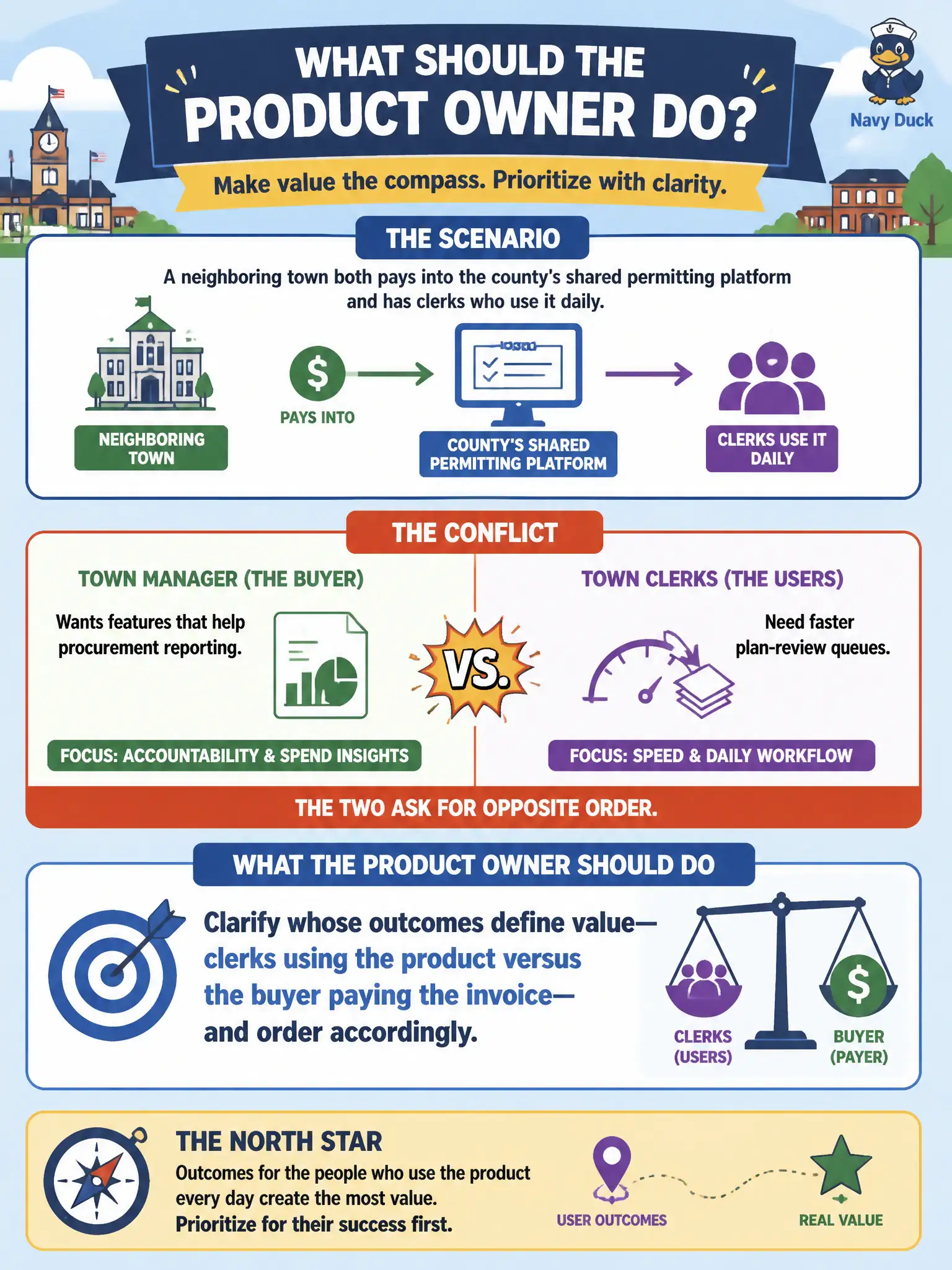
A neighboring town both pays into the county's shared permitting platform and has clerks who use it daily. The town's manager wants features that help procurement reporting; clerks need faster plan-review queues. The two ask for opposite order. What should the Product Owner do?
Select an answer to reveal the explanation.
Short Explanation
The person who writes the check and the person who stamps the plans are not the same customer. Name which outcome the product exists to improve—usually the clerks' plan-review job—and be honest when the buyer wants a report instead. Hybrids need that distinction or the backlog becomes a tug-of-war.
Full Explanation
Payers and end users may both matter; advanced Product Ownership clarifies whose outcomes define value in the ordering decision. When a neighboring town both pays into the county’s shared permitting platform and has clerks who use it daily—and the town’s manager wants procurement-reporting features while clerks need faster plan-review queues—the Product Owner should clarify whose outcomes define value and order accordingly rather than pretending the conflict is trivial. Always preferring the paying manager because budget authority equals customer ignores clerk outcomes that determine whether permitting actually works. Always preferring clerks because only end users can define value can ignore legitimate buyer constraints and contract needs. Duplicating the Product Backlog so each role gets a private order destroys transparency on a shared platform. Exam caveat: often the answer is a transparent trade-off serving the product’s primary beneficiaries while meeting buyer constraints—not a universal rule that payer always wins or user always wins. Operational check: state the product’s primary value definition for the shared platform, order plan-review speed and procurement needs against that definition, show both towns the rationale, and inspect clerk cycle time and reporting sufficiency after Increments.