
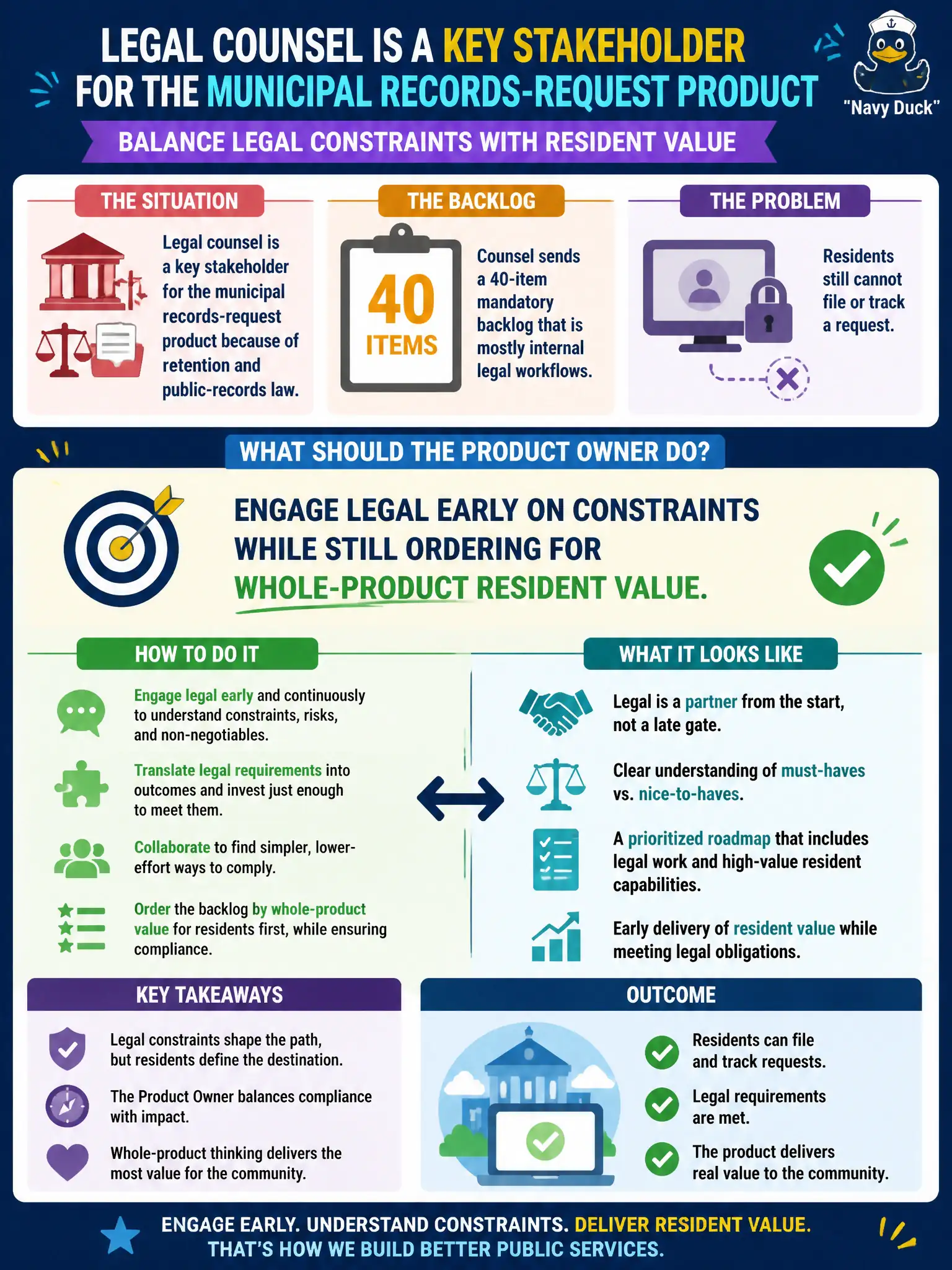
Legal counsel is a key stakeholder for the municipal records-request product because of retention and public-records law. Counsel sends a 40-item mandatory backlog that is mostly internal legal workflows. Residents still cannot file or track a request. What should the Product Owner do?
Select an answer to reveal the explanation.
Short Explanation
Legal is a smoke detector, not the architect. You want them in the room early so the records product does not burn the city down—and you still build the door residents use to file a request. Constraints in; takeover out.
Full Explanation
Legal constraints are essential inputs; they do not automatically become the whole Product Backlog. When counsel is a key stakeholder for the municipal records-request product because of retention and public-records law and sends a forty-item mandatory backlog that is mostly internal legal workflows while residents still cannot file or track a request, the Product Owner should engage legal early on constraints while still ordering for whole-product resident value. Replacing the Product Backlog with counsel’s forty items so legal risk is zeroed first may starve the citizen-facing purpose of the product. Excluding legal until after launch to protect resident-facing velocity invites noncompliance. Asking counsel to serve as Product Owner until legal items are done transfers accountability away from maximizing product value. Exam caveat: some legal items may correctly outrank features when risk is severe; the teaching point is balanced whole-product ordering with early legal engagement—not surrender of the backlog. Operational check: identify non-negotiable legal constraints, weave them into Done and near-term items, keep resident file-and-track outcomes visible in order, and inspect both compliance and resident completion together.