
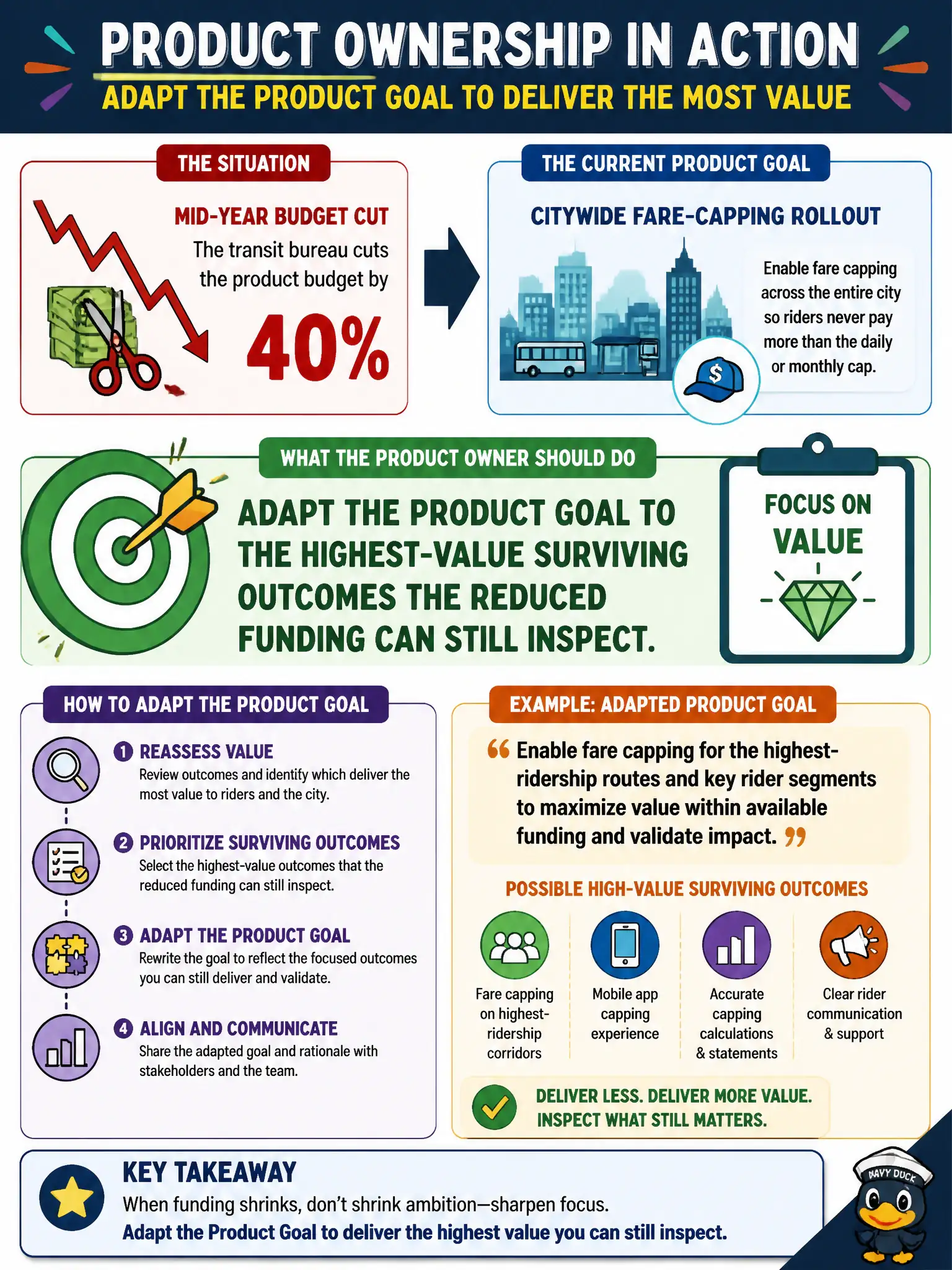
Mid-year, the transit bureau cuts the product budget by 40 percent. The current Product Goal assumed a citywide fare-capping rollout. What should the Product Owner do?
Select an answer to reveal the explanation.
Short Explanation
When the grocery money shrinks, you do not keep the same feast and yell at the cook. The Product Goal has to shrink to the meals you can still serve well. Highest-value surviving outcomes beat a pretend citywide rollout.
Full Explanation
Budget shocks require adapting the Product Goal to surviving high-value outcomes. When the transit bureau cuts the product budget by forty percent mid-year and the current Product Goal assumed citywide fare-capping rollout, the Product Owner should adapt the Goal to the highest-value outcomes reduced funding can still inspect. Keeping the original Goal and asking Developers to go faster so the same scope fits pretends velocity can erase funding reality. Freezing the Product Backlog until next fiscal year so unfinished fare-capping work is not compromised stops learning and value delivery. Spreading remaining budget evenly across every in-flight feature so no stakeholder is disappointed maximizes fairness theater over outcomes. Exam caveat: adaptation may shrink geographic scope or thin the bet while preserving the most valuable learning—do not silently keep an unaffordable Goal. Operational check: revise the Product Goal with leadership, reorder the backlog to the affordable path, communicate stopped work transparently, and inspect the narrowed fare outcomes the reduced budget can still evidence. Preserve a single ordered Product Backlog so municipal stakeholders can inspect opportunity cost without shadow lists or vanity launch calendars.