
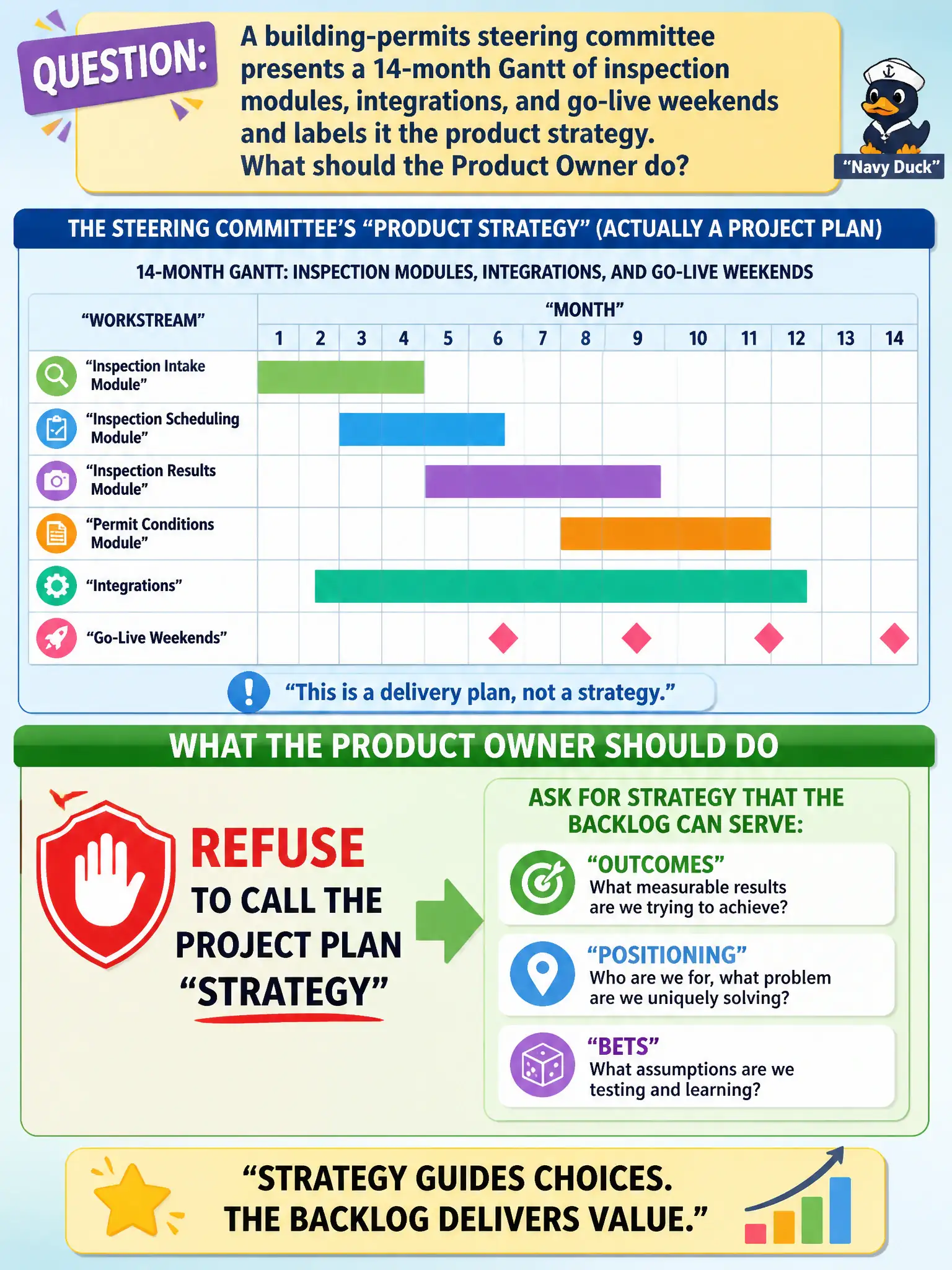
A building-permits steering committee presents a 14-month Gantt of inspection modules, integrations, and go-live weekends and labels it the product strategy. What should the Product Owner do?
Select an answer to reveal the explanation.
Short Explanation
A moving-van schedule is not a reason to move. A Gantt of inspection modules says how someone hopes to ship work; it does not say which resident outcomes matter or which bets to kill. Strategy is the why and the choices—not the project plan.
Full Explanation
A Gantt of modules and go-live weekends is a project plan, not product strategy. When a building-permits steering committee presents a fourteen-month Gantt of inspection modules, integrations, and go-live weekends and labels it strategy, the Product Owner should refuse that label and ask for outcomes, positioning, and bets the backlog can serve. Accepting the Gantt as the Product Goal because council understands dates confuses a schedule with a commitment to value. Replacing Scrum with a stage-gate so the Gantt becomes the single source of truth abandons empiricism. Converting every Gantt bar into a Sprint Goal so delivery stays aligned to the plan corrupts Sprint Goals into plan compliance. Exam caveat: dates may inform constraints; they do not replace outcome-oriented strategy and Product Backlog order. Operational check: restate strategy as citizen and clerk outcomes for permitting, derive Product Goals and backlog bets from those outcomes, keep any roadmap as a forecast not a contract, and inspect evidence at Sprint Review rather than Gantt variance alone. Preserve a single ordered Product Backlog so municipal stakeholders can inspect opportunity cost without shadow lists or vanity launch calendars.