
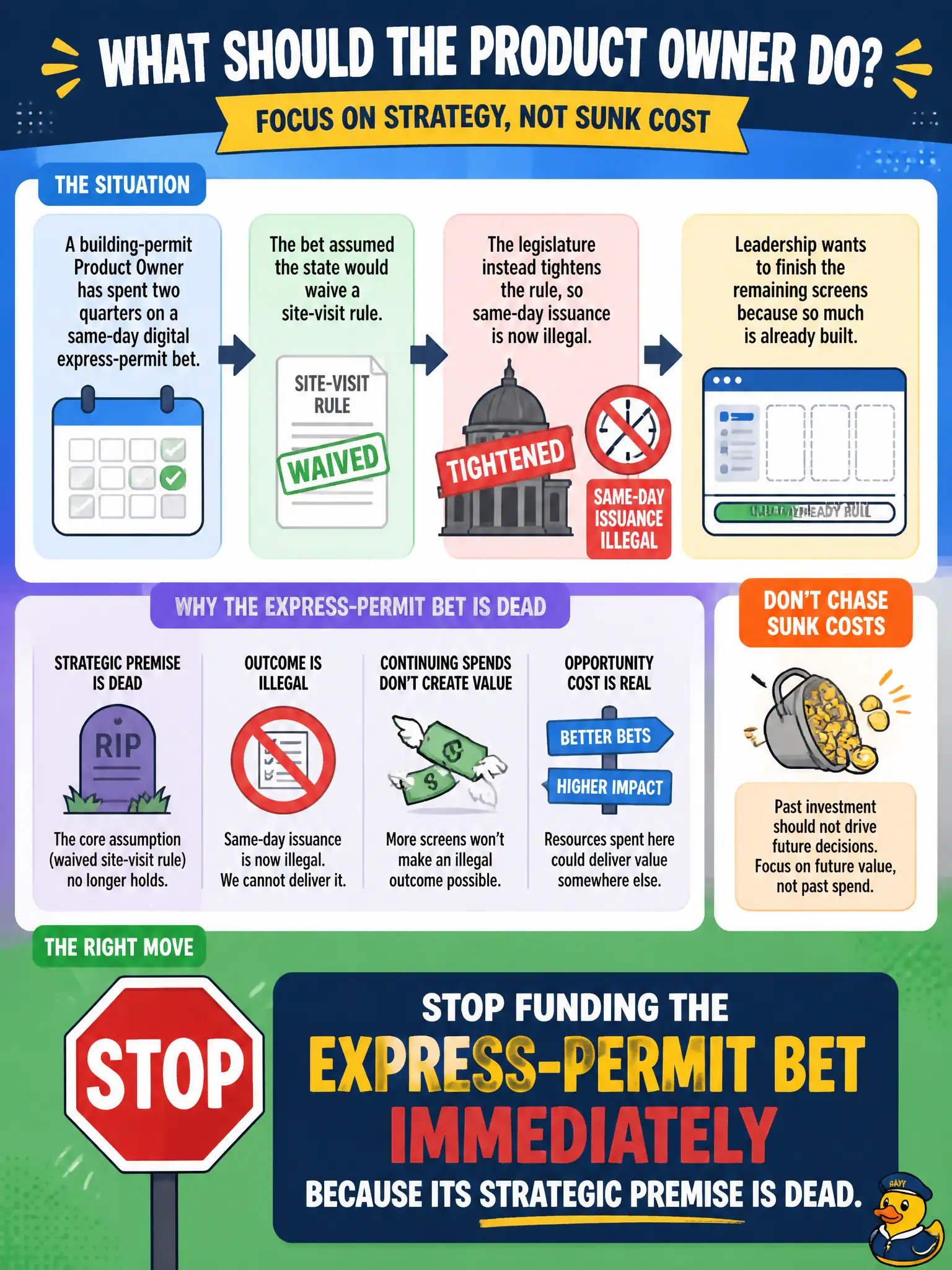
A building-permit Product Owner has spent two quarters on a same-day digital express-permit bet that assumed the state would waive a site-visit rule. The legislature instead tightens the rule, so same-day issuance is now illegal. Leadership wants to finish the remaining screens because so much is already built. What should the Product Owner do?
Select an answer to reveal the explanation.
Short Explanation
If the city just banned the shortcut you were paving, keep pouring asphalt is just pride. Sunk cost is not a Product Goal. When the law kills the bet, stop the spend and put the team on something that can still create value.
Full Explanation
When a strategic premise dies, continuing the bet to honor sunk cost is not Product Ownership. After two quarters on a same-day digital express-permit bet that assumed a state site-visit waiver—and the legislature instead tightens the rule so same-day issuance is illegal—leadership wanting to finish remaining screens because so much is already built is classic sunk-cost fallacy. The Product Owner should stop funding the express-permit bet immediately. Finishing screens so the sunk investment produces a council demo maximizes unused inventory. Relabeling unfinished screens as a Sprint Goal so the team does not lose velocity corrupts the Sprint Goal concept. Asking Legal to draft a local exception so the original roadmap stays intact may be advocacy, but it is not a reason to keep building an illegal pathway while waiting. Exam caveat: salvage useful components into a new legal bet only after reframing outcomes; do not complete the dead bet for its own sake. Operational check: cancel remaining express-permit items, communicate the premise failure, reorder toward compliant cycle-time improvements, and inspect residual risk of illegal same-day promises in resident communications. Preserve a single ordered Product Backlog so municipal stakeholders can inspect opportunity cost without shadow lists or vanity launch calendars.