
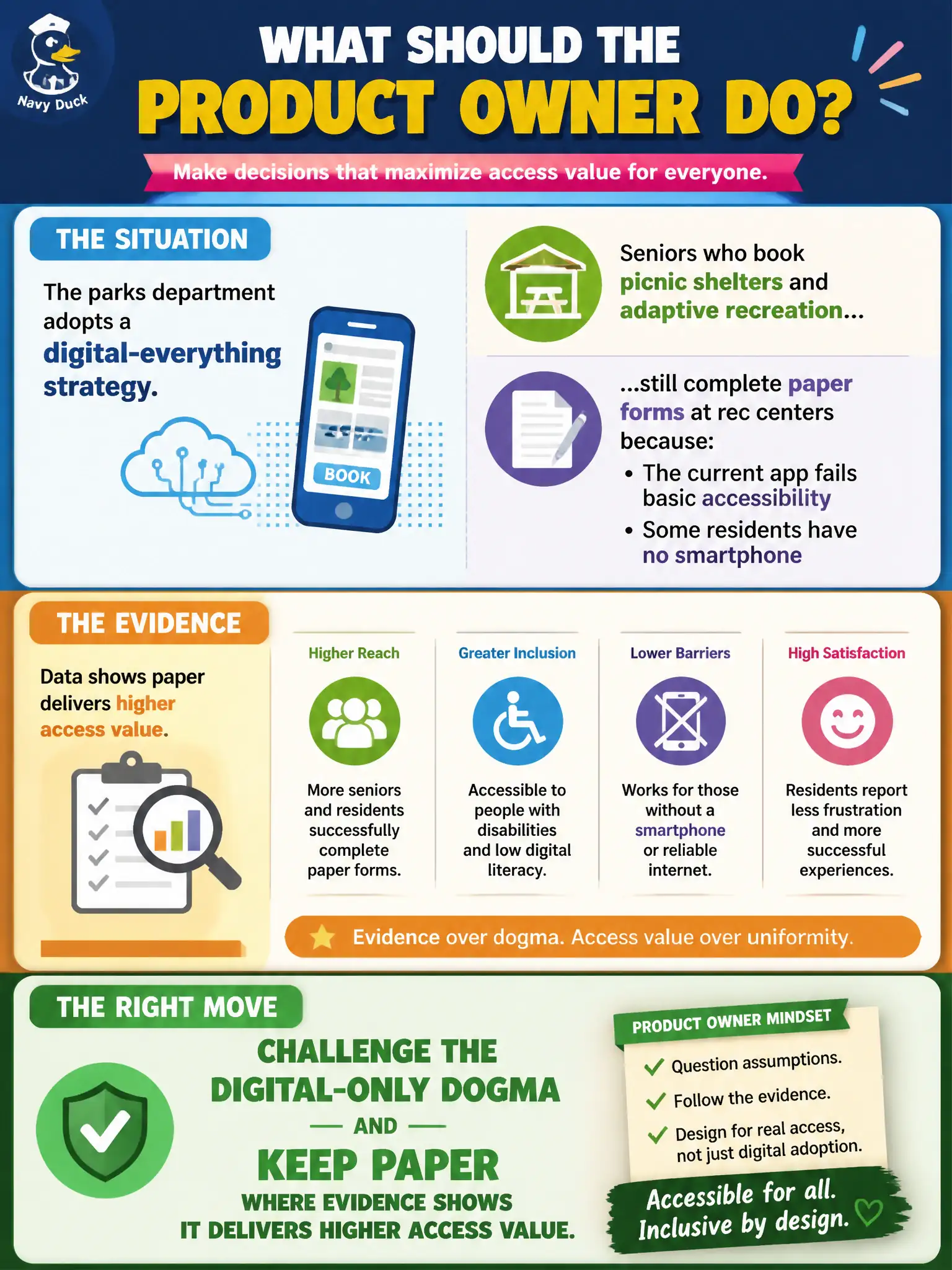
The parks department adopts a digital-everything strategy. Seniors who book picnic shelters and adaptive recreation still complete paper forms at rec centers because the current app fails basic accessibility and some residents have no smartphone. What should the Product Owner do?
Select an answer to reveal the explanation.
Short Explanation
Strategy is supposed to serve real people, not a slogan. If the picnic-shelter form on paper is the only way a grandparent can book a birthday party, ripping it out to look digital is the opposite of value. Challenge the dogma when the evidence says a channel still earns its keep.
Full Explanation
Digital-everything dogma can reduce access value for residents the city must still serve. When parks adopts a digital-everything strategy yet seniors booking picnic shelters and adaptive recreation still complete paper forms because the app fails accessibility and some residents lack smartphones, the Product Owner should challenge digital-only dogma and keep paper where evidence shows higher access value. Forcing every paper form offline immediately so the strategy poster stays consistent sacrifices inclusion for consistency. Hiding the paper path from metrics so digital-adoption OKRs look green falsifies empiricism. Handing the paper process to a separate waterfall team so Scrum stays digital-only creates a dual product reality and hides opportunity cost. Exam caveat: improving digital accessibility remains important; until it works, denying paper can destroy civic value. Operational check: measure completion and equity across paper and digital paths, order accessibility fixes on the Product Backlog, retain paper where needed, and refuse OKR gaming that erases non-digital residents from parks services. Preserve a single ordered Product Backlog so municipal stakeholders can inspect opportunity cost without shadow lists or vanity launch calendars.