
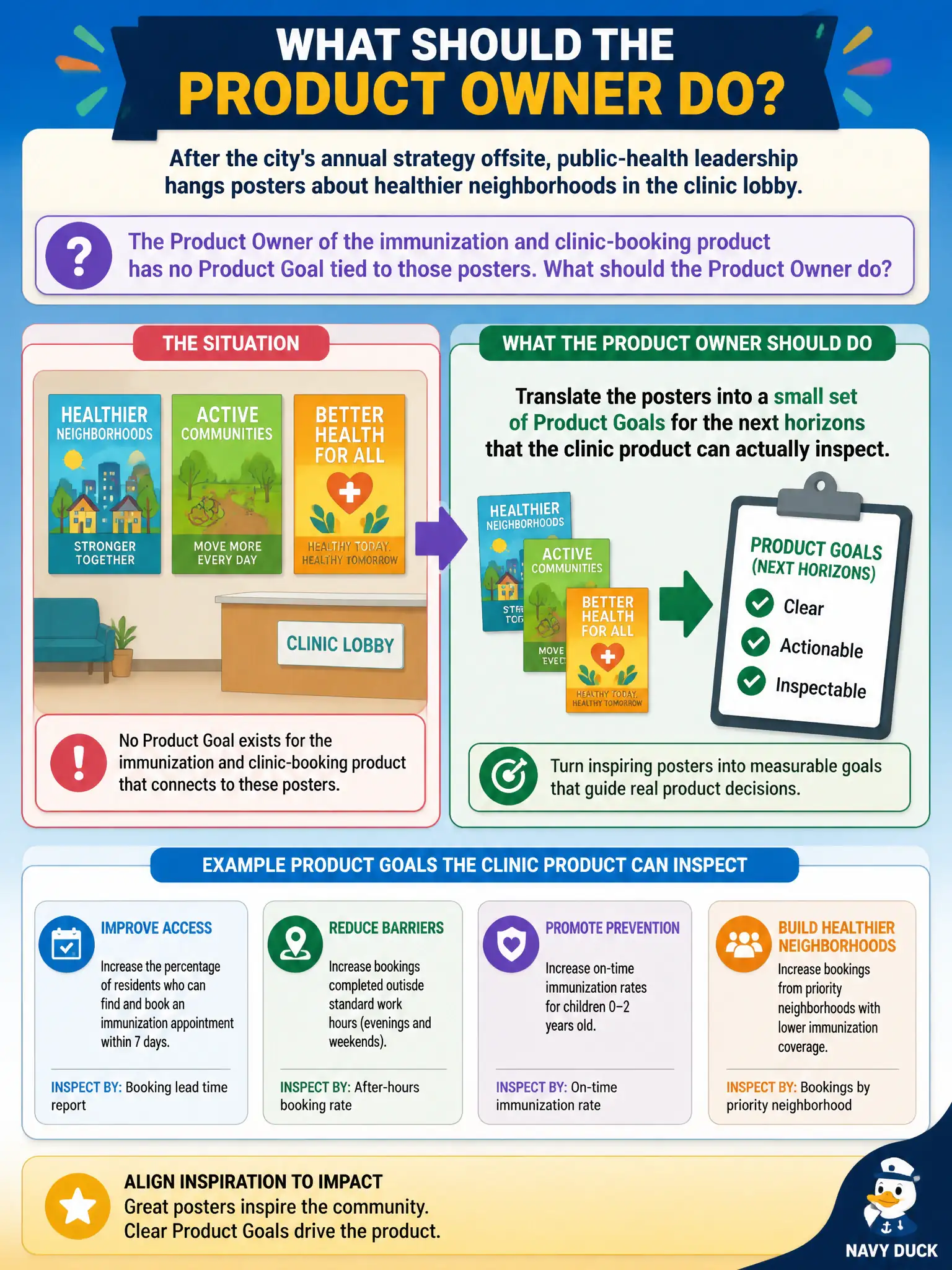
After the city's annual strategy offsite, public-health leadership hangs posters about healthier neighborhoods in the clinic lobby. The Product Owner of the immunization and clinic-booking product has no Product Goal tied to those posters. What should the Product Owner do?
Select an answer to reveal the explanation.
Short Explanation
Posters are the pep rally; Product Goals are the play the team can actually run. Healthier neighborhoods is a vibe until someone turns it into a goal the clinic product can chase and inspect. Strategy that never becomes a Product Goal just stays on the wall.
Full Explanation
Posters are not Product Goals. After an annual strategy offsite hangs healthier-neighborhood slogans in the clinic lobby while the immunization and clinic-booking Product Owner has no Product Goal tied to them, the Product Owner should translate strategy into a small set of Product Goals for the next horizons that the clinic product can actually inspect. Framing the posters themselves as the Product Goal so Sprint Planning can start immediately leaves the Scrum Team without a forecastable commitment. Converting each slogan into a fixed year-long release plan of features invents waterfall scope from marketing language. Leaving strategy with the offsite and keeping the Product Backlog as a queue of clinic-staff requests severs the product from organizational intent. Exam caveat: Product Goals are intermediate commitments toward strategy; they must be achievable and inspectable by the product, not copies of every poster phrase. Operational check: draft one or few Product Goals linking booking and immunization outcomes to healthier-neighborhood strategy, order the backlog to serve them, show Goals in Planning and Review, and inspect clinic measures that evidence progress. Preserve a single ordered Product Backlog so municipal stakeholders can inspect opportunity cost without shadow lists or vanity launch calendars.