
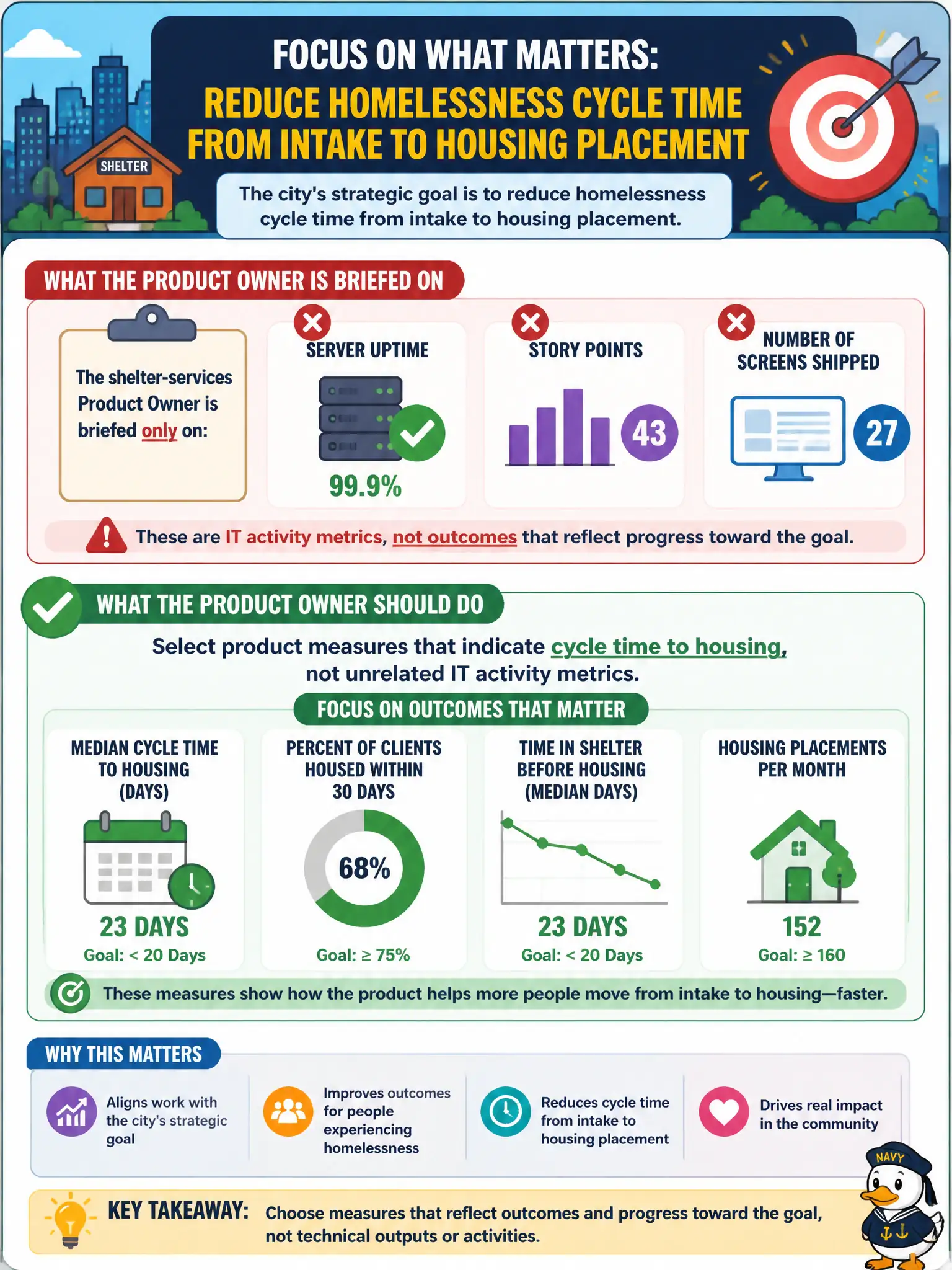
The city's strategic goal is to reduce homelessness cycle time from intake to housing placement. The shelter-services Product Owner is briefed only on server uptime, story points, and number of screens shipped. What should the Product Owner do?
Select an answer to reveal the explanation.
Short Explanation
Uptime and story points do not tell you if someone got housed faster. If the city goal is shorter time from intake to a roof, measure that journey. Shipping extra screens is busywork unless the wait actually shrinks.
Full Explanation
Product measures must indicate progress toward strategic outcomes, not unrelated IT activity. When the city’s goal is reducing homelessness cycle time from intake to housing placement yet the shelter-services Product Owner is briefed only on server uptime, story points, and screens shipped, the Product Owner should select measures that indicate cycle time to housing. Treating story points as the strategy metric because they are already in the tracker confuses effort with outcomes for people seeking placement. Optimizing uptime first on the assumption cycle time will improve automatically elevates a hygiene factor over the civic outcome. Reporting screens shipped to council because output is easier to audit than outcomes invites vanity reporting. Exam caveat: uptime and delivery health matter operationally, but they are not substitutes for the strategic cycle-time measure on PSPO II. Operational check: instrument intake-to-placement time, order Product Backlog items expected to move that measure, brief leadership with outcome trends beside necessary operational metrics, and inspect whether subsequent Increments shorten time to housing. Preserve a single ordered Product Backlog so municipal stakeholders can inspect opportunity cost without shadow lists or vanity launch calendars.