
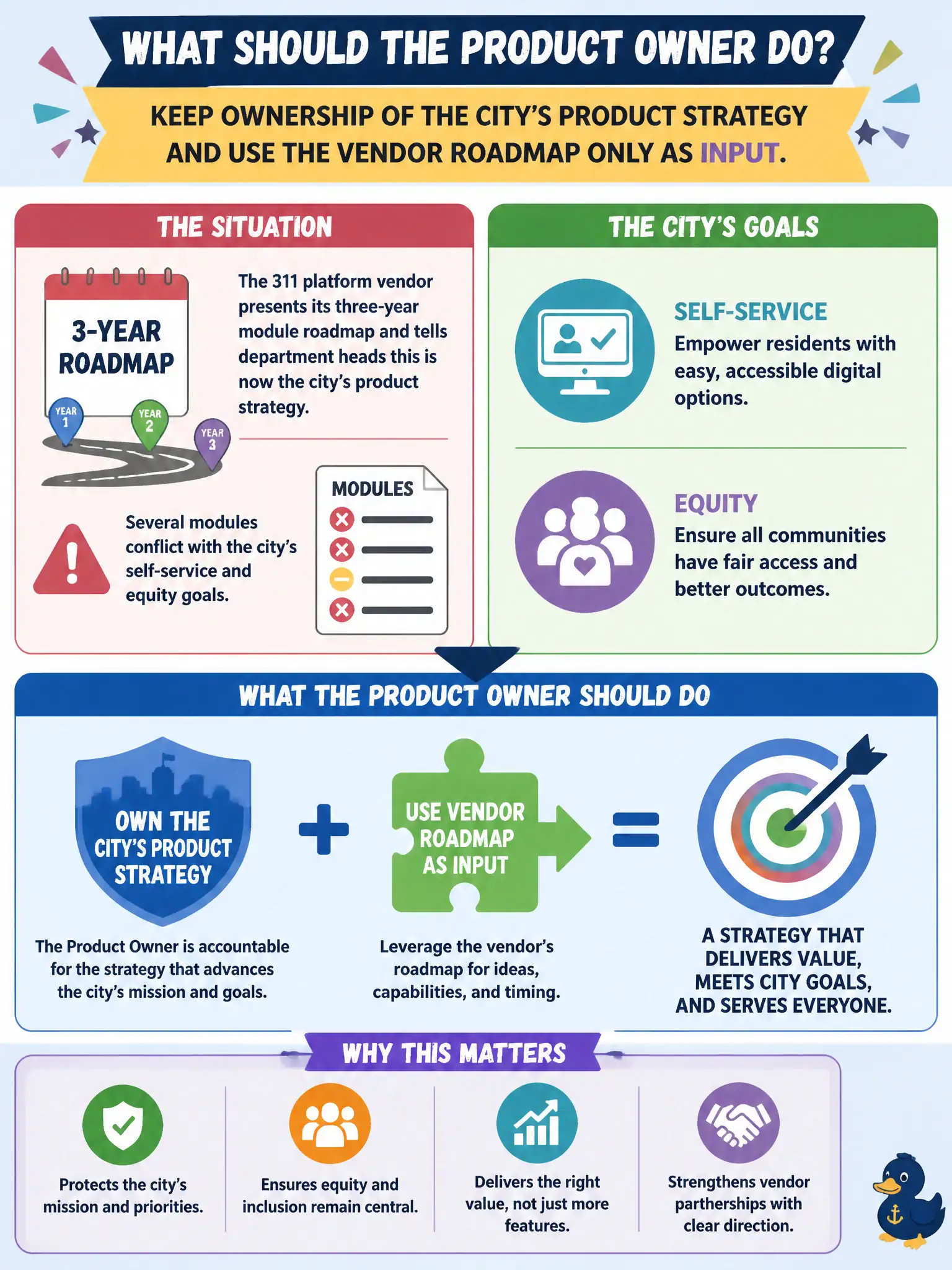
The 311 platform vendor presents its three-year module roadmap and tells department heads this is now the city's product strategy. Several modules conflict with the city's self-service and equity goals. What should the Product Owner do?
Select an answer to reveal the explanation.
Short Explanation
A vendor catalog is a supply closet, not city hall's strategy. 311 modules can be useful ingredients; they do not get to set self-service or equity goals. Keep the strategy hat on the Product Owner and treat the roadmap as one input.
Full Explanation
Vendors supply capabilities; the city owns product strategy. When the 311 platform vendor presents its three-year module roadmap and tells department heads this is now the city’s product strategy—despite modules that conflict with self-service and equity goals—the Product Owner must keep ownership of strategy and treat the vendor roadmap only as input. Adopting the vendor roadmap as strategy so the contract stays friendly subordinates resident outcomes to a sales plan. Letting each department pick modules independently without a city strategy recreates local optimization. Freezing the Product Backlog until the vendor’s next conference keynote delays empiricism. Exam caveat: useful vendor modules can still be ordered when they advance city goals; usefulness is judged by the Product Owner against strategy, not by the vendor’s slide order. Operational check: map vendor modules to self-service and equity outcomes, accept or defer modules on that basis, keep a city-owned Product Goal and backlog order, and refuse to let the contract roadmap replace Sprint Review evidence. Preserve a single ordered Product Backlog so municipal stakeholders can inspect opportunity cost without shadow lists or vanity launch calendars.