
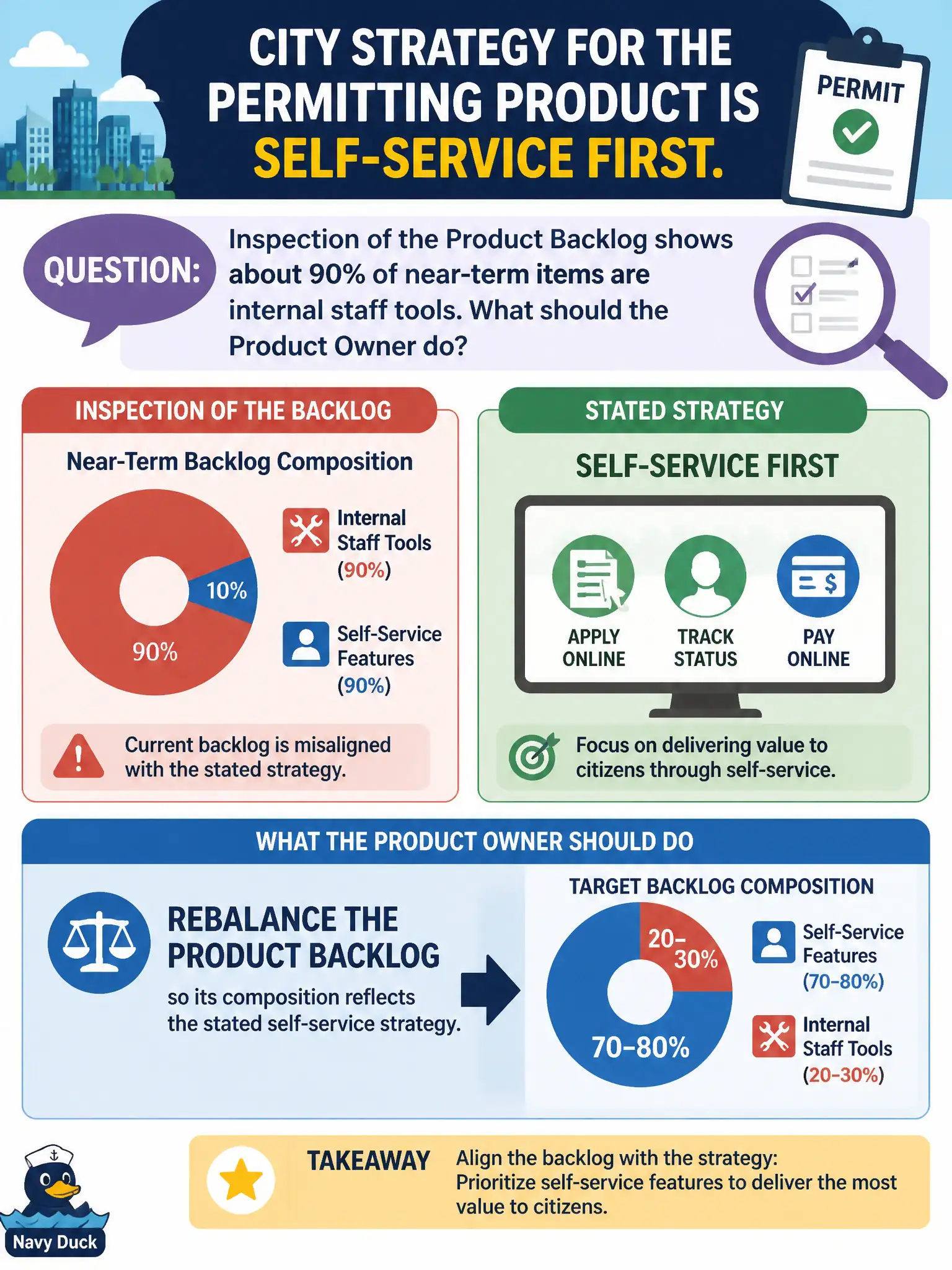
City strategy for the permitting product is self-service first. Inspection of the Product Backlog shows about 90% of near-term items are internal staff tools. What should the Product Owner do?
Select an answer to reveal the explanation.
Short Explanation
If the strategy says residents go first, a backlog of clerk screens is a bait-and-switch. Staff tools can matter, but 90% inside baseball is not self-service. Reorder so the mix matches the city's actual bet.
Full Explanation
Product Backlog composition should reflect stated strategy. When city strategy for the permitting product is self-service first yet about ninety percent of near-term items are internal staff tools, the Product Owner should rebalance the backlog so composition matches the self-service intent. Keeping the staff-tool mix because employees are easier to interview than residents optimizes for convenience of discovery, not strategy. Relabeling staff tools as self-service enablement without changing order is semantic theater. Asking Human Resources to freeze resident-facing work until staff are fully tooled inverts the strategy. Exam caveat: some staff tooling genuinely enables self-service; those items should be ordered for that enabling outcome—not used as a blanket excuse for an internal-only backlog. Operational check: audit near-term items against self-service outcomes, raise resident-facing and true enablement work, demote pure internal convenience, and inspect the mix each Sprint Review until composition tracks strategy. Count near-term items by strategy alignment each month until self-service composition is visible without relabeling staff convenience work. Re-validate the decision after the next Sprint Review using outcome evidence rather than output counts alone.