
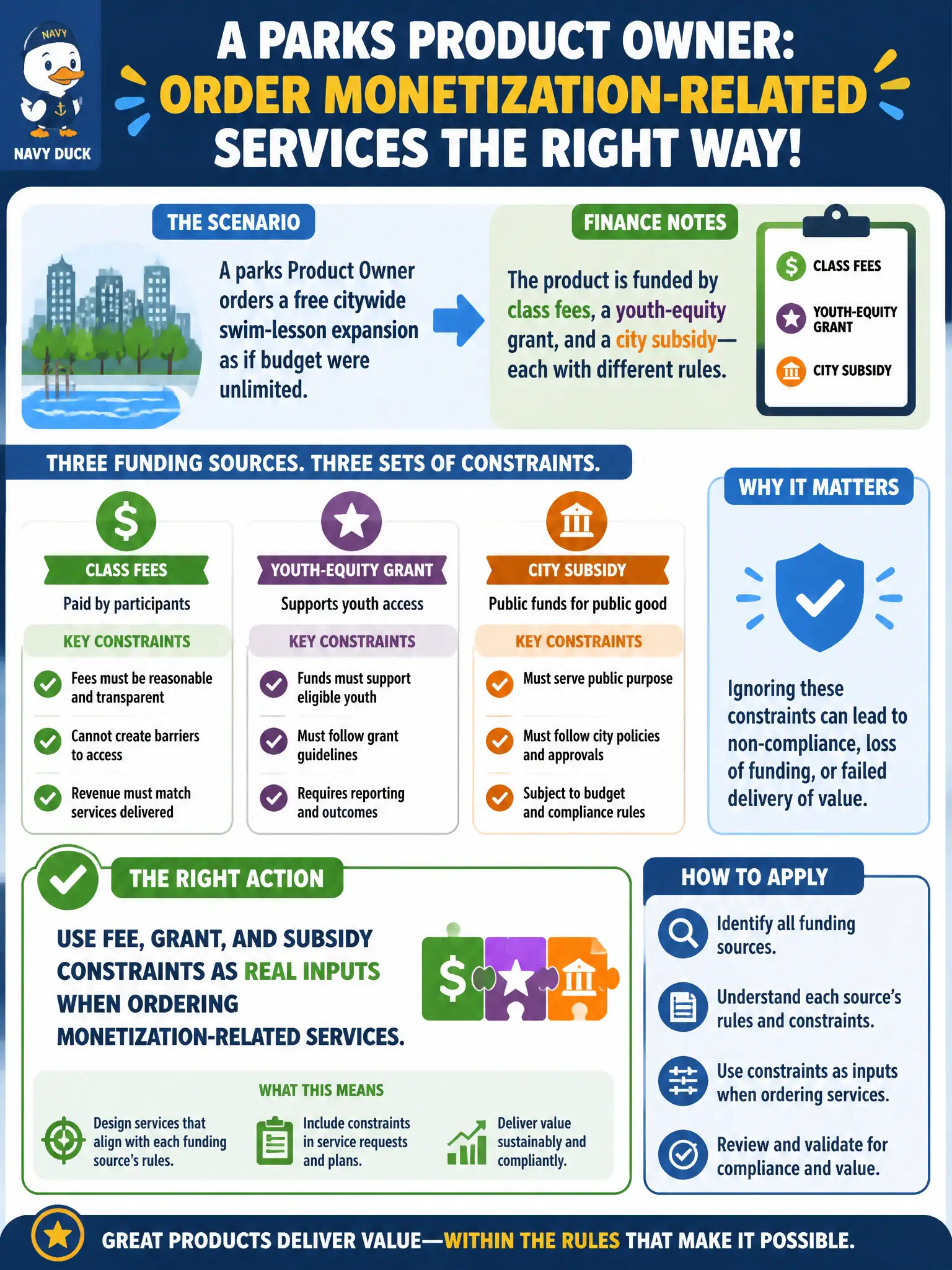
A parks Product Owner orders a free citywide swim-lesson expansion as if budget were unlimited. Finance notes the product is funded by class fees, a youth-equity grant, and a city subsidy—each with different rules. What should the Product Owner do?
Select an answer to reveal the explanation.
Short Explanation
Free swim for everyone is a lovely poster until the grant, the fees, and the subsidy disagree. Money rules are part of the product, not a scolding from Finance after the fact. Order lessons in a way those three pipes can actually pay for.
Full Explanation
Funding constraints are real inputs to Product Backlog order, especially for monetized civic services. When a parks Product Owner orders a free citywide swim-lesson expansion as if budget were unlimited while Finance notes funding from class fees, a youth-equity grant, and a city subsidy—each with different rules—the Product Owner should use those constraints when ordering monetization-related services. Ignoring funding rules because order is only about user delight treats constraints as optional and risks noncompliant spend. Maximizing fee revenue first and treating the grant as optional color commentary may violate equity-grant intent and distort who the product serves. Pausing the Product Backlog until a new tax levy replaces all three sources avoids stewardship inside real constraints. Exam caveat: Product Owners maximize value within constraints; they do not pretend money rules are irrelevant or absolute substitutes for outcomes. Operational check: map which swim-lesson slices each funding source may support, order expansions that satisfy rules and equity outcomes, document the funding fit with Finance, and inspect participation and compliance after the next Increment. Map each swim-lesson expansion slice to the fee, grant, or subsidy rule it satisfies before claiming unlimited free citywide capacity.