
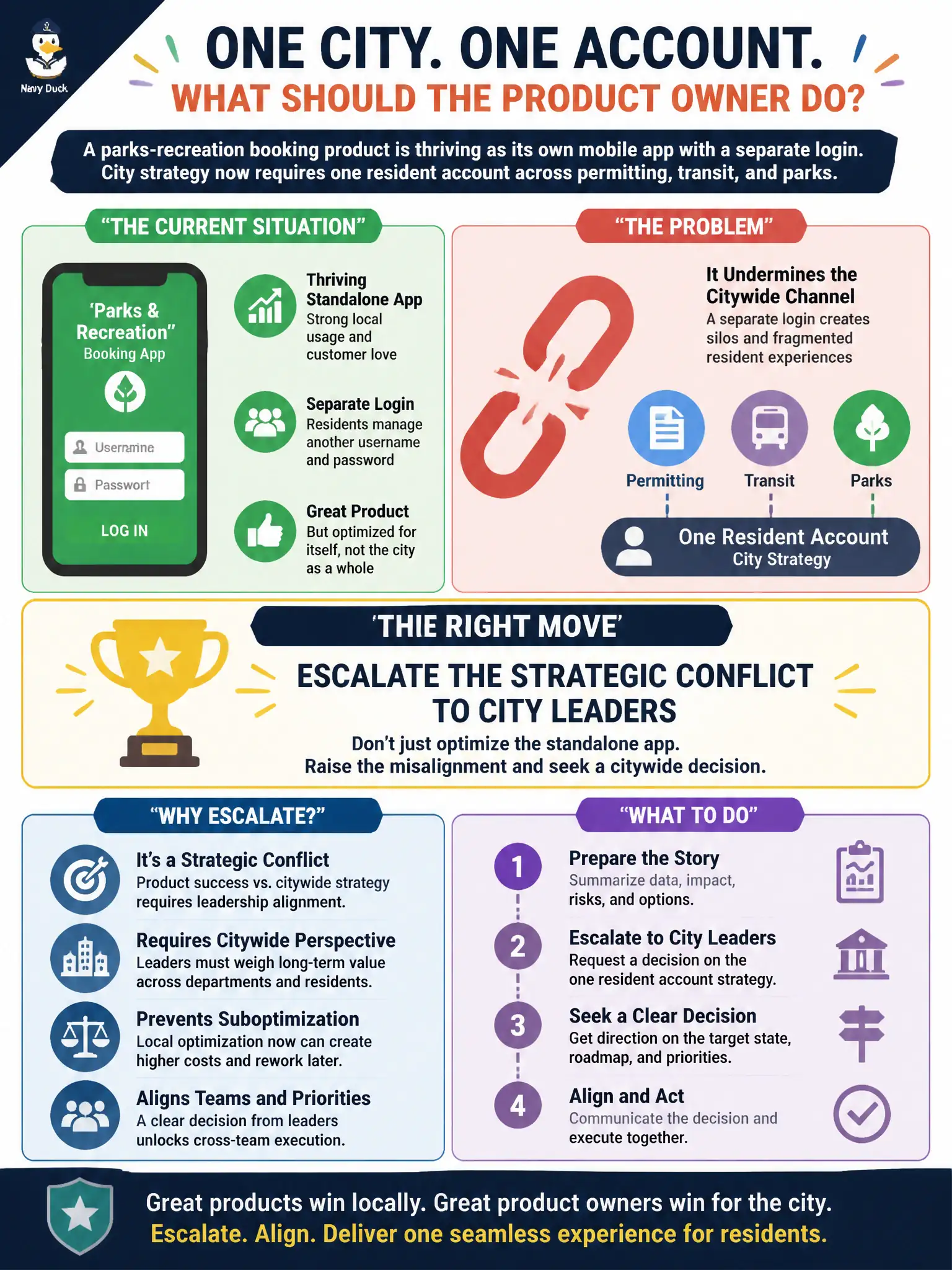
A parks-recreation booking product is thriving as its own mobile app with a separate login. City strategy now requires one resident account across permitting, transit, and parks. Local usage looks strong, but the standalone login undermines the citywide channel. What should the Product Owner do?
Select an answer to reveal the explanation.
Short Explanation
A packed local diner is still a problem if the city is trying to run one kitchen. Parks bookings can look like a win while they wreck the one-account strategy. Surface the conflict upstairs instead of optimizing the side door.
Full Explanation
Local optimization can conflict with citywide strategy; advanced Product Ownership escalates that conflict rather than pretending it does not exist. When a parks-recreation booking product thrives as its own mobile app with a separate login while city strategy requires one resident account across permitting, transit, and parks, the Product Owner should escalate the strategic conflict to city leaders instead of optimizing the standalone app alone. Maximizing local app downloads as the only duty ignores the citywide channel strategy. Quietly ignoring citywide account work until the parks app saturates the market is local optimization with delay. Handing the product to the identity vendor so the Product Owner can stay local abdicates product accountability. Exam caveat: a Product Owner still maximizes their product’s value, but value includes fit to organizational strategy—not only local vanity metrics. Operational check: document the tension between local login success and the unified resident account, escalate options and trade-offs to city leaders, order backlog work consistent with the decided strategy, and inspect cross-service sign-in completion for park users. Local parks metrics remain useful, yet citywide identity strategy may correctly constrain how the booking product evolves its login path.