
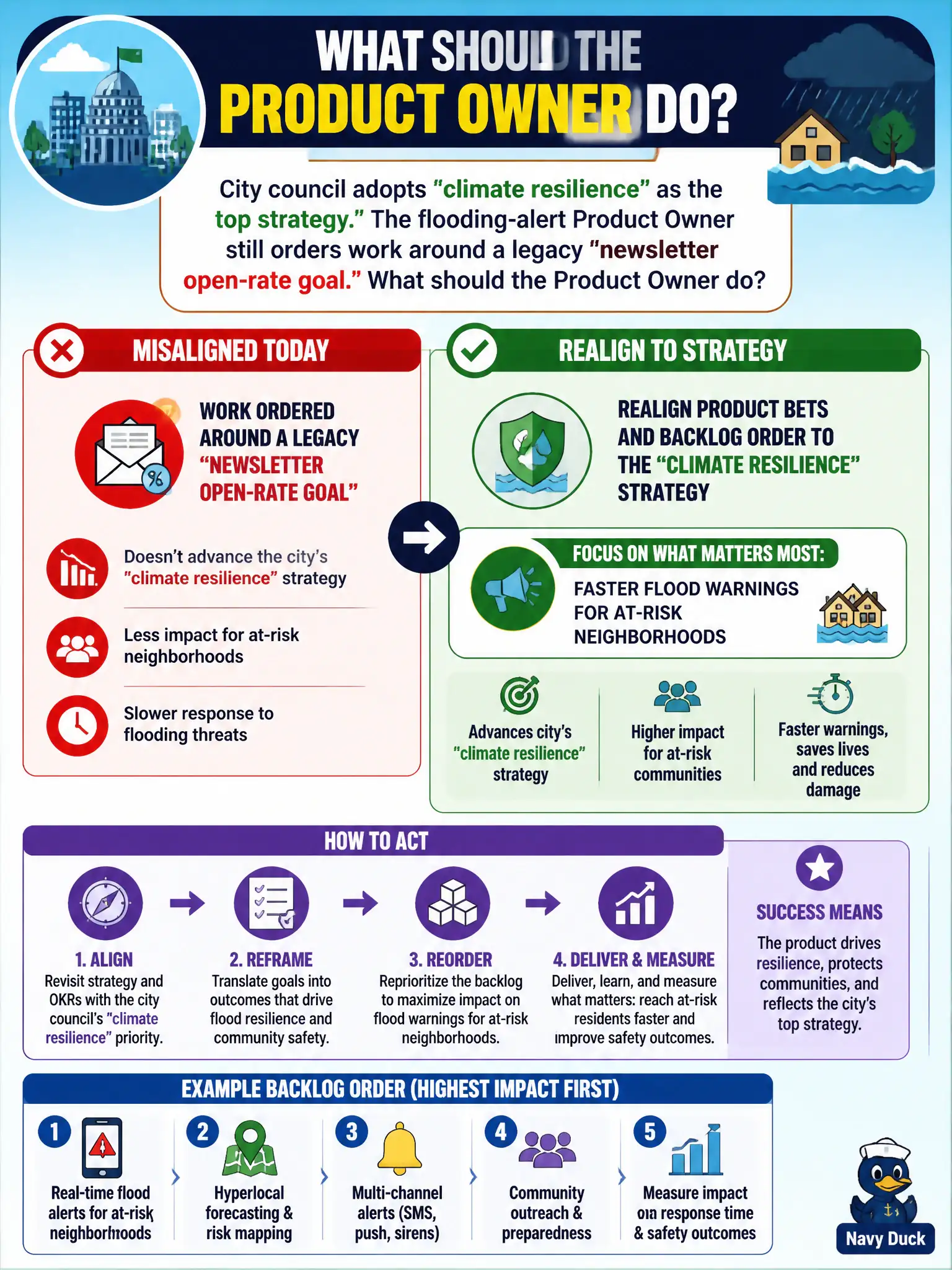
City council adopts climate resilience as the top strategy. The flooding-alert Product Owner still orders work around a legacy newsletter open-rate goal. What should the Product Owner do?
Select an answer to reveal the explanation.
Short Explanation
If city hall just said climate resilience is the main course, do not keep plating newsletter garnish. Flood warnings that reach the neighborhoods that flood are the strategy now. Open rates on an old blast are a leftover KPI, not a compass.
Full Explanation
Product strategy and backlog order should track the organization’s strategic intent. When city council adopts climate resilience as the top strategy yet the flooding-alert Product Owner still orders work around a legacy newsletter open-rate goal, the Product Owner should realign bets toward resilience outcomes such as faster flood warnings for at-risk neighborhoods. Keeping the newsletter metric only because it is already instrumented elevates convenient measurement over strategy. Waiting for a new five-year IT master plan before changing any Product Backlog item delays adaptation. Splitting into a climate team and a newsletter team with two Product Owners may fragment one product without resolving misaligned goals. Exam caveat: legacy metrics can remain secondary indicators, but they should not dominate order when city strategy has clearly shifted. Operational check: redefine success measures around warning lead time and neighborhood reach, reorder the Product Backlog accordingly, explain the shift in Sprint Review, and inspect whether at-risk areas receive faster actionable alerts after subsequent Increments. Open rates on a legacy newsletter are a weak proxy when climate resilience demands faster, targeted flood warnings for vulnerable blocks.