
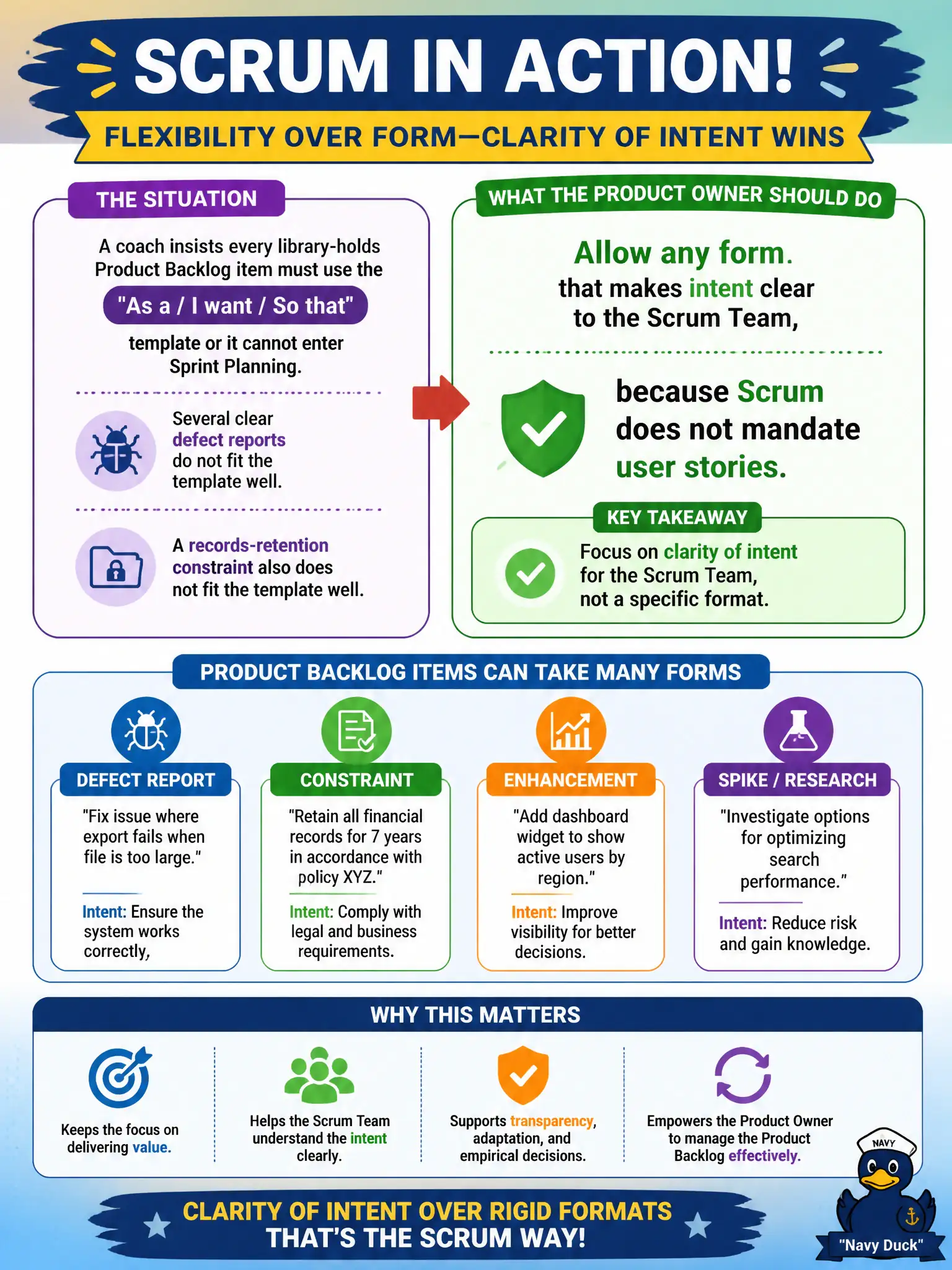
A coach insists every library-holds Product Backlog item must use the As a / I want / So that template or it cannot enter Sprint Planning. Several clear defect reports and a records-retention constraint do not fit the template well. What should the Product Owner do?
Select an answer to reveal the explanation.
Short Explanation
You don't need every library-holds item to fit the three-part user-story template. If a defect or retention constraint is already clear, keep it in a form the Scrum Team understands. Scrum cares about intent, not format theater.
Full Explanation
Scrum does not mandate the user-story template. When a coach insists every library-holds Product Backlog item must use the three-part user-story template or it cannot enter Sprint Planning—even though clear defect reports and a records-retention constraint do not fit well—the Product Owner should allow any form that makes intent clear to the Scrum Team. Rejecting any item that is not written as a user story, including defects, elevates format over transparency and value. Keeping defects and retention constraints out of the backlog until they fit the story template delays needed work and hides real constraints. Hiring an analyst to rewrite every defect as three user-story sentences wastes capacity on ceremony. Adopting the template as a Definition of Ready gate that blocks all other formats turns a helpful pattern into a waterfall choke point. Exam caveat: user stories can be useful for functional intent; they are not a Scrum rule and must not exclude non-story work that still serves patrons and compliance. Operational check: accept well-understood defects and constraints in clear language, keep refinement focused on meaning and readiness, demote template policing, and confirm Sprint Planning can forecast library-holds work without format theater. Clarity for the Scrum Team beats template compliance when library defects and retention constraints must still be ordered and Done.