
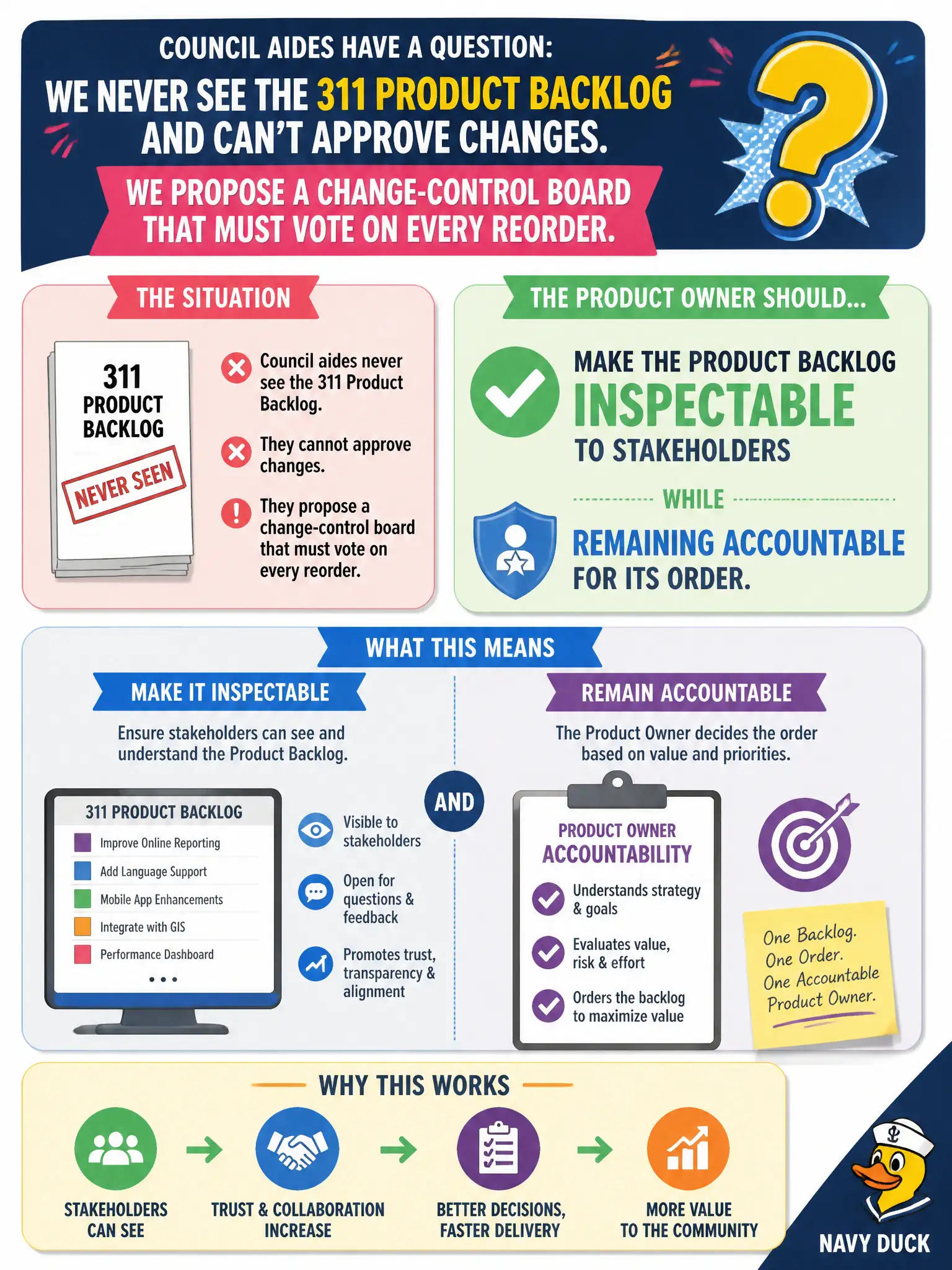
Council aides complain they never see the 311 Product Backlog and therefore cannot approve changes. They propose a change-control board that must vote on every reorder. What should the Product Owner do?
Select an answer to reveal the explanation.
Short Explanation
Transparency is a glass case, not a voting booth. Let aides see the 311 backlog so they can inspect it; do not hand them a gavel for every reorder. Two editable lists just restart the fight in PowerPoint.
Full Explanation
Stakeholders need transparency into the Product Backlog, but accountability for order stays with the Product Owner. When council aides complain they never see the 311 backlog and propose a change-control board that must vote on every reorder, the Product Owner should make the backlog inspectable while remaining accountable for its order. Hiding the backlog from aides so political pressure cannot influence order reduces transparency and breeds mistrust. Accepting the change-control board and only reordering after a recorded vote replaces empiricism with committee lag and dilutes Product Owner accountability. Duplicating the backlog into a slide deck that aides may edit independently creates a second source of truth. Exam caveat: aides can advise and escalate strategy conflicts; they should not become a mandatory vote on every tactical reorder of resident-service work. Operational check: publish a readable 311 Product Backlog with Product Goal and ordering rationale, invite aides to Sprint Review inspection, refuse vote-gated reordering, and record how evidence—not ballots—changed order after the next civic Increment. Transparency without retained ordering accountability invites politics to replace evidence on every 311 reorder.