
Weekly refinement for the city's utilities-billing product has become a round-robin of what-did-you-work-on updates. Upcoming items stay vague and too large to forecast. What should the Product Owner do?
Select an answer to reveal the explanation.
Short Explanation
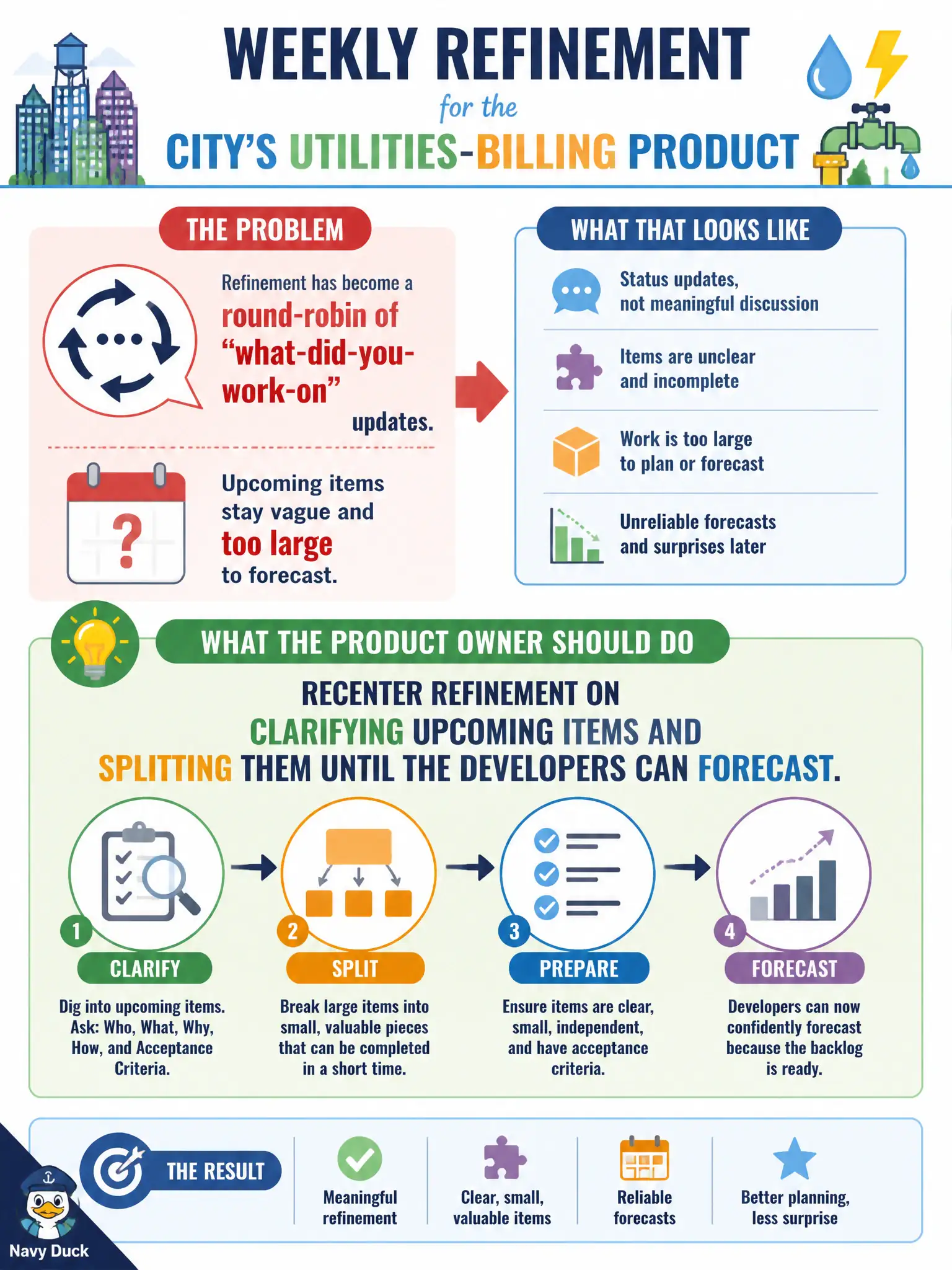
Refinement is meal prep, not a recap of last night's leftovers. If the billing team only swaps status, the next Sprint still has mystery-meat epics. Clear the items and slice them so Planning can actually cook.
Full Explanation
Refinement exists to clarify upcoming Product Backlog items until Developers can forecast—not to run status theater. When weekly refinement for the city’s utilities-billing product becomes a round-robin of what-did-you-work-on updates while upcoming items stay vague and too large, the Product Owner should recenter refinement on clarifying and splitting upcoming items until a Sprint forecast is possible. Replacing refinement with a longer Daily Scrum so status has an official home misuses both events and leaves the backlog opaque. Cancelling refinement and requiring a signed specification packet before Sprint Planning reintroduces waterfall gates. Inviting Finance to grade each status update so the meeting feels more official adds ceremony without readiness. Exam caveat: light progress context can open refinement, but the purpose remains forecastable upcoming work for billing and collection outcomes. Operational check: timebox status out of refinement, split large billing items, clarify acceptance with Developers, confirm top items are ready-enough for Planning, and measure whether Sprint forecasts stabilize for the municipal utilities product. If refinement ends without smaller, clearer billing items, the event failed regardless of how thoroughly status was reported.