
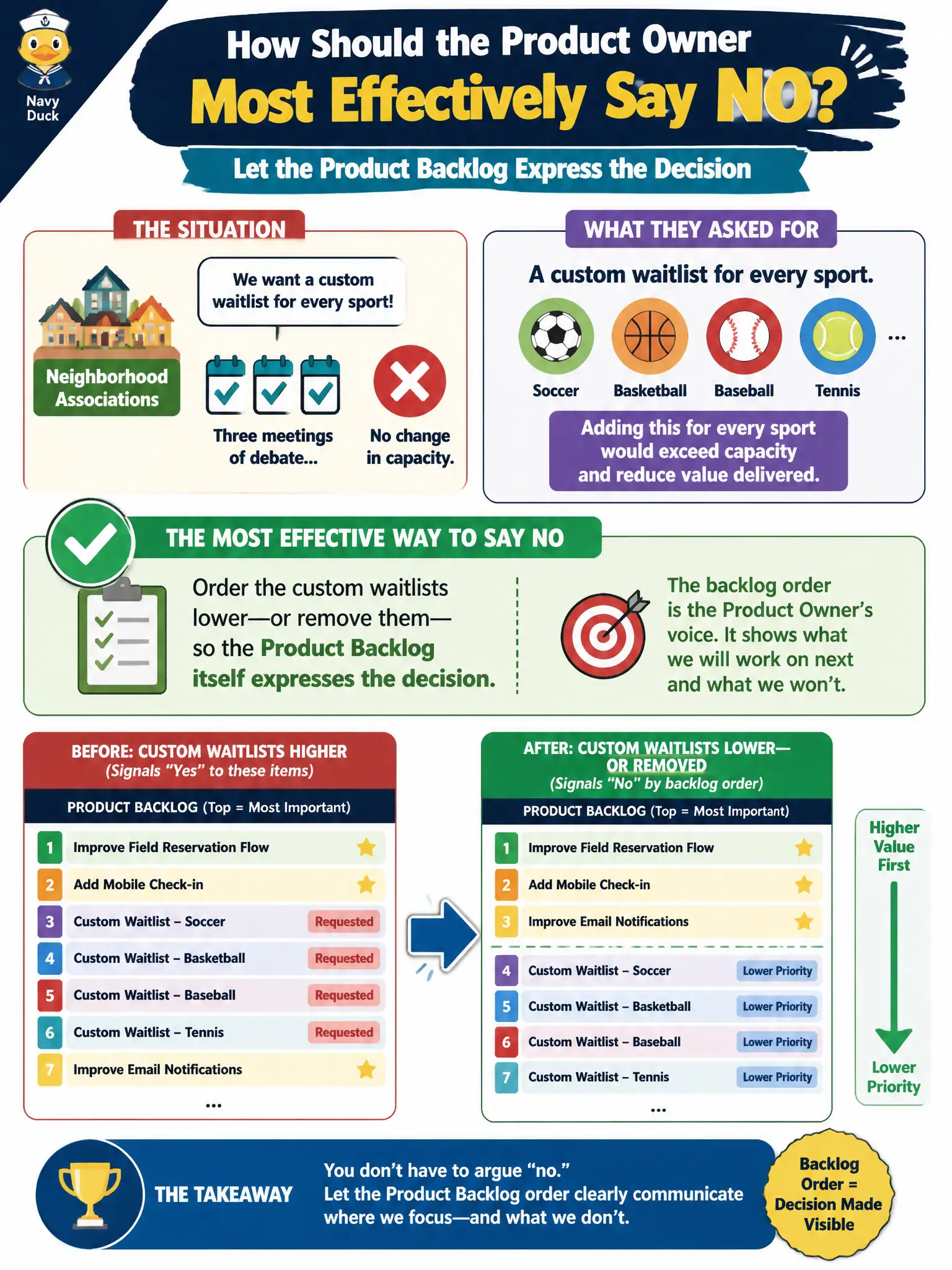
Neighborhood associations lobby the parks-reservation Product Owner to add a custom waitlist for every sport. Three meetings of debate have not changed capacity. How should the Product Owner most effectively say no?
Select an answer to reveal the explanation.
Short Explanation
Saying no is not a three-hour town hall. It is moving the waitlist down—or off—the parks backlog so capacity goes to work that actually books fields. Endless debate and shadow spreadsheets just keep the maybe alive.
Full Explanation
Saying no is expressed most clearly through Product Backlog order. When neighborhood associations lobby the parks-reservation Product Owner for a custom waitlist for every sport and debate has not changed capacity, the Product Owner should order those custom waitlists lower—or remove them—so the backlog itself expresses the decision. Keeping debate until every association signs a waiver agreeing the feature is optional substitutes politics for ordering and burns facilitation capacity. Asking the Scrum Master to run a consensus vote that binds the Product Owner misplaces accountability for maximizing value. Creating a maybe-later spreadsheet outside the Product Backlog so nobody feels refused recreates a shadow list and avoids an honest no. Exam caveat: stakeholder input remains welcome; accountability for order remains with the Product Owner even when the answer is not yes for every neighborhood. Operational check: place or remove custom waitlist items transparently, explain the capacity and Product Goal rationale in Sprint Review, invite associations to evidence that would change order, and refuse off-backlog consolation lists for the civic reservation product. Capacity that does not exist cannot be voted into existence; transparent lower order is a clearer civic no than endless facilitation.