
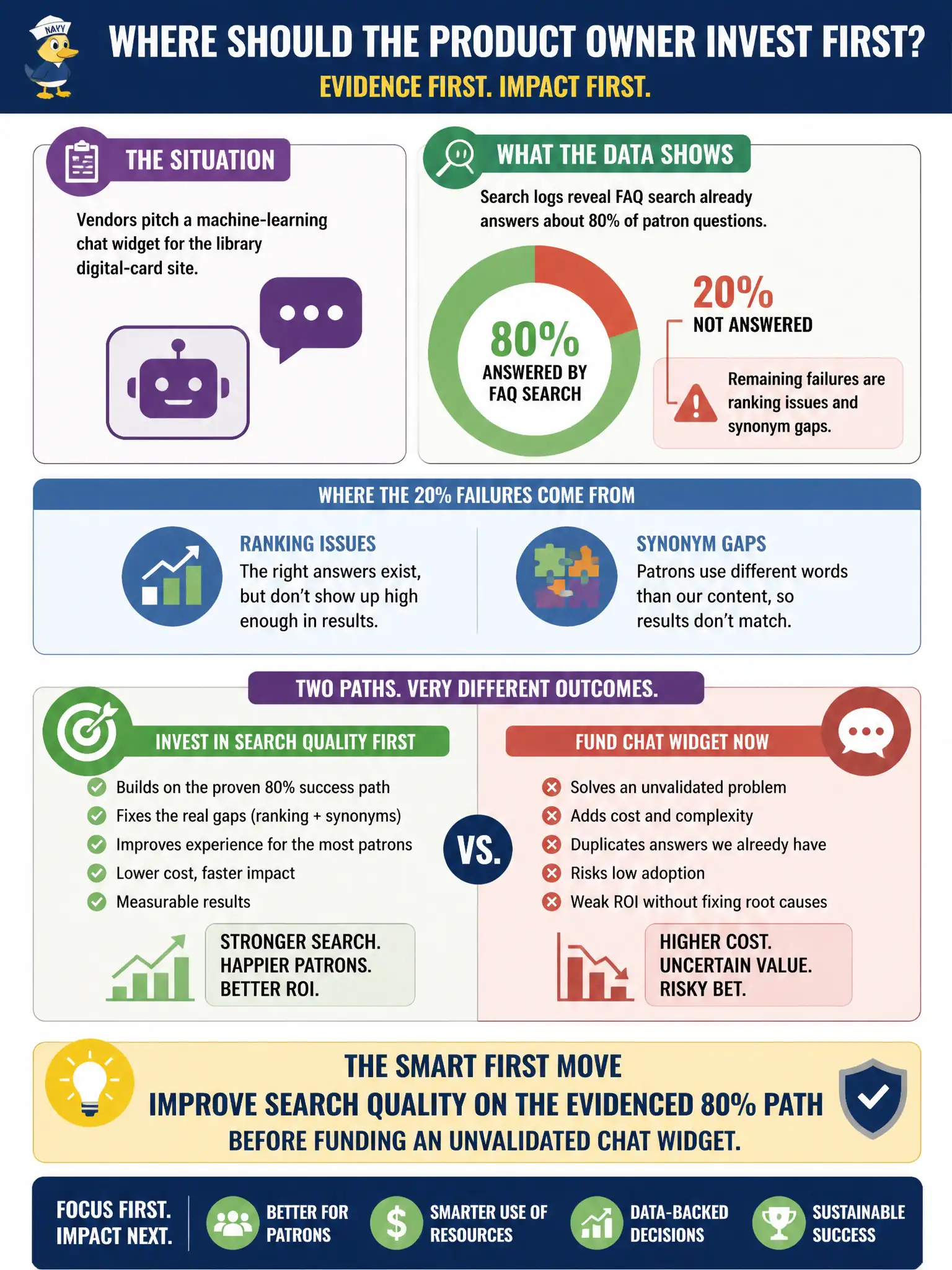
Vendors pitch a machine-learning chat widget for the library digital-card site. Search logs show FAQ search already answers about 80% of patron questions; remaining failures are ranking and synonym gaps. Where should the Product Owner invest first?
Select an answer to reveal the explanation.
Short Explanation
If the card catalog already finds most of the books, you do not bolt a talking robot on the door first. You fix the drawers that already work for four out of five patrons. Trend-chasing is fun at the vendor booth; evidenced incremental value is what the Product Owner funds.
Full Explanation
Trendy capabilities are not valuable merely because they are trendy. When vendors pitch a machine-learning chat widget for the library digital-card site and search logs show FAQ search already answers about eighty percent of patron questions—with remaining failures in ranking and synonym gaps—the higher-probability investment is improving that evidenced path before a large unvalidated bet. The Product Owner should order search-quality work first, then consider chat only against a hypothesis and measures. Buying the widget because machine learning matches the city’s innovation theme confuses theme alignment with patron outcomes. Shutting down FAQ search to force patrons onto chat destroys a working channel and biases any later comparison. Running chat and search at full scale in the same Sprint with no success measures spends capacity without learning. Exam caveat: a chat experiment can still be justified later if it targets the residual twenty percent or new audiences—but only as an evidenced bet, not a full-scale replacement. Operational check: baseline FAQ success and failure modes, ship ranking/synonym improvements, inspect patron self-service completion, and only then fund a thin chat experiment with explicit success criteria on the library Product Backlog.