
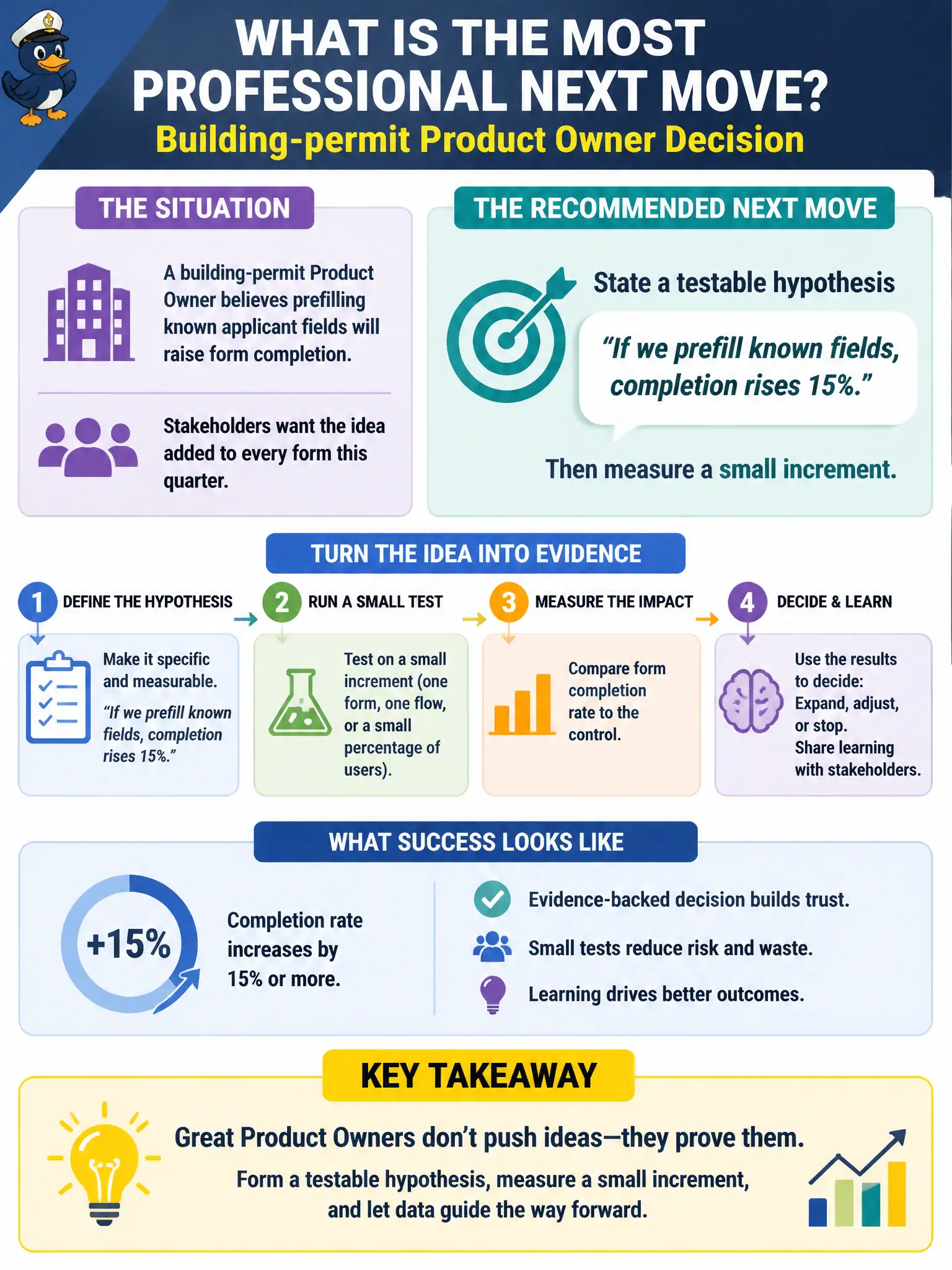
A building-permit Product Owner believes prefilling known applicant fields will raise form completion. Stakeholders want the idea added to every form this quarter. What is the most professional next move?
Select an answer to reveal the explanation.
Short Explanation
A hunch that people will finish more forms is not a plan until the bet is on the scoreboard. Name what should move, by about how much, ship a thin slice, and look. That is how value work stays honest instead of turning into a quarter-long hope.
Full Explanation
Hypothesis-driven product work states a testable relationship between a change and an outcome, then measures. When a building-permit Product Owner believes prefilling known applicant fields will raise form completion and stakeholders want every form changed this quarter, the professional next move is a small Increment with a clear success measure—such as completion rising a stated percentage—so the Product Owner can persevere or pivot. Prefilling every form immediately because writing a hypothesis would slow delivery converts an assumption into a large spend. Treating Developers’ story-point estimate for prefill as the official value score confuses effort with value. Filing the idea in the city strategic plan and waiting a year before inspecting anything is too slow for empiricism on a living permit product. Exam caveat: not every idea needs a formal experiment document, but claims about outcome lift need an inspectable measure before citywide rollout. Operational check: pick one high-volume form, define the completion metric and sample window, release the prefill Increment under the Definition of Done, compare against baseline with permit stakeholders in Sprint Review, and only then order broader rollout on the Product Backlog.