
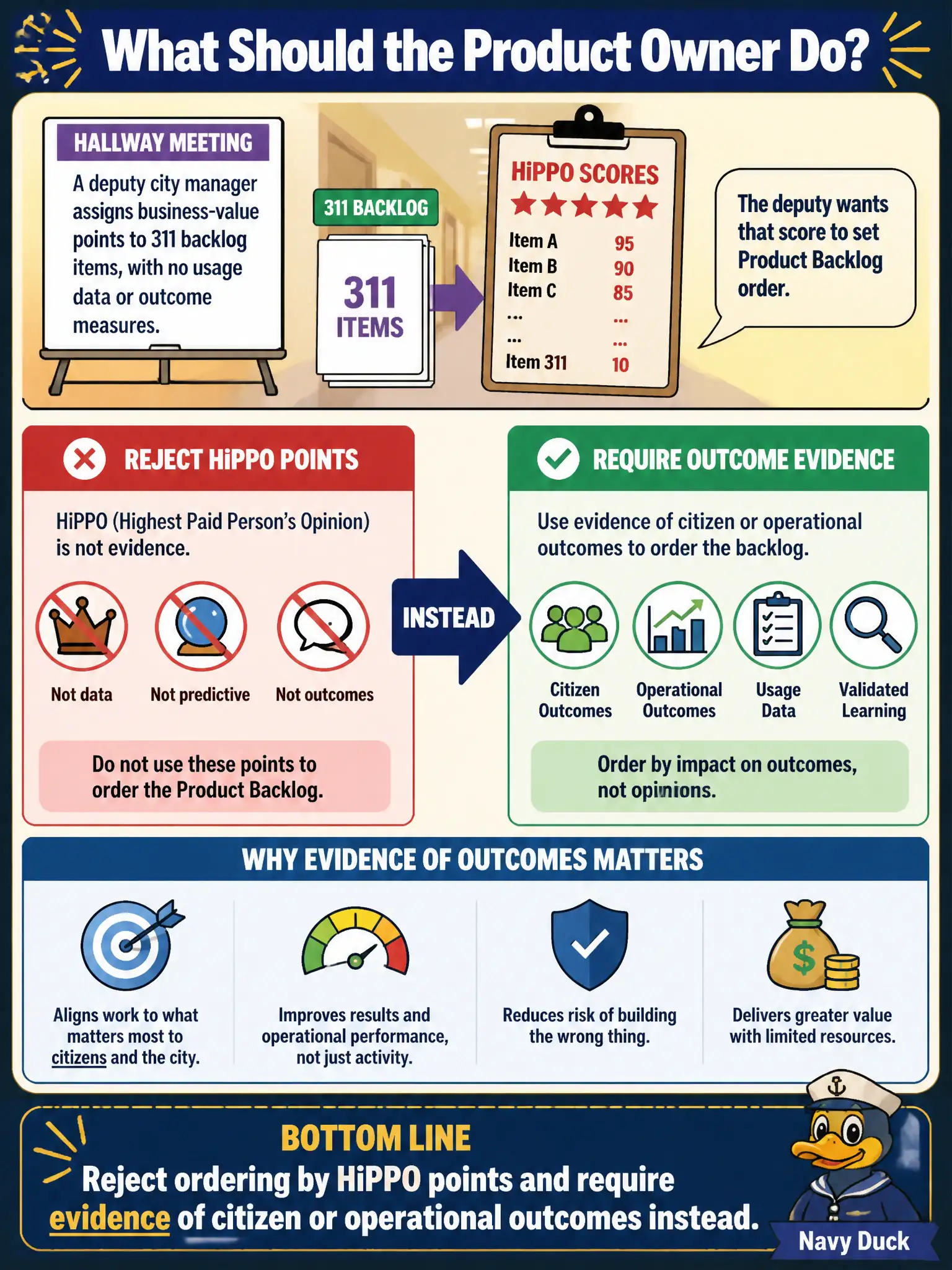
A deputy city manager assigns business-value points to 311 backlog items in a hallway meeting, with no usage data or outcome measures. The deputy wants that score to set Product Backlog order. What should the Product Owner do?
Select an answer to reveal the explanation.
Short Explanation
Points scribbled after a hallway chat are not evidence—they are a loud opinion with a number taped on. Value shows up in what 311 actually does for people, not in a deputy's gut score. The Product Owner politely declines the fake precision and goes looking for outcomes.
Full Explanation
Subjective business-value points assigned by the highest-paid opinion are a weak ordering signal compared with evidence of outcomes. When a deputy city manager scores 311 backlog items in a hallway meeting with no usage data, the Product Owner should reject ordering by those HiPPO points and require evidence of citizen or operational outcomes instead. Accountability for maximizing value and for Product Backlog order cannot be outsourced to unvalidated scores. Adopting the points immediately because a senior score is faster than gathering evidence trades speed of politics for empiricism. Converting the points into story points so Developers can plan from the deputy’s scores confuses effort estimates with value and compounds the error. Hiding the Product Backlog until the numbers are loaded into the tracking tool delays transparency without improving the signal. Exam caveat: stakeholder judgment can inform ordering when grounded in outcomes; numerical theater without evidence is not a value model. Operational check: replace hallway points with inspectable measures (repeat contacts, resolution time, equity of service), order the top 311 items against those measures, make the rationale visible to directors, and revisit order when new outcome evidence arrives rather than when titles change.