
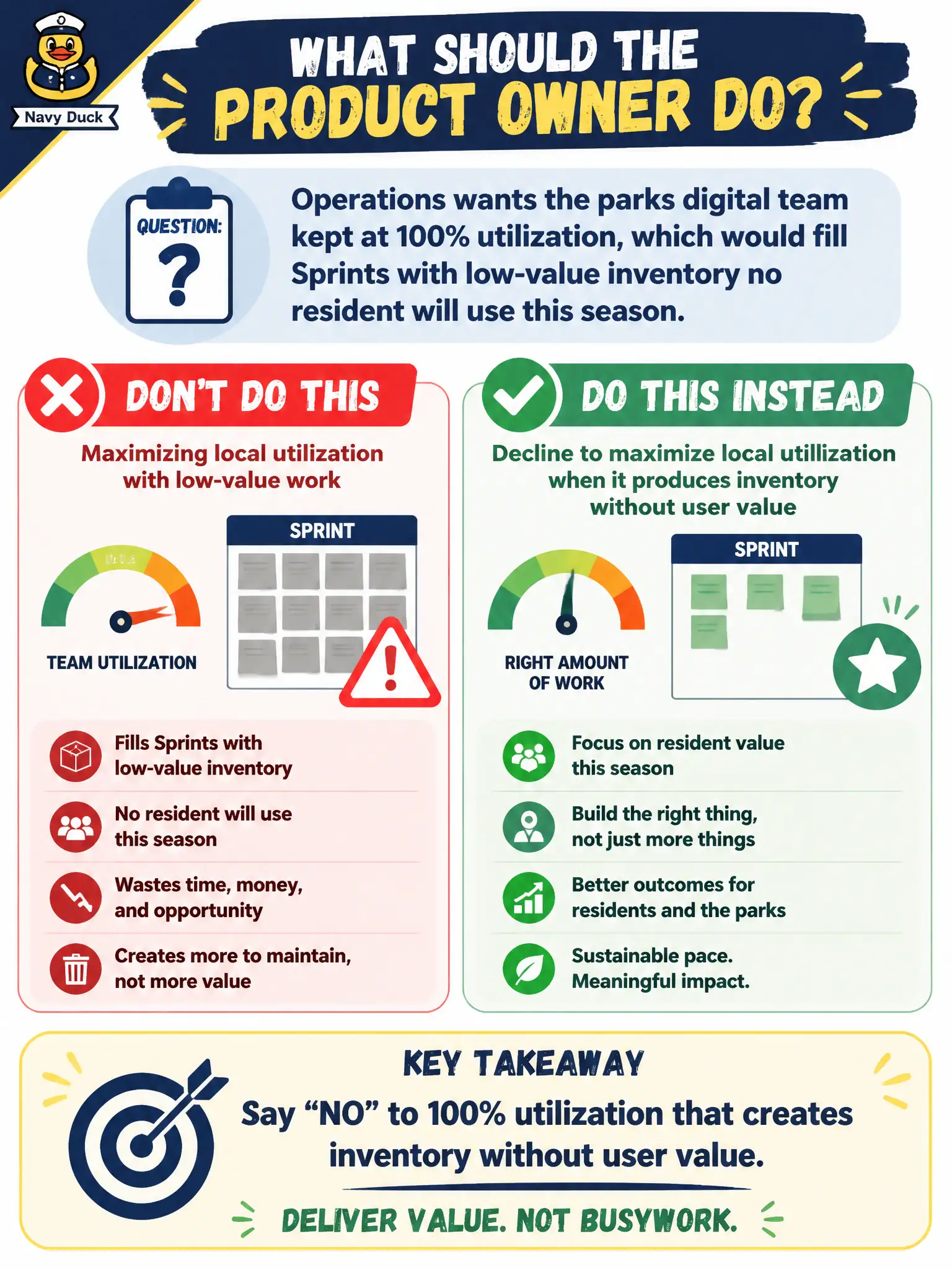
Operations wants the parks digital team kept at 100% utilization, which would fill Sprints with low-value inventory no resident will use this season. What should the Product Owner do?
Select an answer to reveal the explanation.
Short Explanation
A busy team stacking unused park-pass screens is a warehouse, not a product. Utilization is a local efficiency score. Value is a resident finishing a reservation they actually needed.
Full Explanation
Maximizing local utilization on a parks digital team often creates inventory—finished work no resident will use this season—which is the opposite of maximizing value. The Product Owner should decline utilization targets that pull low-value filler into Sprints. Accepting the target and pulling unused items to keep everyone busy produces waste dressed as productivity. Measuring value as hours booked times loaded cost is an accounting proxy, not product value. Creating a separate utilization backlog owned by operations hides busywork from stakeholders while still consuming the same capacity. Exam caveat: idle capacity can be healthier than low-value inventory when ordered work is thin. Operational check: show operations the inventory risk, keep the Product Backlog value-ordered even if that means slack, and spend spare capacity on learning or unpaid technical improvements that raise Ability to Innovate rather than unused seasonal features. Parks teams should not fill Sprints with unused seasonal inventory to hit 100% utilization; value-ordered backlogs may leave slack. Prefer learning or Ability-to-Innovate improvements over busywork that no resident will use this season. When operations pushes 100% utilization, show examples of prior unused seasonal inventory and propose learning spikes or unpaid improvements that raise future throughput instead of filler stories.