
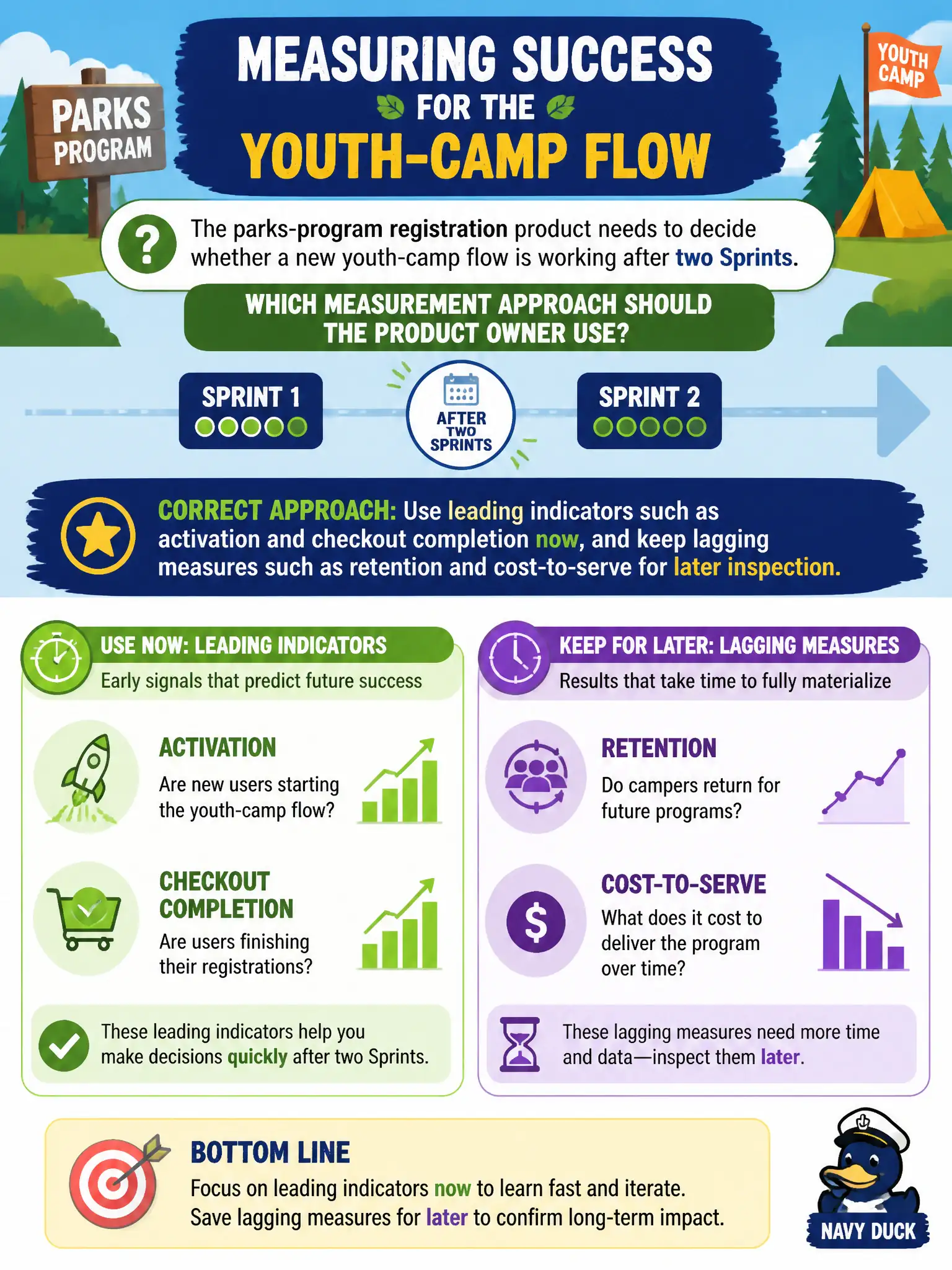
The parks-program registration product needs to decide whether a new youth-camp flow is working after two Sprints. Which measurement approach should the Product Owner use?
Select an answer to reveal the explanation.
Short Explanation
Leading lights tell you if the boat is pointed right before the harbor report comes in. After two Sprints, activation and completed checkouts are those lights. Retention and cost-to-serve still matter — they just show up later.
Full Explanation
After two Sprints on a new youth-camp flow in parks-program registration, the Product Owner should use leading indicators such as activation and checkout completion now, while keeping lagging measures such as retention and cost-to-serve for later inspection. Waiting twelve months for year-end retention before changing the Product Backlog delays adaptation far too long. Tracking only cost-to-serve ignores whether families can successfully register. Judging the flow by story points completed in the two Sprints measures output, not whether the camp flow works. Exam caveat: combine leading and lagging indicators; do not wait solely on lagging annual metrics. Operational check: instrument activation and checkout this Sprint, review them at Sprint Review, adapt the backlog immediately if leading indicators fail, and schedule retention and cost-to-serve checks once enough cohorts exist. Youth-camp registration learning uses leading indicators now and lagging retention later; waiting a year freezes adaptation. If activation or checkout fails after two Sprints, change the backlog immediately rather than defending story-point progress. Define thresholds for activation and checkout that trigger backlog change within one Sprint, so two-Sprint learning on youth-camp flow cannot stall waiting for year-end retention.