
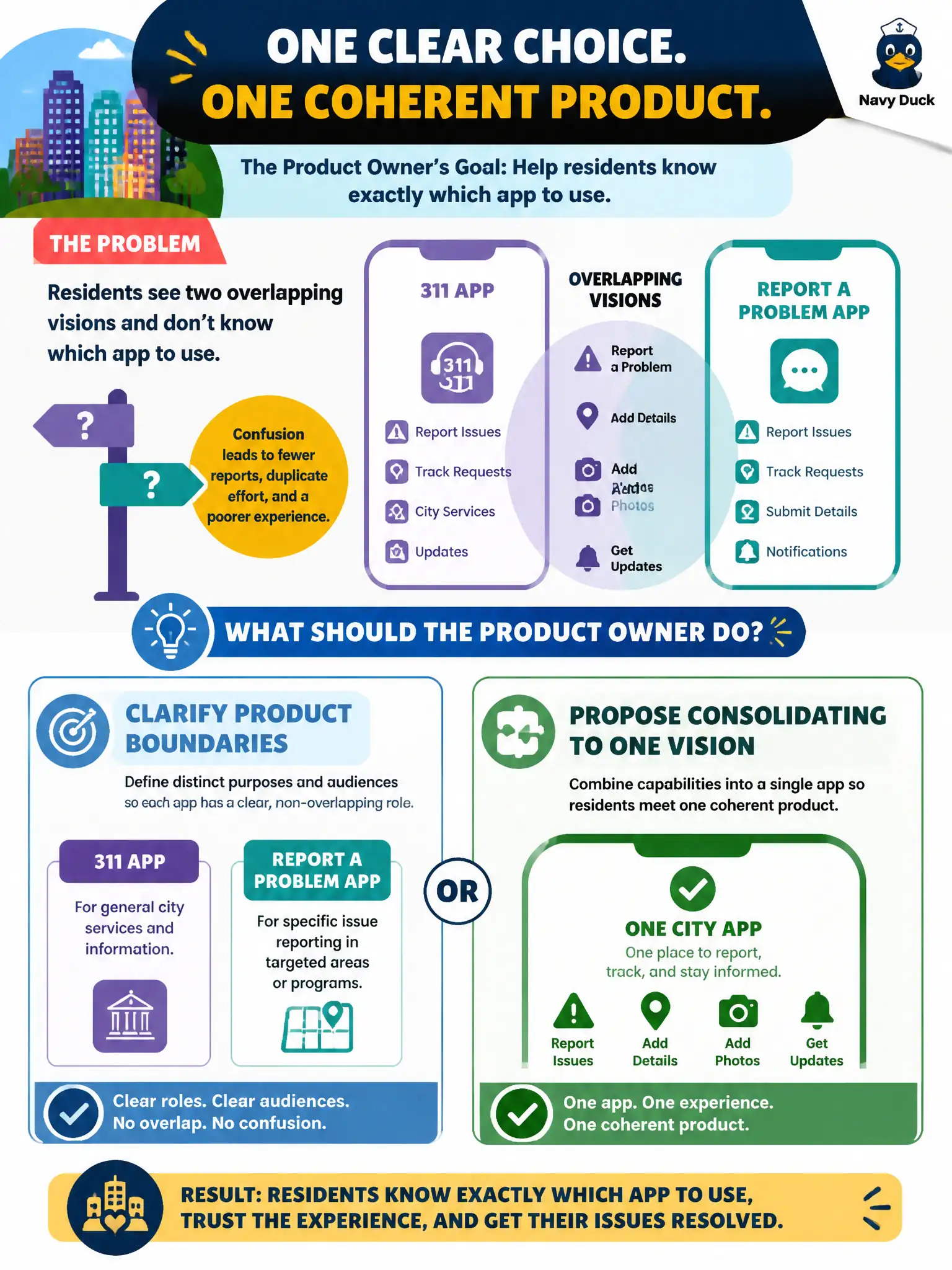
A city 311 app and a separate 'report a problem' app publish overlapping visions, and residents do not know which to use. What should the Product Owner do?
Select an answer to reveal the explanation.
Short Explanation
Two city apps with the same promise is two front doors to the same house — people pick the wrong one and blame the city. Either draw a hard line between the products or make them one. Overlap is not coverage; it is fog.
Full Explanation
Overlapping visions for a city 311 app and a separate report-a-problem app confuse residents about which product to use. The Product Owner should clarify product boundaries or propose consolidating to one coherent vision so residents meet one clear offering. Keeping both visions identical so the apps feel consistent even while they compete does not resolve the boundary problem. Adding a third chooser product with its own vision compounds complexity instead of resolving overlap. Letting marketing test slogans while both backlogs continue to grow increases inventory without strategic clarity. Exam caveat: product boundary clarity is part of Product Ownership when multiple civic apps collide. Operational check: map resident jobs across both apps, decide consolidate versus differentiate with explicit boundaries, publish the resulting vision or visions, and stop dual backlog growth that duplicates the same report-a-problem journey. Overlapping 311 and report-a-problem visions tax residents with product confusion; consolidate or differentiate boundaries before more backlog growth. Map duplicated journeys and stop funding two inventories for the same civic job. Publish a boundary decision—one consolidated app or two clearly differentiated products—then freeze duplicate backlog growth until resident journeys no longer collide in messaging and intake.