
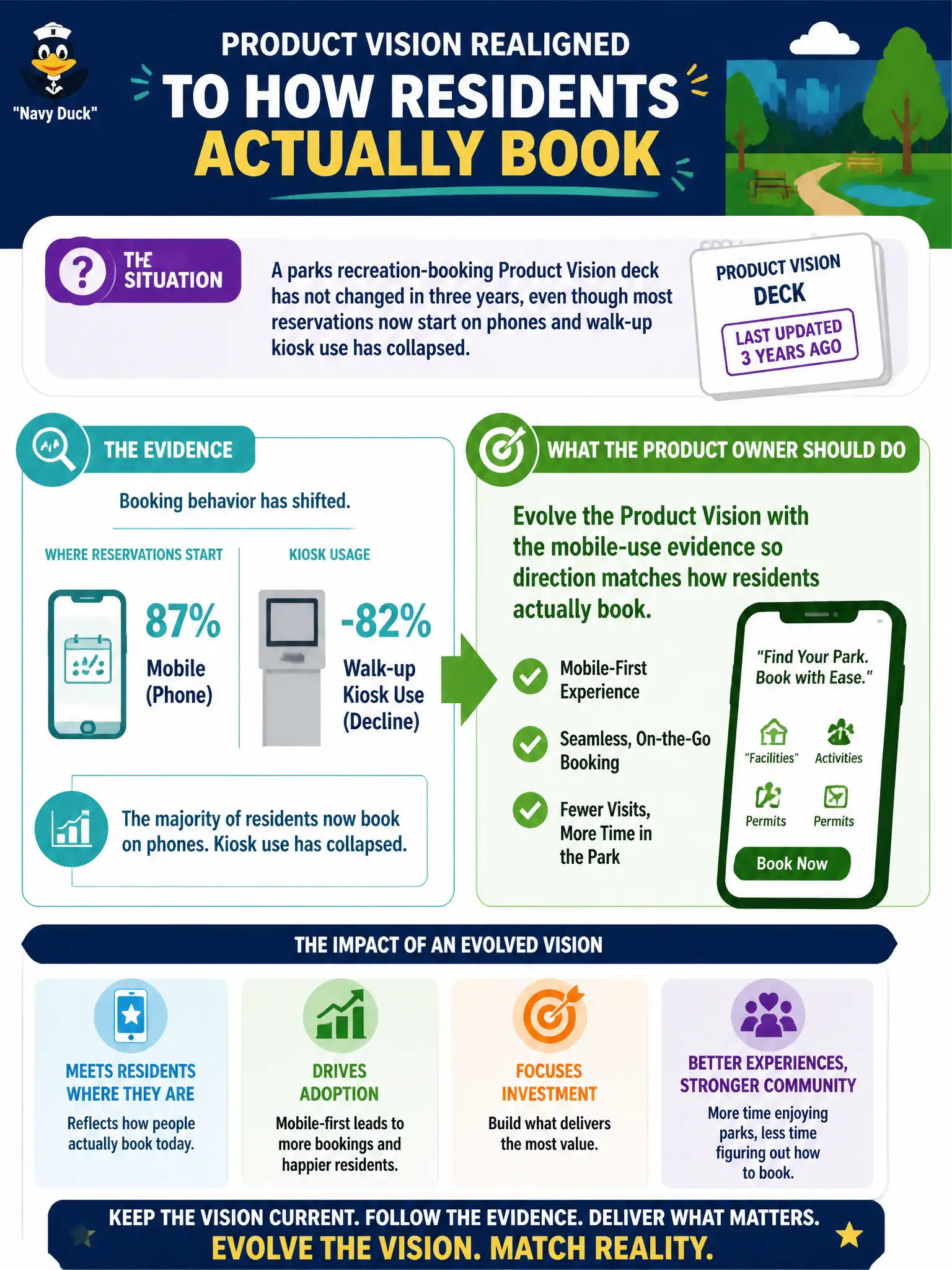
A parks recreation-booking Product Vision deck has not changed in three years, even though most reservations now start on phones and walk-up kiosk use has collapsed. What should the Product Owner do?
Select an answer to reveal the explanation.
Short Explanation
A three-year-old vision while everyone booked on phones is like a paper trail map after the trail moved. Vision is living, not a laminated poster. When the evidence changes, the story of who you serve and how they succeed has to change too.
Full Explanation
Product Vision is living direction, not a museum piece. When a parks recreation-booking vision has not changed in three years while most reservations now start on phones and walk-up kiosk use has collapsed, the Product Owner should evolve the vision with that mobile-use evidence so direction matches how residents actually book. Keeping the original vision to prove stability and treating mobile as a later channel project ignores Current Value reality. Archiving the vision and replacing it with a mobile-app feature list owned by marketing substitutes a feature dump for outcome direction. Waiting for a new parks director so vision changes have political cover delays adaptation the evidence already justifies. Exam caveat: visions should be stable enough for focus yet change when the environment clearly shifts. Operational check: update the vision to center mobile booking outcomes, realign the Product Goal and near-term backlog, and retire kiosk-first assumptions that no longer match resident behavior observed in parks analytics. Parks booking behavior shifting to phones is environmental evidence that should evolve Product Vision; stability is not stubbornness. Realign Product Goals and near-term backlog to mobile outcomes and stop treating collapsed kiosk use as the default channel story.