
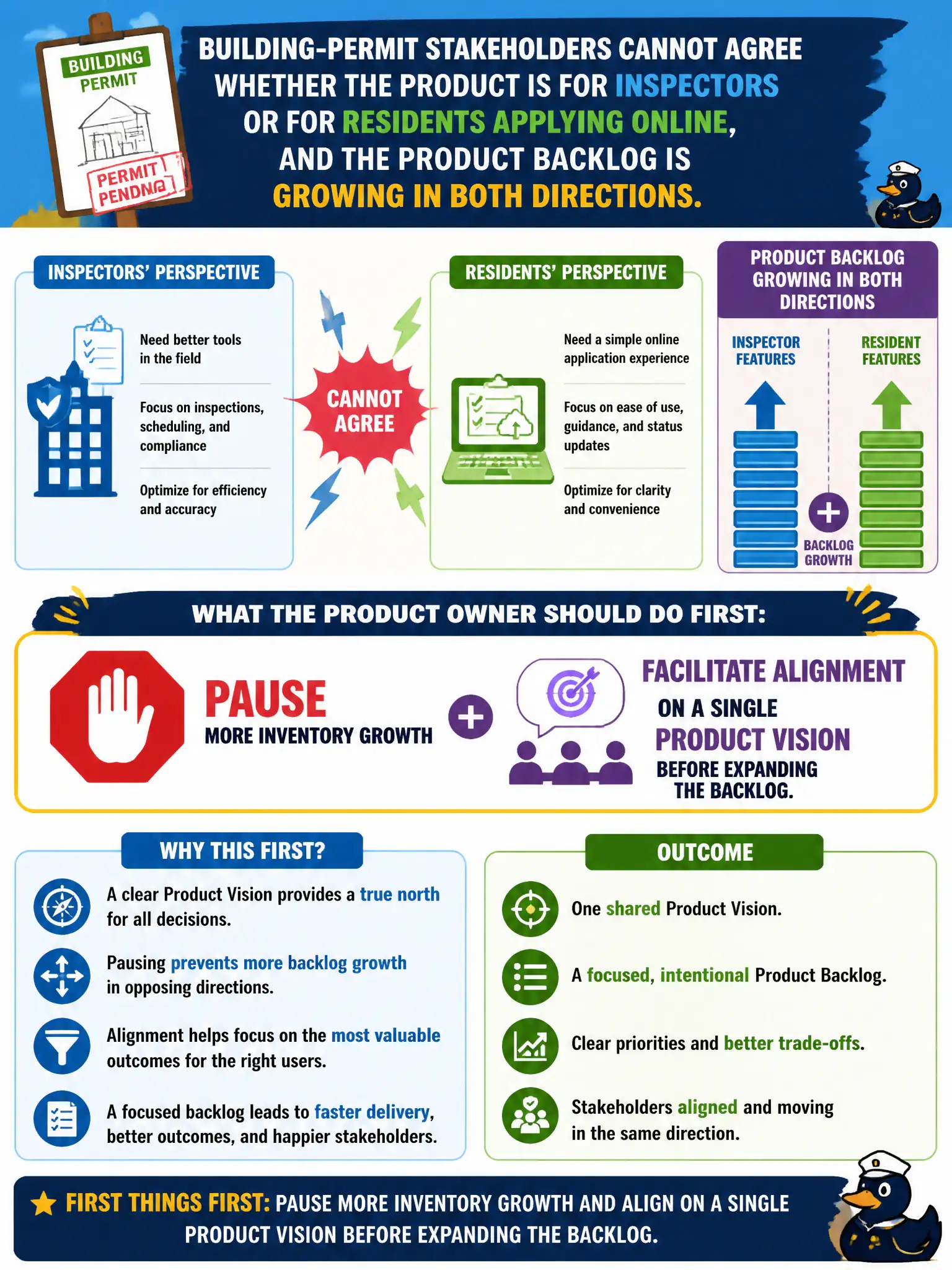
Building-permit stakeholders cannot agree whether the product is for inspectors or for residents applying online, and the Product Backlog is growing in both directions. What should the Product Owner do first?
Select an answer to reveal the explanation.
Short Explanation
Two audiences fighting over one product is like one kitchen trying to be a steakhouse and a bakery at the same time — the menu explodes and nobody is happy. Align on who this product is for before stocking more tickets. Extra features just hide the argument.
Full Explanation
When building-permit stakeholders cannot agree whether the product is for inspectors or for residents applying online, and the backlog is growing in both directions, the Product Owner should pause more inventory growth and facilitate alignment on a single Product Vision before expanding further. Without shared direction, every new item increases Unrealized Value noise and splits focus. Splitting into two Product Backlogs immediately so each camp can fund its wish list may be a later option, but it skips the first job of clarifying whether one product or two products exist. Keep adding both streams until usage data later reveals a winner creates inventory without strategy. Asking the Scrum Master to vote the audience in the next Retrospective misuses the Retrospective and dodges Product Owner facilitation of vision. Exam caveat: vision alignment precedes backlog expansion when stakeholder camps conflict. Operational check: stop unchecked dual-audience feature growth, run a short alignment on primary user and outcome, publish one Product Vision, and only then resume ordered refinement for the agreed audience. Dual-audience backlog growth for permits without a shared vision multiplies inventory and conflict; align the primary user and outcome before adding more features. If alignment fails, decide consciously whether two products exist rather than growing one confused backlog.