
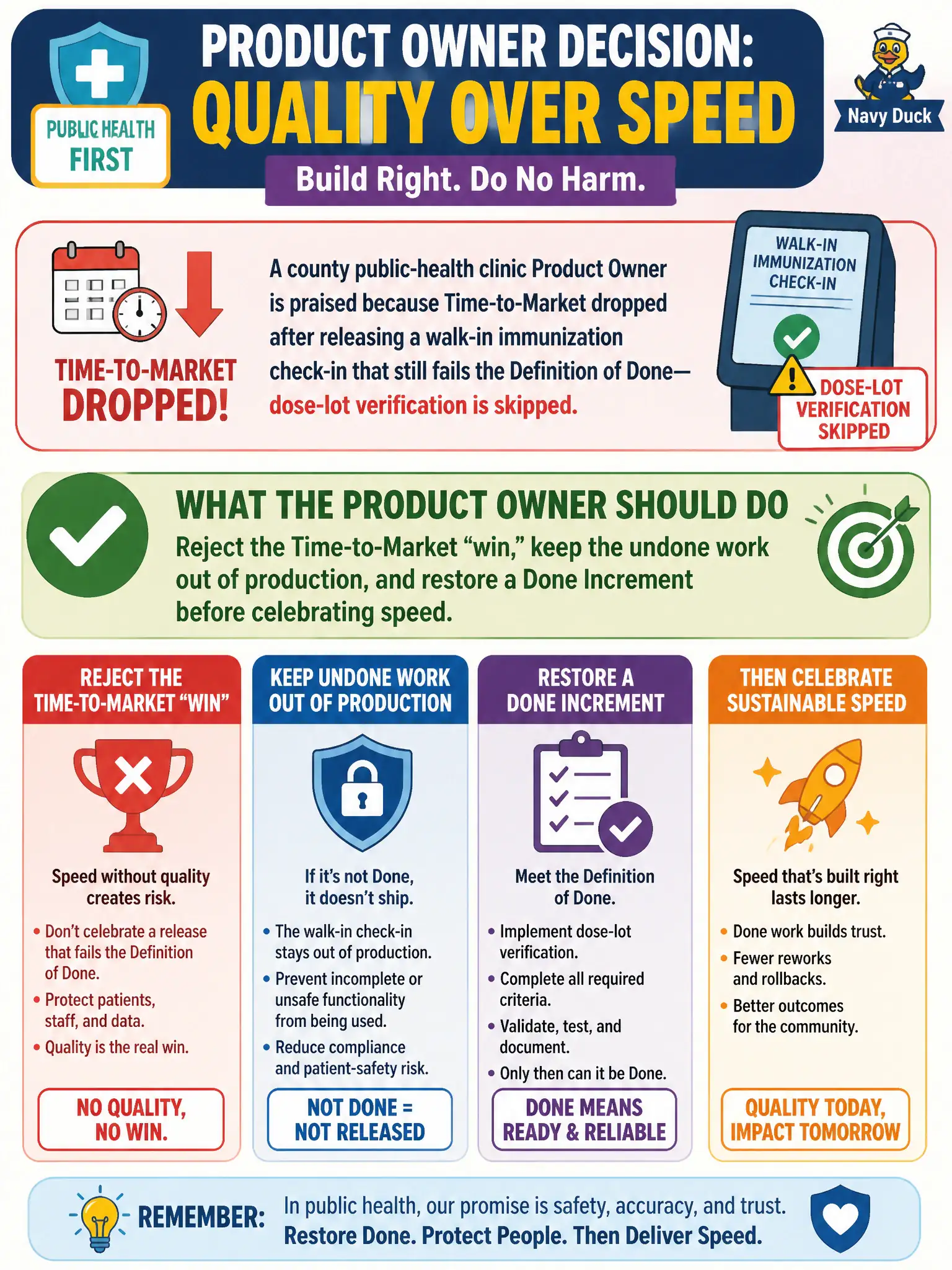
A county public-health clinic Product Owner is praised because Time-to-Market dropped after releasing a walk-in immunization check-in that still fails the Definition of Done—dose-lot verification is skipped. What should the Product Owner do?
Select an answer to reveal the explanation.
Short Explanation
Shipping a half-ready clinic check-in just to make the stopwatch look good is like handing out vaccines from a warm fridge—faster, and that is the problem. Time-to-Market only counts when the Increment is actually Done. A fake speed trophy is still a quality miss.
Full Explanation
Evidence-Based Management's Time-to-Market Key Value Area measures how quickly the organization can deliver value, not how quickly it can push unfinished work onto residents. An immunization check-in Increment that fails the Definition of Done—skipping dose-lot verification—is not releasable value, and celebrating that 'speed' actively harms Current Value and public trust. The Product Owner should reject the false T2M win, keep undone work out of production, and restore a Done Increment before inspecting Time-to-Market.
Shipping the check-in, reporting the T2M improvement, and filing dose-lot verification as technical debt next quarter games the stopwatch and endangers clinic safety. Broadening the Definition of Done so skipped safety checks no longer block a T2M score rewrites quality to fit a metric. Asking the steering committee to replace Time-to-Market with story-point velocity so quality debates disappear swaps one gamed number for another.
Exam caveat: PSPO II Time-to-Market only counts on Done, releasable Increments; weakening Done to improve T2M is a classic anti-pattern.
Operational check: exclude any clinic Increment that fails Done from T2M reporting, restore dose-lot verification before release, and republish T2M only after a usable immunization check-in ships.