
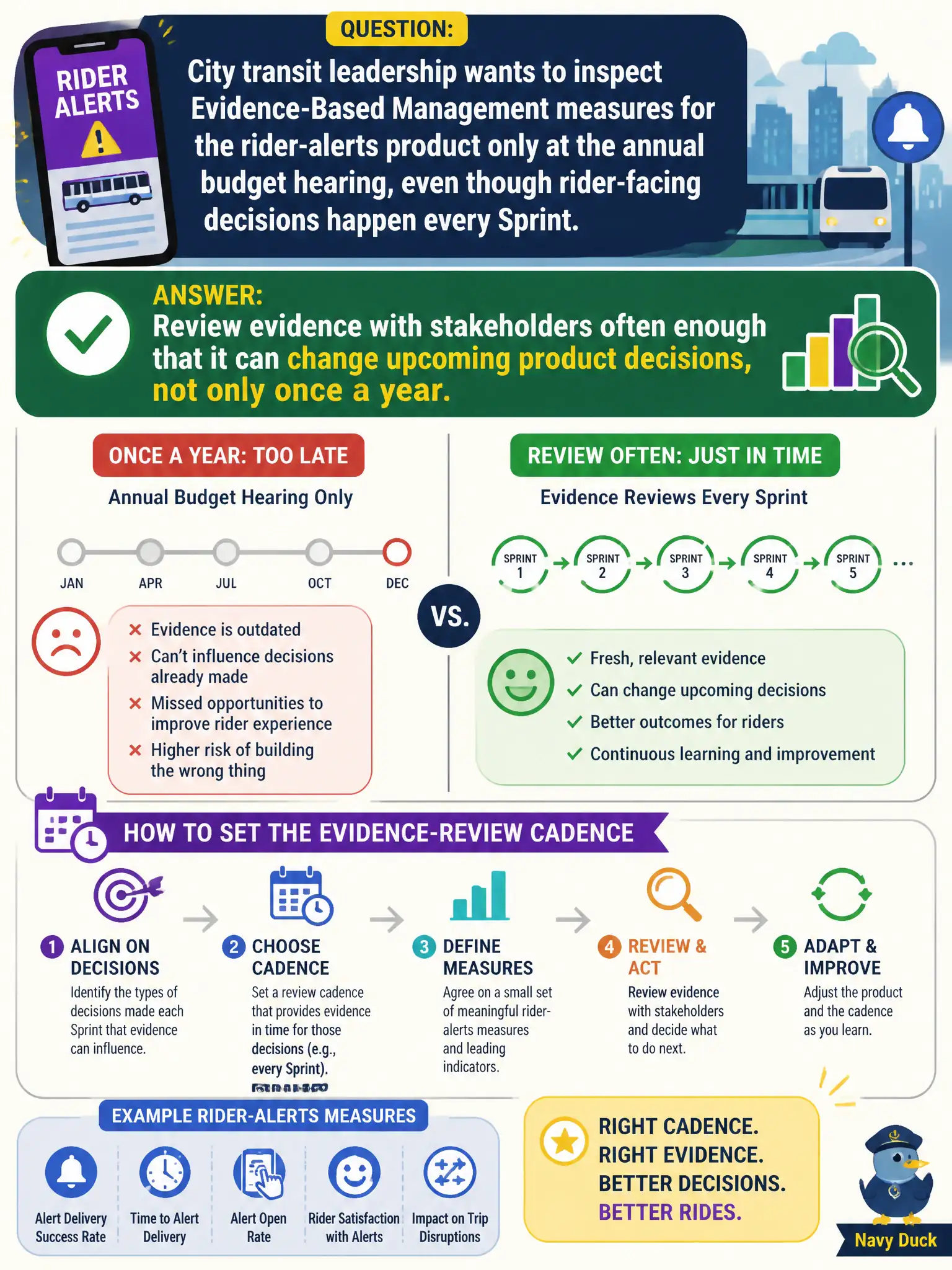
City transit leadership wants to inspect Evidence-Based Management measures for the rider-alerts product only at the annual budget hearing, even though rider-facing decisions happen every Sprint. How should the Product Owner set the evidence-review cadence?
Select an answer to reveal the explanation.
Short Explanation
If the scoreboard is only unveiled at the championship banquet, nobody can change the playbook during the season. Riders feel this product every week, so evidence has to show up on a cadence that can still change the next call. An annual binder is a scrapbook, not a steering wheel.
Full Explanation
Evidence-Based Management is an empirical loop of goals, measures, experiments, inspection, and adaptation. Inspection must be frequent enough relative to the decisions being made. When rider-facing decisions on a transit alerts product occur each Sprint, an annual-only evidence review at the budget hearing cannot inform ordering, experiments, or Intermediate Goals. The Product Owner should review evidence with stakeholders often enough that it can change upcoming product decisions.
Keeping the annual hearing as the only evidence event freezes the dashboard for council theater and starves Sprint-level adaptation. Inspecting evidence only after a full year of features ships optimizes sample size optics while decisions go blind for months. Handing evidence reviews to Finance and skipping product stakeholders until the next fiscal vote severs measures from the people who order the Product Backlog.
Exam caveat: PSPO II cadence of evidence follows decision cadence, not the municipal budget calendar alone.
Operational check: schedule a stakeholder evidence review at least every Sprint or every other Sprint for rider-alerts measures, and bring one backlog ordering change that followed the latest evidence.