
Several teams work on a city recycling-set-out product but inspect unrelated numbers. How should the Product Owner enable Evidence-Based Management?
Select an answer to reveal the explanation.
Short Explanation
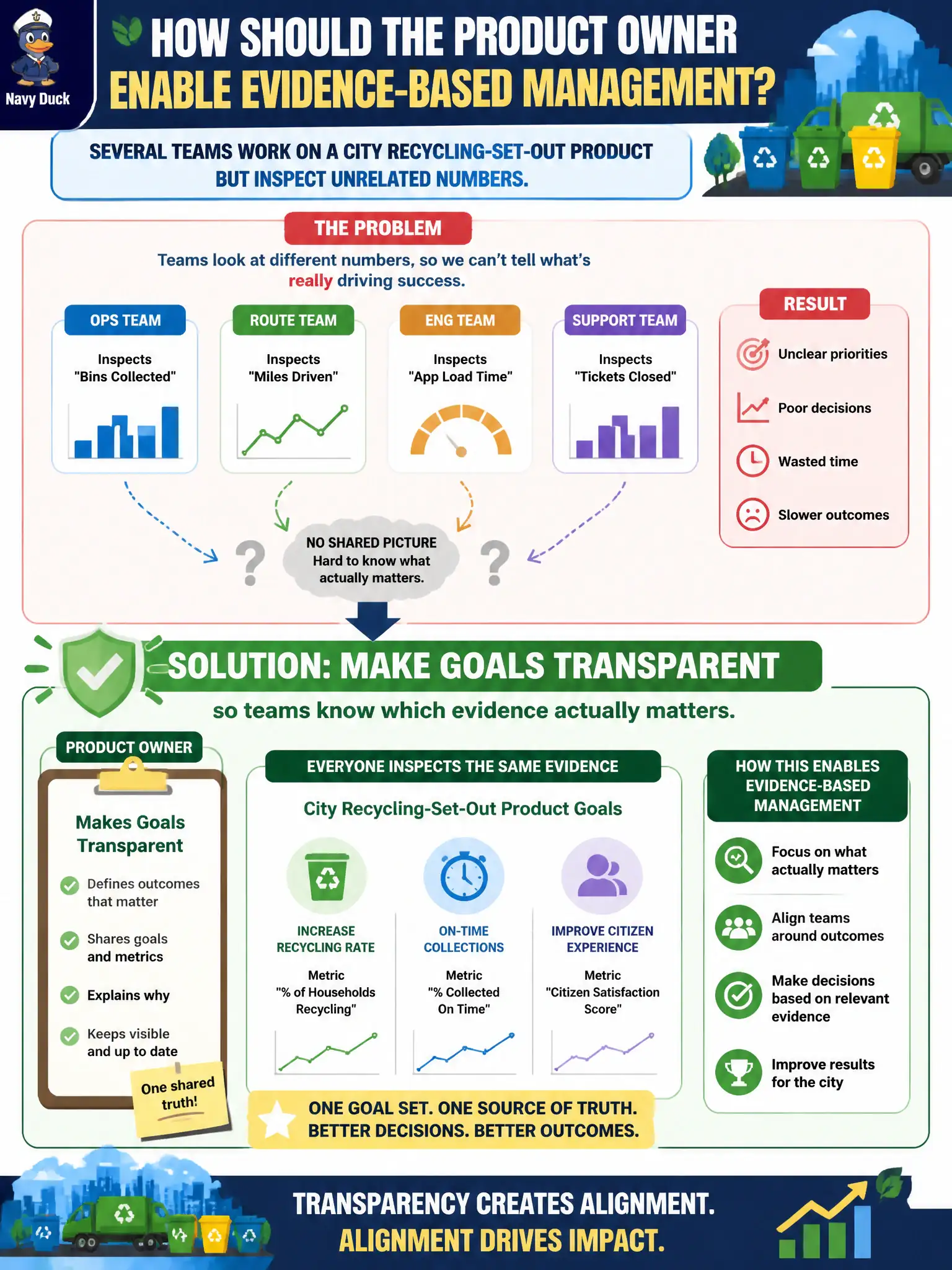
If nobody posts the destination, every crew will measure a different thing and still feel busy. Transparent goals tell teams which evidence is worth gathering for recycling set-out. Hiding the goal or swapping it for velocity just guarantees five dashboards and one confused city.
Full Explanation
Evidence-Based Management depends on transparency of goals so people can inspect the same outcomes and capabilities. When several teams on a city recycling-set-out product watch unrelated numbers, they cannot tell whether Intermediate or Tactical Goals are moving. The Product Owner should make goals transparent so teams know which evidence actually matters and collect measures that serve the shared civic outcome.
Letting each team invent private goals so self-management stays intact misreads self-management as secrecy and fragments product evidence. Hiding Strategic Goals from Developers to avoid biasing Sprint forecasts removes the aim that should guide forecast choices. Replacing goals with a shared velocity target so evidence is comparable substitutes an output proxy for outcome transparency. Civic recycling outcomes need one shared destination on the wall so every team's evidence points at the same resident result.
Exam caveat: PSPO II links EBM to goal transparency; private dashboards and velocity targets are not a substitute for a visible goals ladder.
Operational check: publish the recycling product's Strategic and Intermediate Goals where all teams can see them, list the two or three measures that evidence those goals, and stop collecting unrelated vanity numbers at Sprint Reviews.