
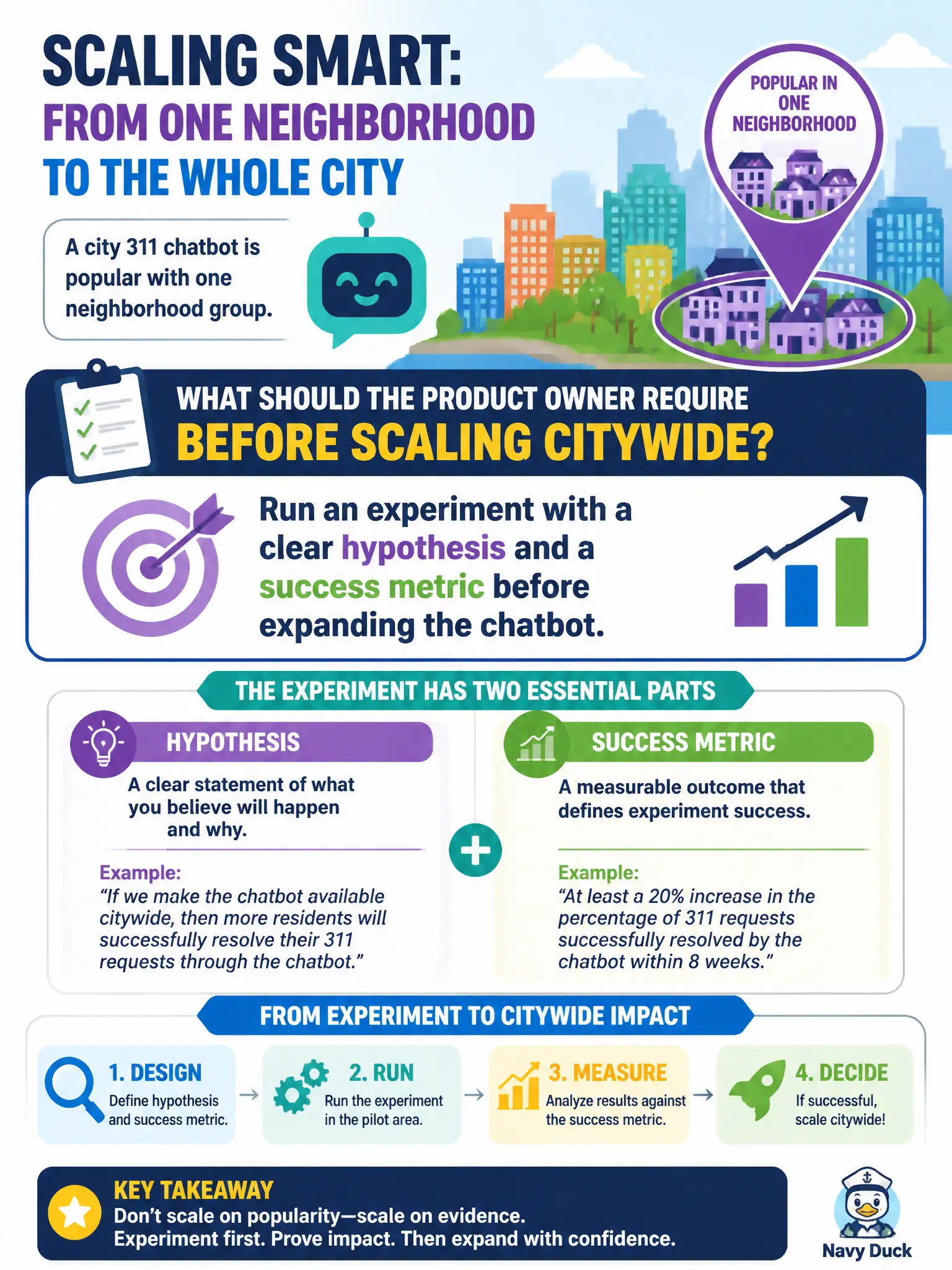
A city 311 chatbot is popular with one neighborhood group. What should the Product Owner require before scaling it citywide?
Select an answer to reveal the explanation.
Short Explanation
One loud neighborhood liking a chatbot is a compliment, not a citywide proof. Before spreading it, write down what should get better and how you will know. Hypothesis plus a success metric beats a vibe, a binder of requirements, or a steering-committee charter.
Full Explanation
Evidence-Based Management treats citywide scale as a decision that follows evidence, not enthusiasm. A 311 chatbot popular with one neighborhood group is a weak signal; before expanding, the Product Owner should run an experiment with a clear hypothesis and a success metric that can confirm or refute value for broader civic use.
Scaling immediately because anecdotal popularity feels like Current Value mistakes compliments for outcome evidence and risks costly reversal. Commissioning a year-long requirements document so the scaled chatbot can be built without further hypotheses substitutes predictive theater for learning. Transferring ownership to a PMO steering committee for a charter gate replaces empiricism with governance ceremony. Before citywide investment, weak neighborhood enthusiasm must be upgraded into outcome evidence the Product Owner can defend to council and operations alike.
Exam caveat: PSPO II often tests evidence strength before scale—anecdote and political enthusiasm are weak compared with hypothesized outcome measures.
Operational check: before any citywide 311 chatbot rollout, write the hypothesis, the success metric, the sample of neighborhoods, and the kill/scale criteria; do not expand until those measures are inspected.