
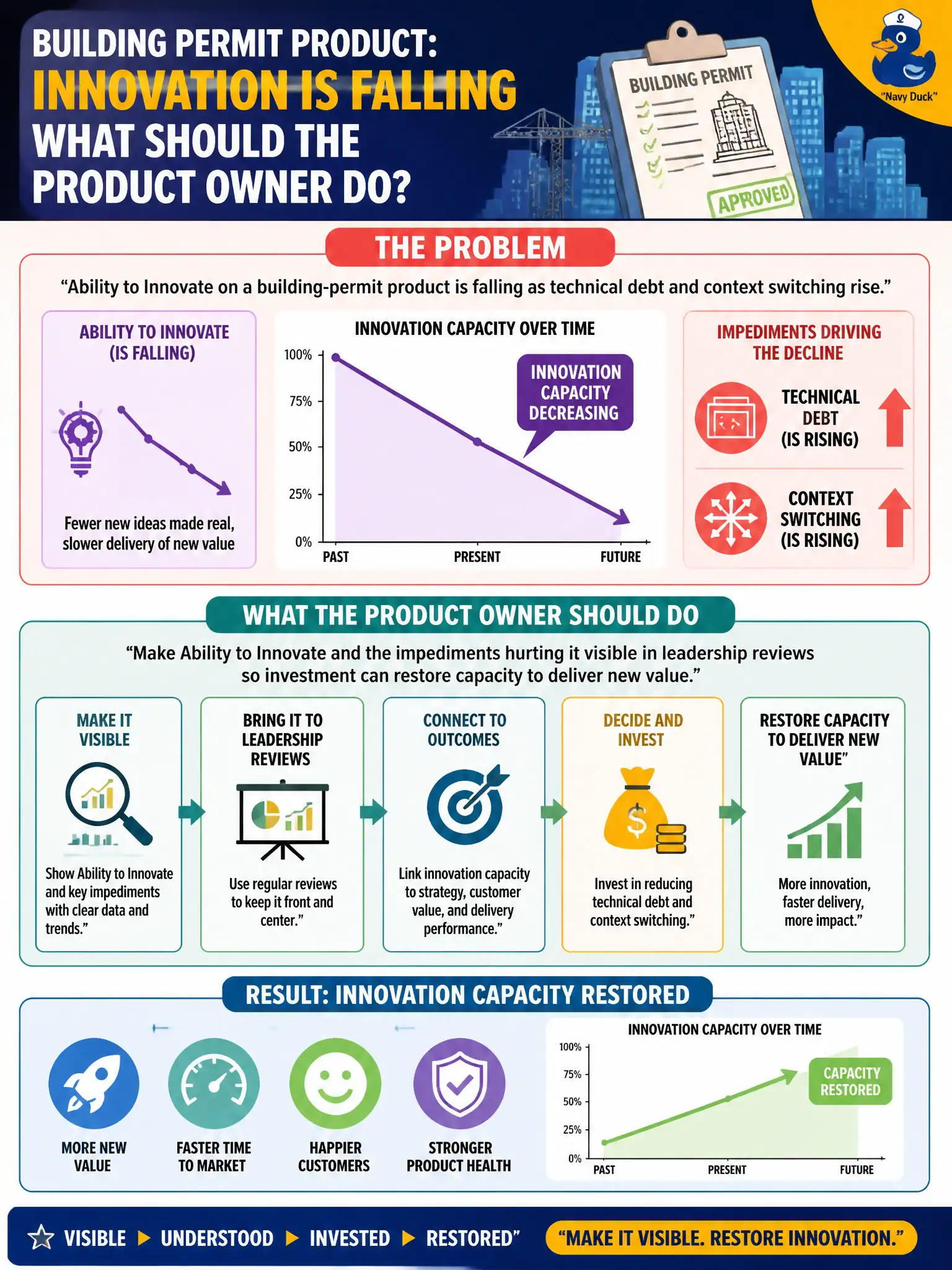
Ability to Innovate on a building-permit product is falling as technical debt and context switching rise. How should the Product Owner use that Key Value Area with leadership?
Select an answer to reveal the explanation.
Short Explanation
If the workshop is buried in broken tools and people bouncing between jobs, nothing new gets built — that is Ability to Innovate dying in public. Technical debt and context switching are product problems because they steal tomorrow's permits, not just tonight's code. Show leadership the drop instead of hiding it behind points or a side backlog.
Full Explanation
Ability to Innovate describes the organization's capacity to deliver new value. Rising technical debt and context switching on a building-permit product consume capacity that would otherwise go to new permit capabilities, so A2I is a Product Owner concern in leadership reviews—not a private engineering scorecard. Making the decline and the impediments transparent lets the organization inspect and adapt investment to restore capacity.
Dropping Ability to Innovate from reviews because it seems like an engineering concern hides the product constraint that will starve tomorrow's permits. Raising the story-point forecast so the team appears to innovate at the previous rate games output and conceals capability loss. Creating a separate innovation backlog owned by architecture parks the problem off the product conversation instead of restoring capacity where value is ordered.
Exam caveat: PSPO II expects Product Owners to treat A2I impediments—debt, switching, fragile platforms—as value constraints visible to leadership, not as deferred engineering trivia.
Operational check: in the next leadership review, show permit-product capacity spent on unplanned work or context switches beside the stalled new-value items, and ask which investment restores A2I before adding more scope.