
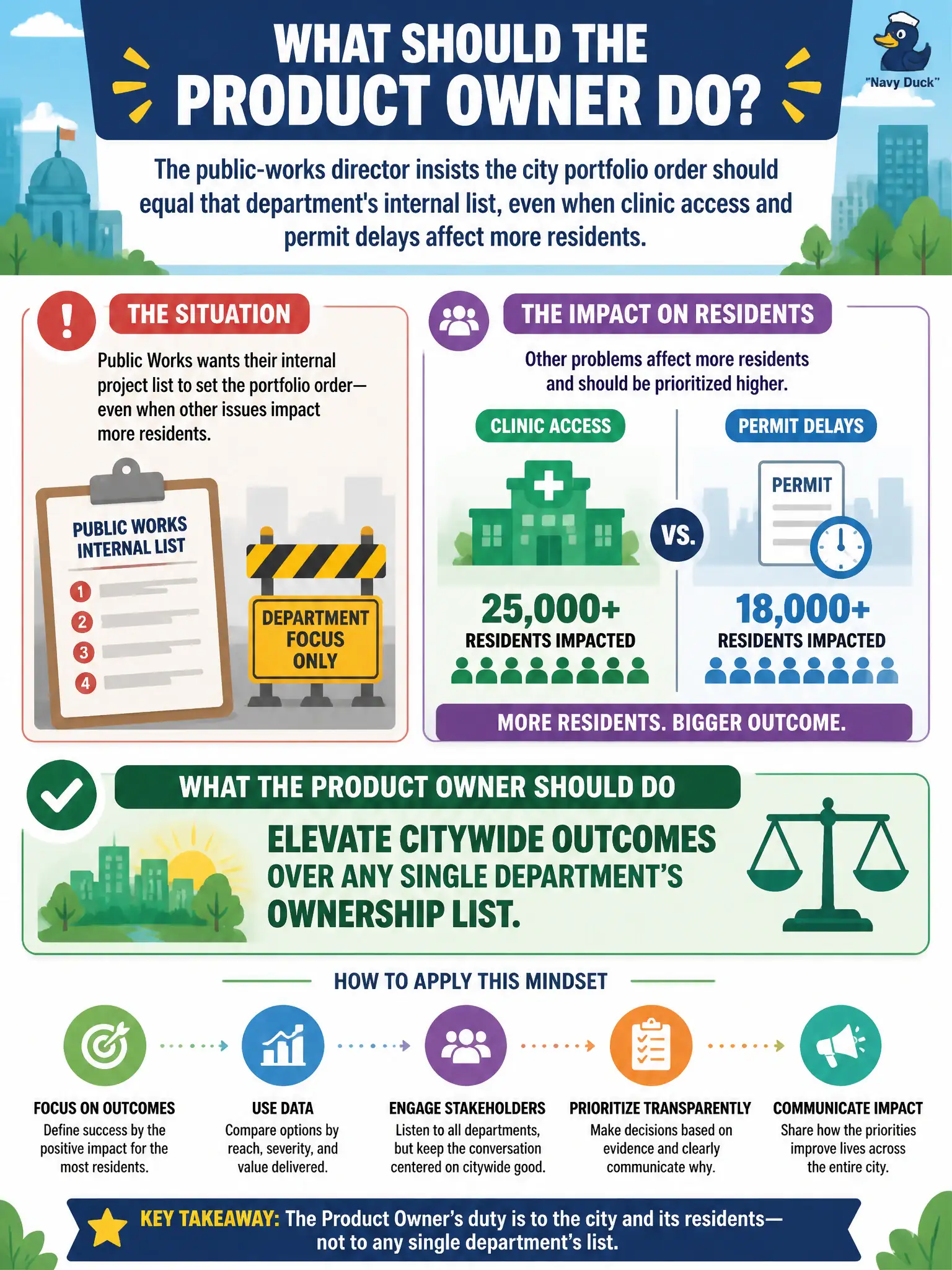
The public-works director insists the city portfolio order should equal that department's internal list, even when clinic access and permit delays affect more residents. What should the Product Owner do?
Select an answer to reveal the explanation.
Short Explanation
If every department's shopping list became the city portfolio, the city would optimize for org charts, not for residents. Clinic access and permit delays do not care who owns the budget line. Citywide outcomes beat "because it is our list."
Full Explanation
Portfolio priority serves organization-wide outcomes, not the loudest department’s backlog. When the public-works director insists the city portfolio order should equal that department’s internal list—even when clinic access and permit delays affect more residents—the Product Owner should elevate citywide outcomes over any single department’s ownership list. Rotating slots, budget-weighted ranking, and averaged ranks are fairness heuristics that hide Unrealized Value. Ordering conversations should stay on citizen outcomes—health access, permit time, transit reliability—even when that disappoints a single director.
Rotating the number-one slot among departments each quarter fails by optimizing peace over impact. Adopting public works’ list because that director controls the largest budget fails by equating budget power with citywide value. Averaging ranks from every department fails so that no outcome is truly first and urgent resident harm stays buried.
Exam caveat: Elevate citywide citizen outcomes over any one department’s internal list. Operational check: Rank the next portfolio slice using clinic access, permit delay, and similar resident outcomes; publish why public works’ internal list did not automatically become the city order.