
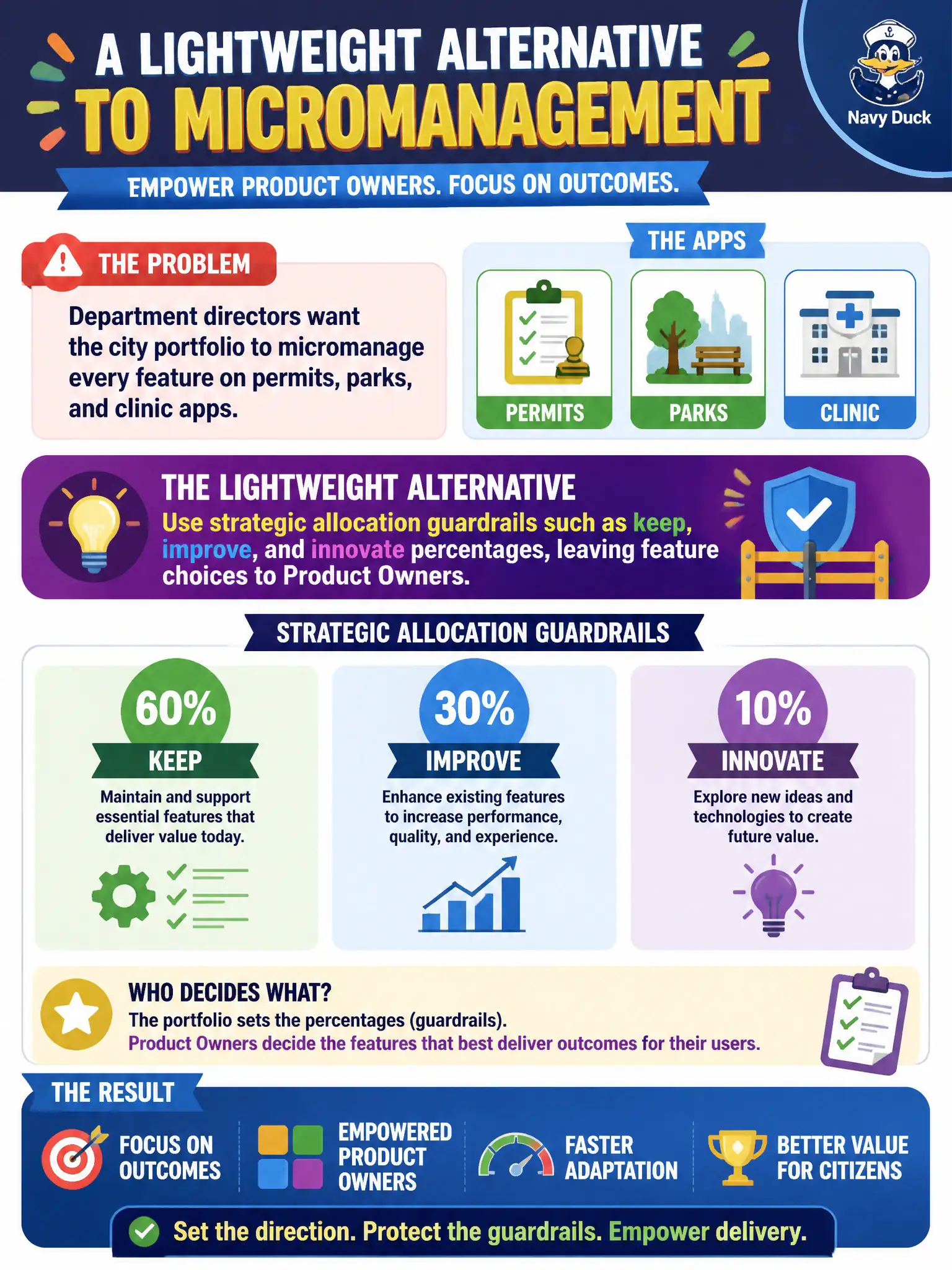
Department directors want the city portfolio to micromanage every feature on permits, parks, and clinic apps. What lightweight alternative should the Product Owner use?
Select an answer to reveal the explanation.
Short Explanation
Guardrails on a bridge tell you where the lanes are; they do not steer every car. Keep, improve, and innovate percentages keep a city portfolio from starving maintenance or never trying anything new. Directors do not need to vote on every permit-form field.
Full Explanation
Lightweight allocation guardrails—for example keep, improve, innovate—set strategic capacity mix without turning the portfolio into a feature committee. When department directors want the city portfolio to micromanage every feature on permits, parks, and clinic apps, the Product Owner should use strategic allocation guardrails such as keep, improve, and innovate percentages, leaving feature choices to Product Owners. Director voting, equal feature counts, and annual work-breakdowns micromanage output and destroy Product Owner ordering. Guardrails plus per-product Product Backlogs preserve both strategy and empiricism.
A mandatory feature board that directors vote on each Monday fails by making the portfolio a weekly feature legislature. Equal feature counts per department so allocation looks fair fails by fairness theater over outcomes. A full annual work-breakdown of every product through month twelve fails by predictive micromanagement.
Exam caveat: Use capacity guardrails (keep/improve/innovate); do not let directors vote every feature. Operational check: Agree portfolio percentages for keep, improve, and innovate across permits, parks, and clinics, then let each Product Owner order features inside that mix without a Monday feature board.