
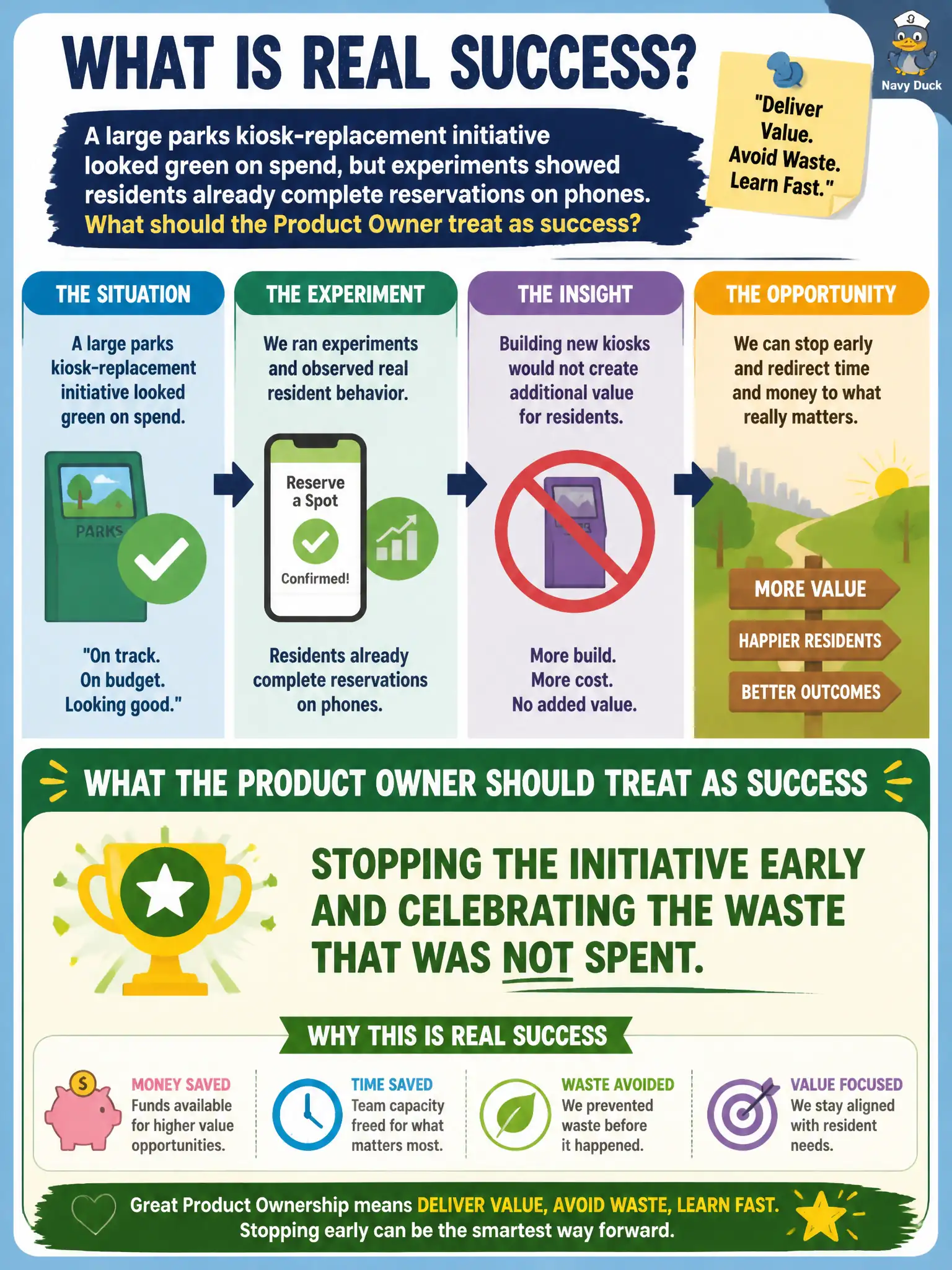
A large parks kiosk-replacement initiative looked green on spend, but experiments showed residents already complete reservations on phones. What should the Product Owner treat as success?
Select an answer to reveal the explanation.
Short Explanation
Finding out the kiosks are a museum piece before two hundred of them go in the ground is a win, not a scarlet letter. Evidence that phones already do the job is the city catching the leak. Celebrate the money that did not get poured into steel boxes.
Full Explanation
Stopping a low-evidence initiative early is portfolio success because it frees capacity for Unrealized Value elsewhere. When a large parks kiosk-replacement initiative looked green on spend, but experiments showed residents already complete reservations on phones, finishing the rollout would pour money into steel boxes nobody needs. The Product Owner should treat stopping early and celebrating the waste that was not spent as success. Completing a disproven kiosk rollout, rebranding to protect capital, or parking leftover budget in velocity buffers all punish learning. Leadership should inspect the evidence, stop, and reallocate.
Finishing the kiosk rollout anyway so the original business case can be marked complete fails by completing a disproven plan for reporting theater. Rebranding the kiosks as a public-art program so capital funds are not returned fails by protecting spend instead of residents. Moving remaining kiosk budget into unused story-point buffers for other teams fails by hiding money in output metrics.
Exam caveat: Early stop of a disproven initiative is success; celebrate avoided waste. Operational check: Present phone-versus-kiosk evidence, formally stop the kiosk initiative, reallocate capacity to higher Unrealized Value parks work, and report avoided capital spend as a portfolio win.