
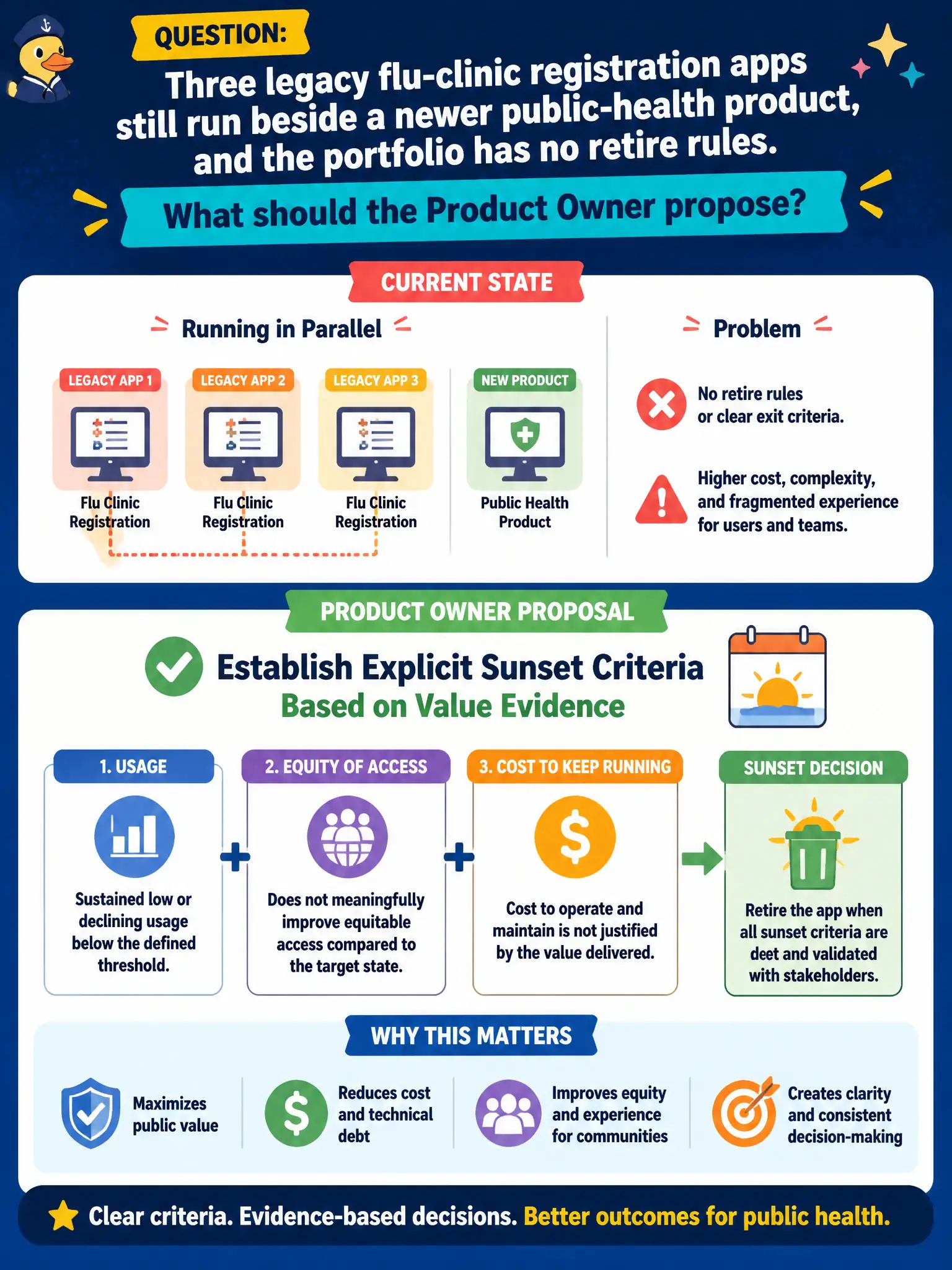
Three legacy flu-clinic registration apps still run beside a newer public-health product, and the portfolio has no retire rules. What should the Product Owner propose?
Select an answer to reveal the explanation.
Short Explanation
Old clinic apps that nobody will turn off are like extra refrigerators in the garage — they still draw power. A portfolio without sunset rules never takes out the trash. Usage, who still needs access, and cost to keep the lights on are fair retire tests.
Full Explanation
Portfolios need explicit retire and sunset criteria so products do not consume capacity forever by default. When three legacy flu-clinic registration apps still run beside a newer public-health product with no retire rules, the city keeps paying for refrigerators in the garage. The Product Owner should propose explicit sunset criteria based on value evidence such as usage, equity of access, and cost to keep running. Value evidence beats both indefinite keep-everything and date-driven shutdowns that ignore who is still served. Vendors should not own civic sunset decisions.
Keeping all four apps indefinitely so no neighborhood loses a familiar login fails by never retiring cost and complexity. Retiring the three legacy apps on a fixed calendar date regardless of usage evidence fails by ignoring who still depends on a channel. Handing sunset decisions to the vendor of the newest clinic app fails because a vendor must not own civic retire policy.
Exam caveat: Sunset with usage, equity, and cost evidence—not indefinite keep or blind calendar cuts. Operational check: Define retire thresholds for clinic registration apps (usage, who still needs access, operating cost), review the three legacy apps against them, and schedule retire or retain with a migration plan.