
A vanity mayor-branded parks selfie map is consuming a Scrum Team that could cut building-permit wait times. How should the Product Owner present the opportunity cost?
Select an answer to reveal the explanation.
Short Explanation
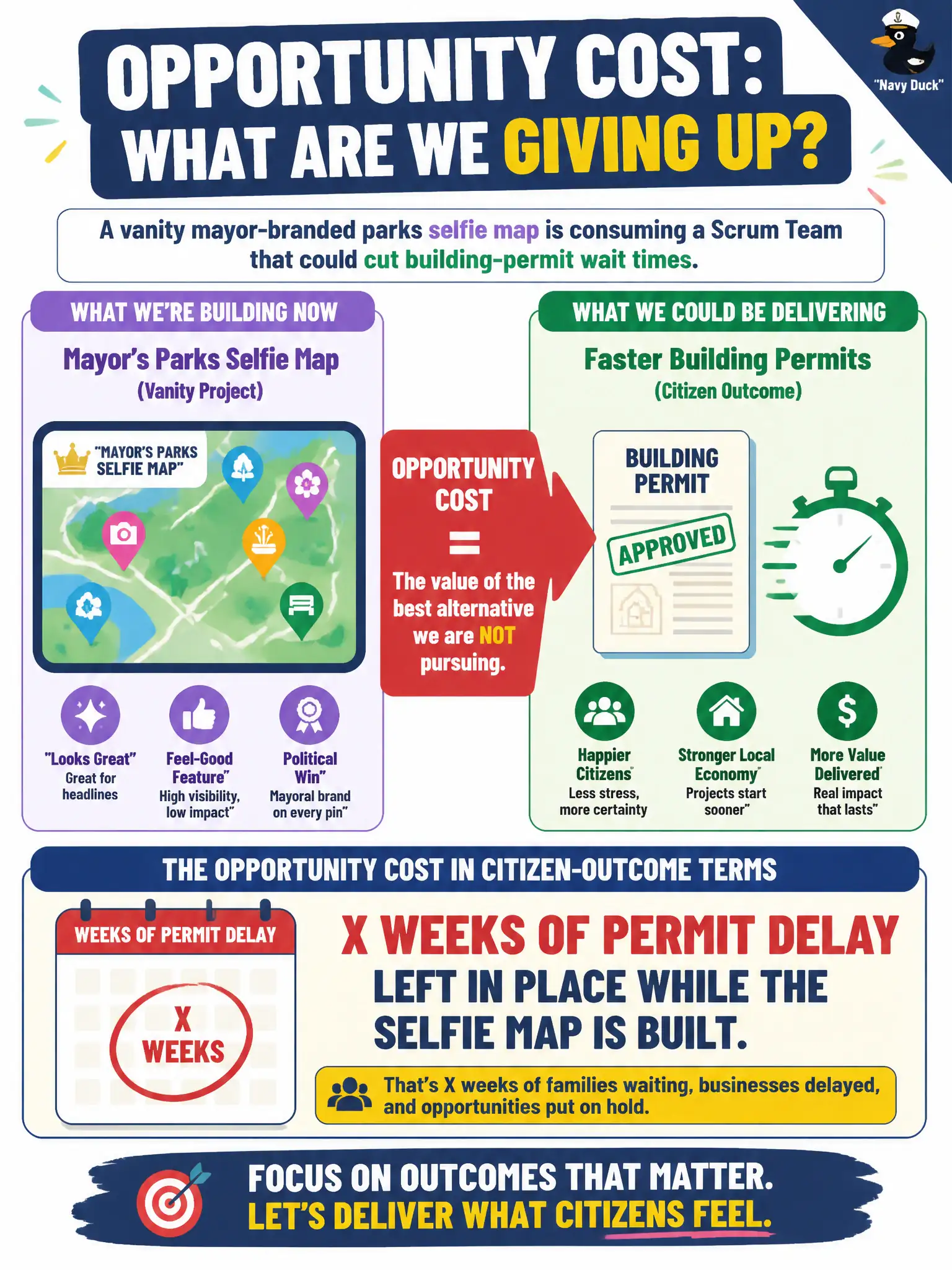
Opportunity cost is the dinner that did not get cooked because the stove was making cotton candy. A selfie map for parks might be fun, but if permits still take weeks, that is the real price. Leaders hear outcomes — delayed roofs, delayed shops — louder than story points.
Full Explanation
Portfolio opportunity cost should be expressed in outcomes stakeholders already care about, not in output metrics or political scorekeeping. When a vanity mayor-branded parks selfie map consumes a Scrum Team that could cut building-permit wait times, the Product Owner should present opportunity cost in citizen-outcome terms such as weeks of permit delay left in place while the selfie map is built. Weeks of remaining permit delay, missed inspections, or stalled small-business openings make the vanity item’s cost inspectable. Story points, media mentions, and budget taxonomy do not describe Unrealized Value left on the table.
Framing cost as unused story points the selfie map will burn fails because points are not resident outcomes. Comparing the mayor’s media mentions versus the permit director’s complaints fails by turning portfolio choice into a popularity contest. Using capital-versus-operating classification so finance can decide fails because accounting codes are not opportunity-cost evidence.
Exam caveat: State opportunity cost in citizen outcomes leaders already feel, not in points or press. Operational check: Show how many weeks of permit delay remain if the selfie-map team is not redirected, and put that outcome cost beside the vanity initiative in the next portfolio review.