
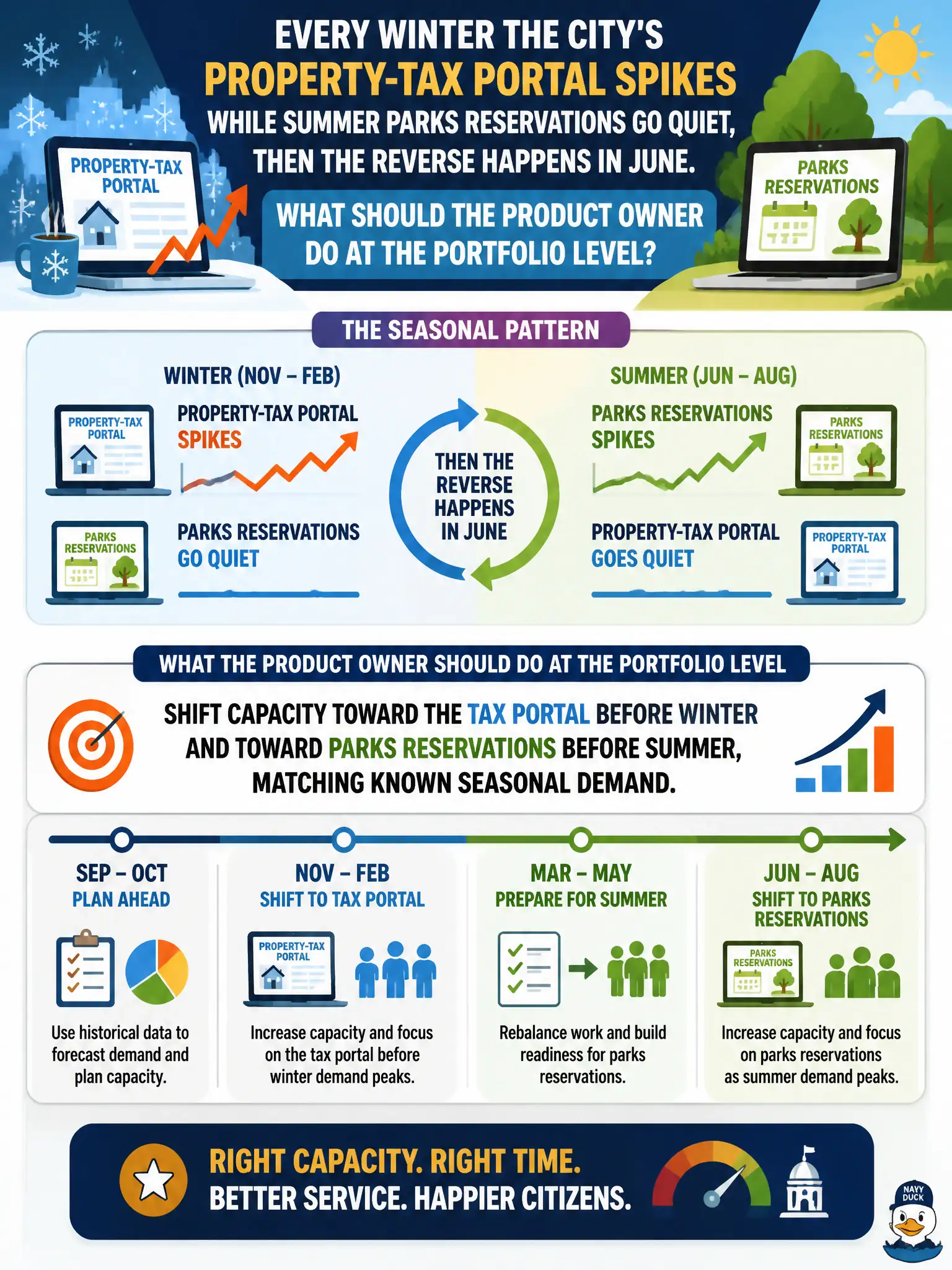
Every winter the city's property-tax portal spikes while summer parks reservations go quiet, then the reverse happens in June. What should the Product Owner do at the portfolio level?
Select an answer to reveal the explanation.
Short Explanation
Ice-cream stands do not staff the same in January as in July. City products have seasons too — tax time, then park-pass time. A portfolio that ignores the calendar leaves residents waiting in the season that actually matters.
Full Explanation
Known seasonal value demand is information a portfolio should use to reallocate capacity. Every winter the city’s property-tax portal spikes while summer parks reservations go quiet, then the reverse happens in June. The Product Owner should shift capacity toward the tax portal before winter and toward parks reservations before summer, matching known seasonal demand. Equal year-round staffing and winter freezes optimize fairness theater or forecast comfort, not citizen outcomes. Vendors who cannot release to production add coordination without Time-to-Market.
Keeping year-round equal staffing so no department can claim favoritism fails by ignoring when residents actually need the product. Freezing both products from November through April fails by protecting Sprint forecast comfort while tax filers wait. Hiring a seasonal vendor team that cannot release to the live tax or parks systems fails because non-releasable help does not create seasonal value.
Exam caveat: Reallocate portfolio capacity to match known seasonal civic demand. Operational check: Publish a seasonal staffing plan that moves people toward the tax portal before filing season and toward parks before summer, with releasable Done as the goal—not equal year-round headcount.