
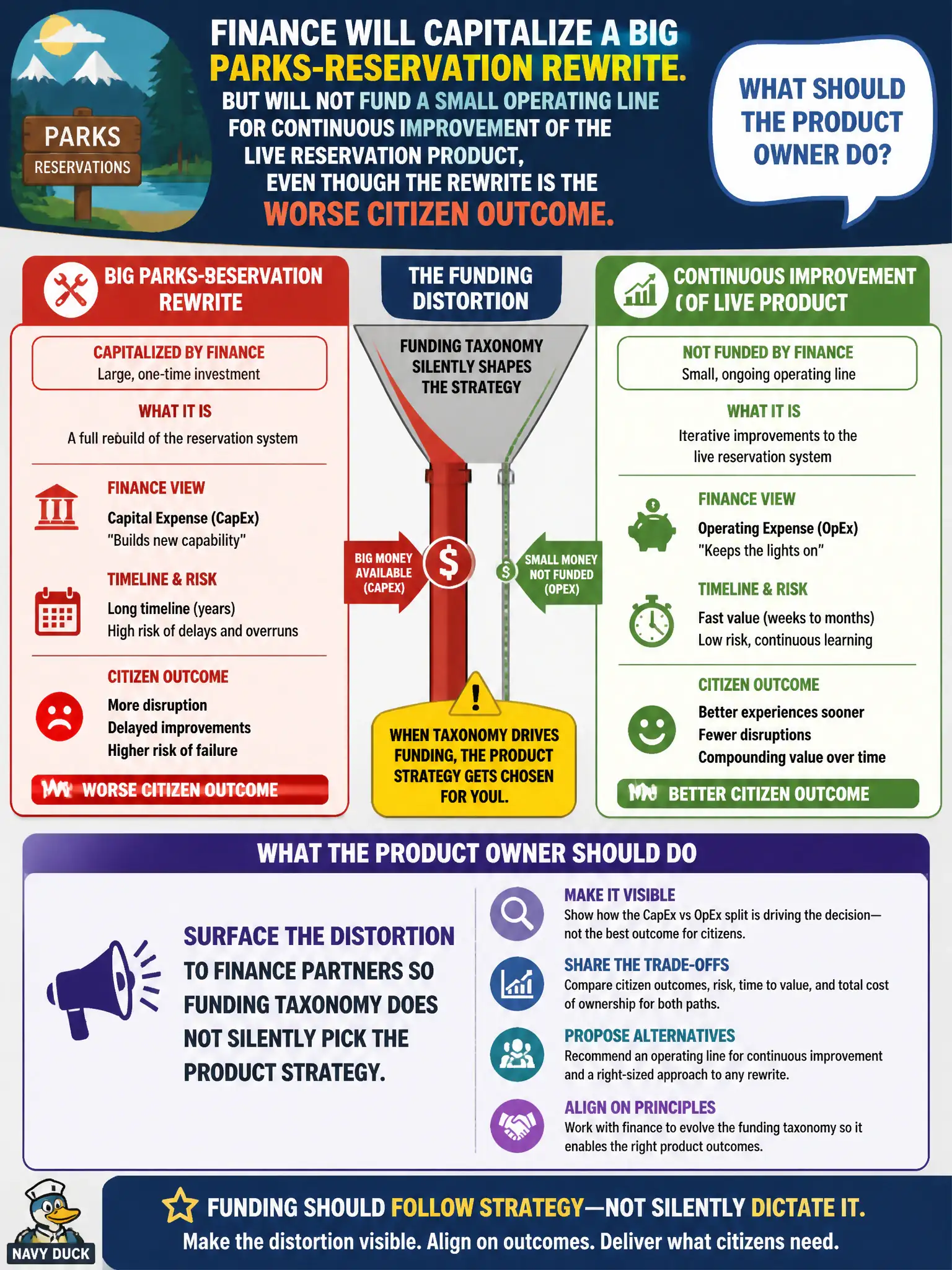
Finance will capitalize a big parks-reservation rewrite but will not fund a small operating line for continuous improvement of the live reservation product, even though the rewrite is the worse citizen outcome. What should the Product Owner do?
Select an answer to reveal the explanation.
Short Explanation
If the city will only pay for a new kitchen, not for keeping the current stove working, dinner still suffers. Capital-versus-operating labels can shove a parks product toward a flashy rewrite. Put that distortion on the table with finance instead of pretending the accounting code is a product strategy.
Full Explanation
Budget taxonomy—capital versus operating—often fights agility by making large rewrites easier to fund than incremental improvement of a live civic product. When finance will capitalize a big parks-reservation rewrite but will not fund a small operating line for continuous improvement of the live reservation product—even though the rewrite is the worse citizen outcome—the Product Owner should surface the distortion so funding taxonomy does not silently pick the product strategy. Optimizing inside a silent distortion, manufacturing extra capital projects, or withholding releases to force a crisis all hide the real portfolio problem.
Choosing the rewrite because capital rules are immovable fails by treating accounting as strategy without challenging it. Splitting the rewrite into two capital projects to capitalize more money fails by gaming taxonomy. Stopping releases of the live product until operating funds appear fails by harming residents to force a crisis.
Exam caveat: Make capital-versus-operating distortions transparent with finance; do not let accounting silently choose strategy. Operational check: Show finance outcome and cost evidence that continuous improvement of the live parks reservation product beats the rewrite, and negotiate an operating line—or an explicit leadership acceptance of the worse path.