
The municipal portfolio board ranks next quarter's bets for parks, transit, and clinics by a round of highest-paid-person votes from department directors. What should the Product Owner introduce instead?
Select an answer to reveal the explanation.
Short Explanation
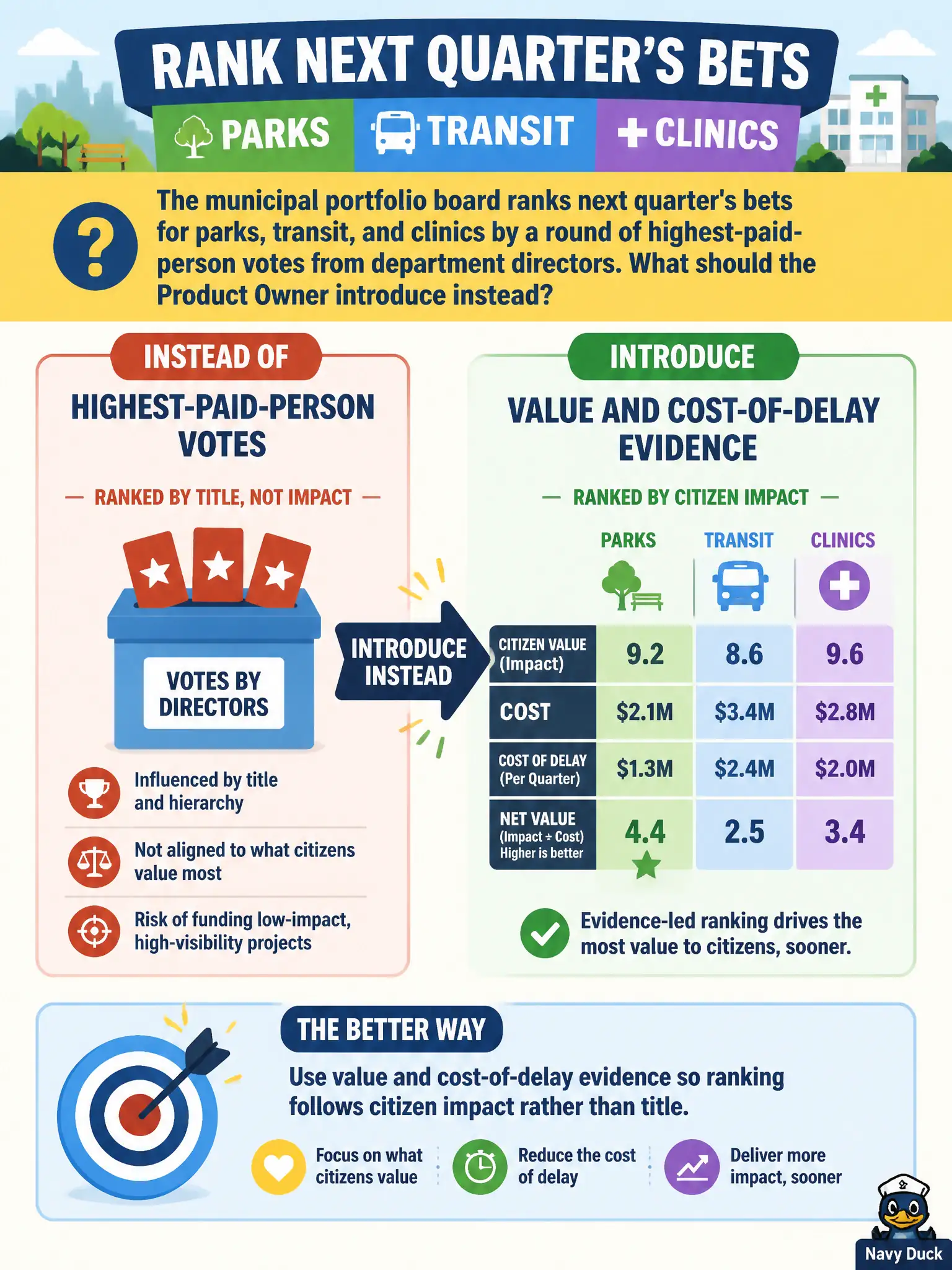
HiPPO voting is just "the hippo in the room decides." Parks and transit directors can shout, but that is not evidence. Cost of delay asks whose residents wait longer if the city does nothing — a much better ranking tool than the loudest title.
Full Explanation
Portfolio ordering should use evidence of value and cost of delay, not positional power. When the municipal portfolio board ranks next quarter’s bets for parks, transit, and clinics by highest-paid-person votes from department directors, HiPPO preference can crowd out high-delay civic need. The Product Owner should introduce value and cost-of-delay evidence so ranking follows citizen impact rather than title. Secret ballots and seniority rules still encode politics; story points measure effort, not whether residents wait longer if the city does nothing.
A secret ballot so directors cannot see who voted fails because anonymity does not create value evidence. Story-point totals from each Scrum Team as a proxy for importance fail because effort is not citizen impact. A rule that the longest-serving director’s list always goes first fails by encoding seniority as strategy and silencing outcome comparison.
Exam caveat: Rank portfolio bets with value and cost-of-delay evidence, not HiPPO votes. Operational check: For the next ranking session, require each parks, transit, and clinic proposal to state the delayed citizen outcome if deferred, then order using that evidence beside cost—not director title.