
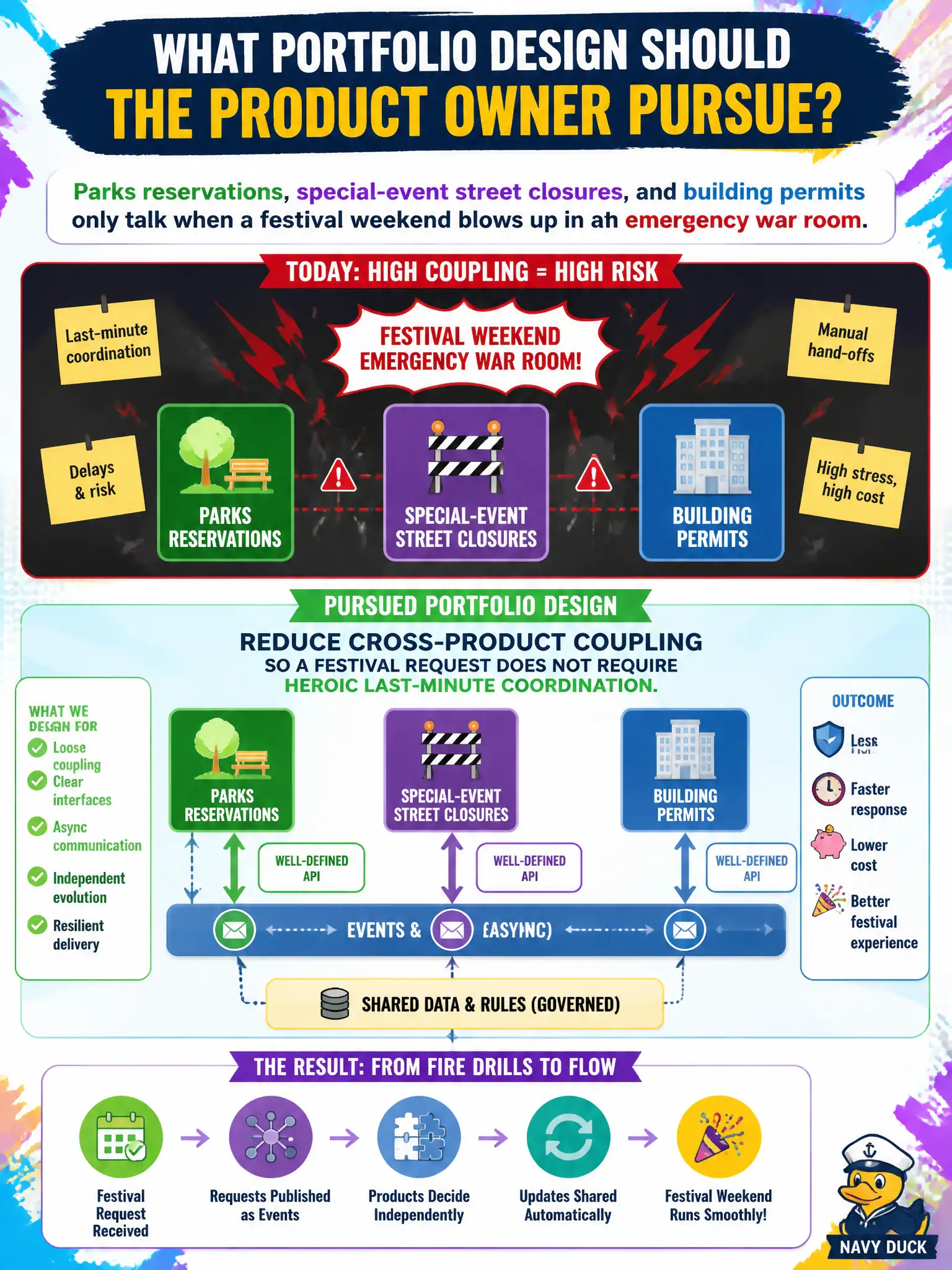
Parks reservations, special-event street closures, and building permits only talk when a festival weekend blows up in an emergency war room. What portfolio design should the Product Owner pursue?
Select an answer to reveal the explanation.
Short Explanation
If three city products only meet when a festival is on fire, the building is the problem, not the firefighters. War rooms feel productive, but they are a tax on last-minute coupling. Better product boundaries mean a street closure does not need a midnight permit scramble.
Full Explanation
Chronic emergency coordination is a portfolio design smell: products are coupled in ways that destroy Time-to-Market and hide who owns which citizen journey. When parks reservations, special-event street closures, and building permits only talk when a festival weekend blows up in a war room, the building is the problem, not the firefighters. The Product Owner should pursue portfolio design that reduces cross-product coupling so a festival request does not require heroic last-minute coordination—clearer interfaces, shared calendar data, fewer sequential handoffs. Standing war rooms, program managers seizing three backlogs, or PMO RAID logs institutionalize the smell.
Scheduling a standing daily war room fails by making emergency coordination the operating model. Appointing a program manager who owns all three Product Backlogs during event season fails by centralizing ordering without removing dependencies. Keeping war rooms and adding a Friday PMO RAID log fails by documenting coupling instead of reducing it.
Exam caveat: Reduce cross-product coupling; do not glorify war rooms as portfolio excellence. Operational check: Map festival weekend handoffs among reservations, closures, and permits; introduce shared event dates and clearer interfaces so next festival needs no midnight war room.